
Micron's Groundbreaking AI-Driven Future
ED
Editorial
Cashu Markets·5 min read
TL;DR
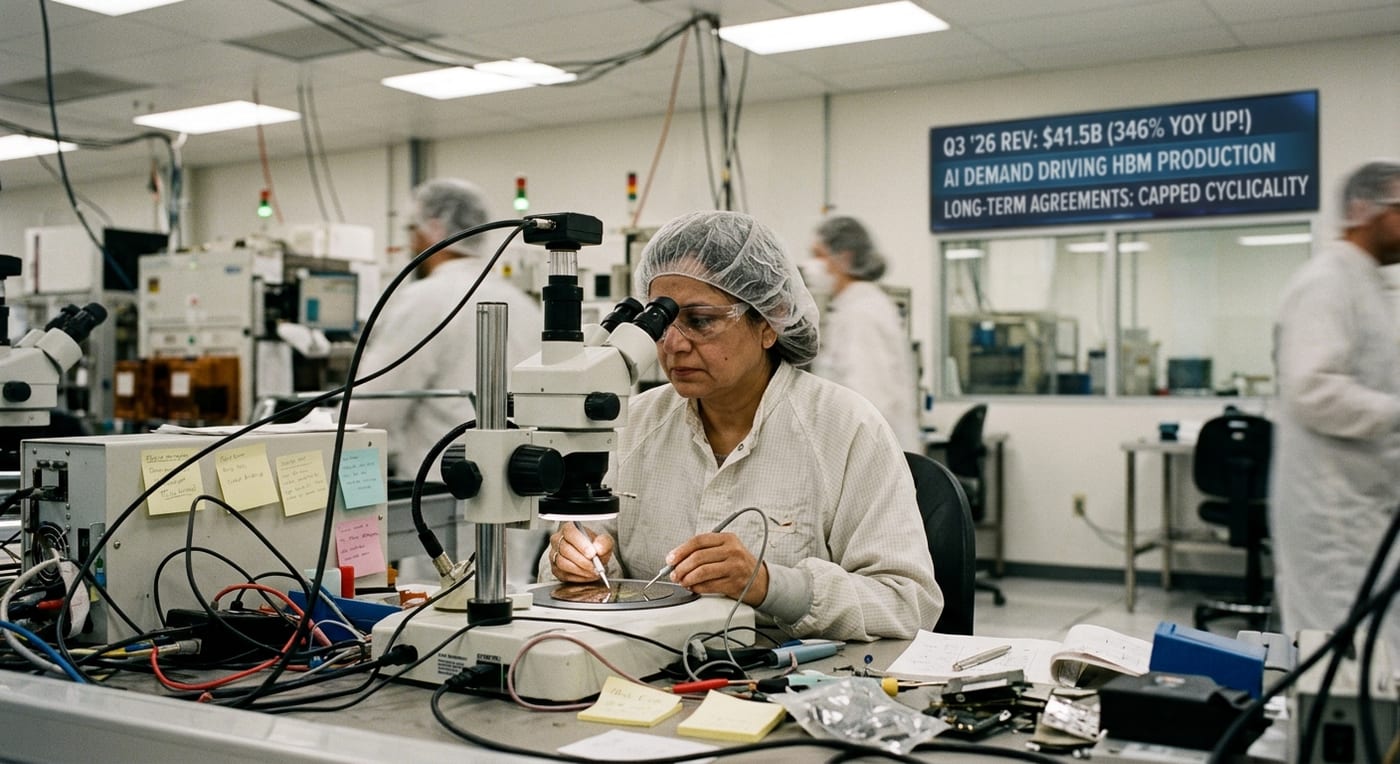
- Micron reported Q3 2026 revenues of $41.5 billion, a 346% increase year-over-year.
- Strategic long-term agreements enhance financial stability and reduce market cyclicality.
- Demand for high-performance memory products, particularly in AI applications, continues to grow.
Micron Technology, Inc. ( MU) is at a pivotal juncture, leveraging accelerated demand for memory products vital to artificial intelligence (AI) applications. This burgeoning landscape positions Micron as a key player, not just in the semiconductor market, but also within the broader technology ecosystem driven by evolving AI workloads. As the company navigates these transformative changes, its recent financial performance highlights both the opportunities and risks that lie ahead.
Overview of Financial Performance
In its fiscal third quarter of 2026, Micron reported outstanding revenues of approximately $41.5 billion, reflecting an unprecedented 346% year-over-year increase. This surge underscores the growing significance of high-performance memory, particularly in applications related to data centers and advanced computing. Notably, these results surpassed industry expectations, paving the way for Micron to establish a dominant position in the memory market. The continuous advancements in AI and machine learning have catalyzed the demand for high bandwidth memory (HBM), a segment that Micron is uniquely positioned to dominate.
The rise in Micron's earnings can be directly correlated with the increasing dependency of major AI hyperscalers such as Amazon and Microsoft on memory solutions that facilitate their operations. Their investment in AI infrastructure has created a ripple effect, wherein the memory chip sector has witnessed unparalleled growth. As noted previously, Micron's strategy includes securing multi-year contracts, providing stability amid possible market fluctuations. These agreements significantly bolster financial forecasting, reducing the cyclicality Micron’s revenues might otherwise experience.
Challenges Amidst Growth
However, this promising trajectory is not without challenges. Despite the impressive growth metrics, Micron faces historical volatility, which complicates market perceptions. The company’s stock has experienced a rollercoaster, having surged 690% over the past year, only to see a considerable pullback of approximately 30% post-peak in June. Many investors remain cautious, citing Micron’s cyclical nature and the looming potential for market oversupply as critical factors influencing their sentiment. Undoubtedly, the semiconductor market is inherently cyclical; however, recent trends suggest that any downturn could be mitigated through strategic management and foresighted contracts with clients.
The AI Imperative
The ongoing evolution of AI technology continues to reshape demand patterns within the semiconductor space. With the expected growth in AI applications, the demand for advanced memory solutions is projected to rise sharply. Elon Musk's recent comments during a SpaceX earnings call underscore this perspective. He indicated a discrepancy between memory output, which is increasing at approximately 20% per year, and demand, which could be escalating as high as 200% annually. This widening gap creates a fertile market for memory producers like Micron, uniquely benefiting from the imbalance.
Investors appear to be recognizing the strategic positioning of Micron against this backdrop. With the pricing power that comes from being at the center of a critical supply chain segment, Micron has solidified its avenues for revenue expansion. The company’s emphasis on high-performance DRAM and HBM enables it to command better margins, crucial in sustaining profitability amidst heightened operational costs.
Strategic Long-Term Alliances
Navigating through the dynamics of the semiconductor market entails a robust strategic approach. Micron has been vigilant in forming longer-term agreements with its clients, safeguarding against the uncertainties that cyclical downturns can present. These contractual arrangements extend for up to five years, offering a hedge against market volatility, unlike traditional yearly contracts that previously characterized industry practices. Such proactive measures not only stabilize revenue but also affirm Micron’s role as a reliable supplier in an increasingly competitive landscape. The foresight embedded in these partnerships demonstrates a commitment to sustained growth. As illustrated in previous discussions, this strategy has attracted attention due to its potential to create a dependable revenue stream, thus fortifying investor confidence in Micron's future outlook.
Industry Dynamics and Competitive Landscape
While Micron currently holds a strong position, the competitive landscape is evolving with new entrants threatening to erode market share. The emergence of Chinese manufacturers, particularly ChangXin Memory Technologies, poses a challenge that could intensify pricing pressures. Such competition necessitates vigilance and innovation on Micron’s part to maintain its market dominance. According to market analysis, demand for Micron’s products is expected to persist, but the capacity to mitigate the impact of increased competition will play a decisive role in shaping future profitability.
The undeniable truth remains: for Micron, the path ahead is marked by both explosive growth and inherent risks. As it continues to navigate the complexities of the market, the company must capitalize on its strategic advantages while remaining vigilant of emerging competition. As the market adjusts to the dynamics of AI and related technologies, Micron's financial resilience and strategic foresight will likely determine its trajectory in the years to come.
Conclusion
In summation, Micron Technology, Inc. ( MU) stands poised to thrive in a landscape driven by unprecedented AI demand. The convergence of strategic long-term agreements, cutting-edge product offerings, and a market ripe for growth positions it strongly against the challenges posed by competition and cyclical downturns. As the semiconductor industry continues to transform alongside advancements in technology, Micron's evolving narrative will be one of resilience and strategic acumen, promising significant implications for investors and stakeholders alike. The same pressure is reflected in recent reporting on the issue, which helps explain why the company's pricing decisions remain under scrutiny.