
Nordic American Tankers Withdraws Suezmax Vessels Amid Geopolitical Tensions Impacting Shipping Routes
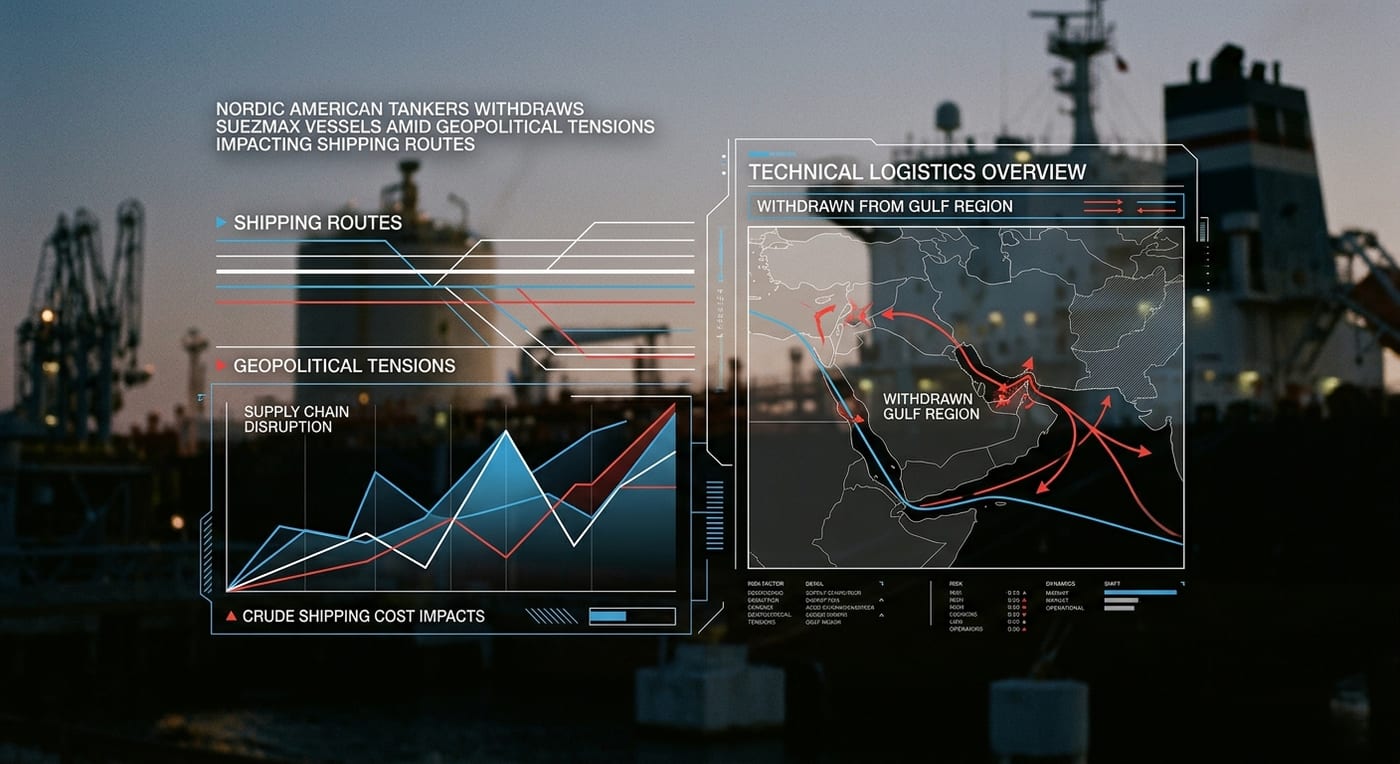
- Nordic American Tankers is withdrawing two Suezmax tankers from the Gulf region due to rising geopolitical tensions.
- The decision highlights the impact of conflict risk on crude shipping routes and market dynamics.
- Geopolitical events can change shipping costs and disrupt the supply chain in the shipping industry.
Nordic American Tankers (NAT) has recently made a strategic decision to withdraw two of its Suezmax tankers from the Gulf region, a move driven by rising geopolitical tensions. This withdrawal underscores the broader implications of conflict risks that loom over crude shipping routes, highlighting the delicate equilibrium of global supply chains. As international relations fluctuate and uncertainty grows, the shipping industry finds itself at the mercy of disruptions that can alter logistics and raise operational costs.
Navigating Geopolitical Turbulence
The decision by NAT to pull its tankers reflects a proactive approach to risk management in an increasingly volatile geopolitical landscape. The company recognizes that regional conflicts not only threaten safety but can also escalate transportation costs, significantly impacting profitability. By making this strategic choice, NAT demonstrates its commitment to safeguarding its operations while addressing the realities of the market.
As reflected in its latest financial reports, Nordic American Tankers continues to showcase robust performance metrics, indicating a positive outlook among investors despite the challenges posed by global instability. The shipping sector's complexities demand agility and keen awareness of emerging threats, and NAT's response to these challenges may be crucial in maintaining its competitive positioning in the global market.
Implications for the Shipping Industry
The broader implications of NAT's actions resonate not only within the company but throughout the shipping industry. With maritime operations under constant scrutiny due to geopolitical shifts, companies must remain adaptive and vigilant. The current environment calls for strategic foresight as firms navigate the unpredictable waters of international trade, ensuring resilience against disruptions that could derail supply routes.
Conclusion
In summary, Nordic American Tankers' recent decision to withdraw vessels from the Gulf region illustrates a strategic pivot in response to mounting geopolitical tensions. This development serves as a reminder of the fragile balance within the global shipping industry, emphasizing the need for robust strategies to mitigate risk and maintain operational continuity amidst uncertainty.
Related Cashu News

DHT Holdings Poised for Growth Amid Structural Challenges in Tanker Market
DHT Holdings (Ticker: DHT) is positioned effectively in the current tanker market, driven by ongoing structural challenges within the industry. Recent remarks from industry expert Mr. Harfjeld undersc…

Western Midstream Partners Secures $700 Million Financing for Growth and Sustainability Initiatives
Western Midstream Partners LP (Ticker: WES) advances its operational and environmental initiatives by securing substantial financing for crucial capital projects while simultaneously reshaping its ris…

PBF Energy's Growth Potential Boosted by Strong Refining Market and Full Capacity Operations
PBF Energy's robust cash generation potential is reinforcing its position in the refining sector as highlighted by recent insights from Morgan Stanley. The report underscores key factors that positive…

Plains All American Secures $2.7 Billion Credit Facility to Enhance Liquidity and Growth Potential
Plains All American Pipeline LP (Ticker: PAA) has entered into a new unsecured revolving credit agreement valued at $2.7 billion, a strategic financial maneuver that provides significant liquidity and…