
NVIDIA: Leading the AI Revolution
ED
Editorial
Cashu Markets·5 min read
TL;DR
- NVIDIA's commanding 85% market share enhances its growth potential.
- Strategic partnerships and innovative financing shape its market dominance.
- Expansion of manufacturing capabilities addresses surging AI demand.
NVIDIA Corporation ( NVDA) continues to solidify its status as a cornerstone of the rapidly evolving artificial intelligence (AI) landscape. With a commanding 85% market share in AI data centers, the company is uniquely positioned to leverage the surging demand for advanced computing technologies. As organizations across various sectors, including healthcare, finance, and automotive, rush to integrate AI into their operations, NVIDIA's innovative products, strategic partnerships, and operational agility play a crucial role in its market dominance. However, despite its impressive standing, NVIDIA faces inherent challenges and must navigate a complex web of production and geopolitical factors that could impact its growth trajectory.
The Unprecedented Surge in AI Demand
The revolution in AI technologies has created an insatiable demand for high-performance graphics processing units (GPUs), the backbone of NVIDIA's product portfolio. Recent trends indicate that industries are increasingly seeking out NVIDIA's GPU solutions as they aim to enhance operational efficacy and drive innovation. The need for AI capabilities has propelled NVIDIA into a leadership role, enabling it to capitalize on market opportunities and reinforce its revenue streams. As highlighted in previous analyses, NVIDIA's robust position in the AI ecosystem is a product of strategic initiatives and a commitment to innovation. As companies seek efficiency via AI, they are significantly increasing their investments in NVIDIA’s cutting-edge technology, predicting remarkable gains in revenue centered around these developments.
Strategic Partnerships Bolster Growth
NVIDIA's business acumen is evident in its relationships with various tech enterprises. The company's collaboration with neoclouds—specialized AI cloud providers—exemplifies its adaptive strategies to overcome financing challenges faced by AI startups, such as Fireworks AI. By backing loans for these neoclouds, NVIDIA allows them to expand their service offerings rapidly, thereby increasing the reach of its GPUs in emerging markets. This financing model not only provides neoclouds with the capital required to acquire NVIDIA's products but also enhances NVIDIA's customer base, diversifying its revenue streams. Such innovative maneuvers ensure that NVIDIA maintains its competitive edge against rival firms that are developing proprietary AI solutions.
In a recent initiative, GMI Cloud, one such neocloud, has committed $500 million to expand its AI infrastructure under NVIDIA's new financing model. This strategic development shifts NVIDIA’s role from a supplier to a long-term partner, fostering deeper connections in the AI marketplace. While this approach supports NVIDIA’s growth ambitions, it warrants caution as investors consider the implications of such financing practices on demand sustainability. Analysts have flagged this model as a potential risk yet recognize its strategic value if it drives genuine customer demand.
Production and Supply Chain Developments
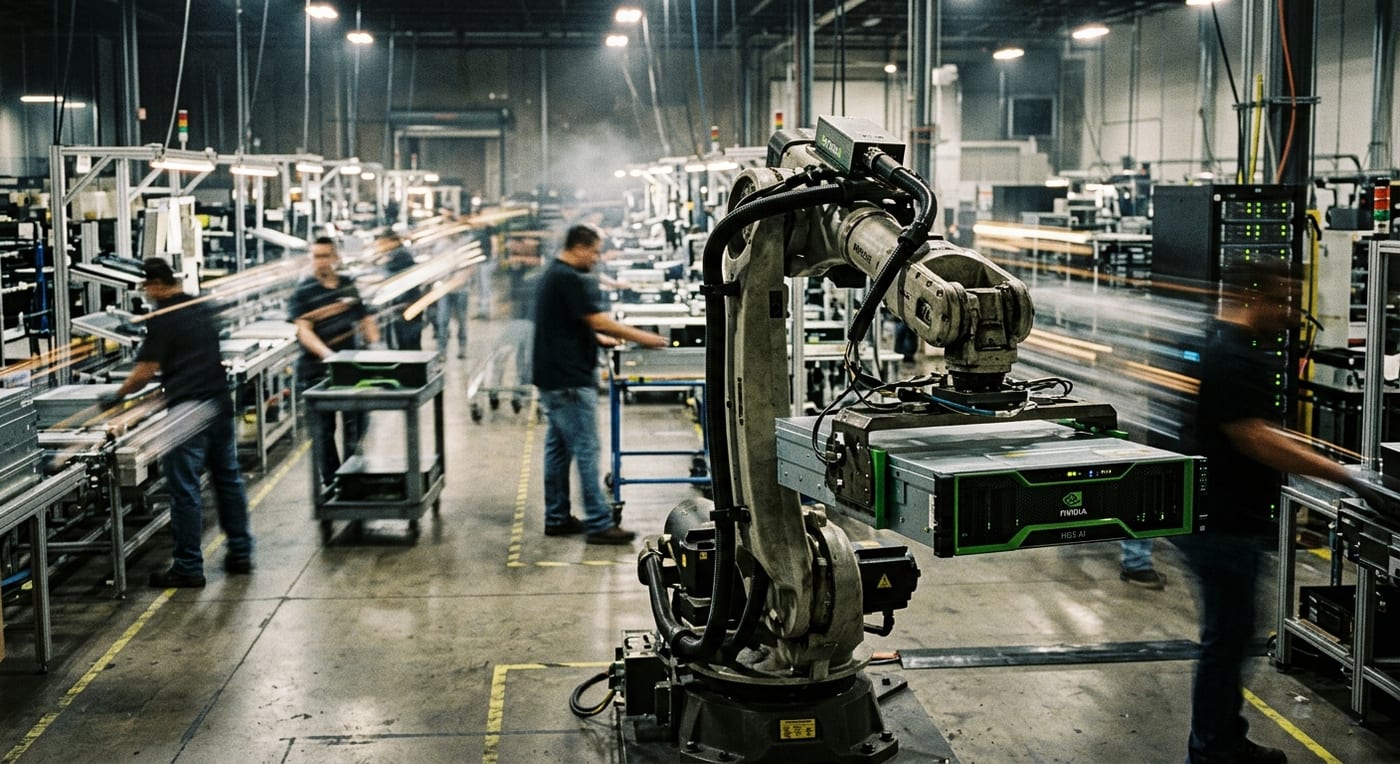
As AI demand surges, NVIDIA is also focused on expanding its manufacturing capabilities to meet this influx. Collaborations with technology providers such as Wistron are pivotal in increasing production capacity. Wistron has recently established a new facility in Texas to manufacture AI servers specifically for NVIDIA, highlighting the growing importance of domestic AI infrastructure in the U.S. market. With the opening of this $700 million facility, Wistron will initially focus on producing NVIDIA’s GB300 Grace Blackwell Ultra Superchip, which is essential for powering the next generation of AI workloads.
The expansion not only underscores the commitment of NVIDIA to ensuring a robust supply chain but also aligns with its broader strategy of diversifying manufacturing locations beyond Silicon Valley. As the demand for AI factories escalates, NVIDIA stands to benefit from localized production that can swiftly respond to market shifts and customer needs, reinforcing its market position as the leader in AI solutions.
Navigating Challenges and Competition
Despite its strong market presence, NVIDIA is not without challenges. Production delays and supply chain disruptions could thwart its growth expectations if not managed effectively. The chipmaker’s ongoing collaboration with partners aims to mitigate these risks. However, geopolitical uncertainties, particularly regarding trade policies and regulatory scrutiny related to AI technologies, further complicate NVIDIA's operational landscape. As competitors also vigorously pursue AI advancements, NVIDIA must maintain its innovative edge while scaling production effectively.
Investors are closely monitoring NVIDIA's ability to navigate these complexities without sacrificing its trajectory of growth. The insights extracted from AI demand trends and production capabilities suggest that organizational agility will be critical for sustaining its market share. NVIDIA's unique position as not only a manufacturer but also an investor in startups indicates its commitment towards fostering innovation in the AI space.
The Future Outlook for NVIDIA
As NVIDIA continues its ascent in the AI domain, the spotlight remains on its strategies that leverage both partnerships and innovation. Market analysts believe that the company’s ability to adapt to an ever-changing landscape will dictate its success. By strengthening its relationships with emerging neoclouds and enhancing its domestic production facilities, NVIDIA is poised to meet the growing demand for AI technologies.
Consideration of these factors reveals a multifaceted corporate strategy that encompasses risk management, production efficiency, and strategic collaboration. As NVIDIA looks towards the future, its actions today will dictate how it solidifies its standing not just as a tech supplier but as an indispensable player in the AI revolution that is reshaping industries globally. The integration of advanced AI capabilities into its operational framework positions NVIDIA not only for immediate success but for long-term sustainability in an exponentially growing field. The same pressure is reflected in recent reporting on the issue, which helps explain why the company's pricing decisions remain under scrutiny.