
NVIDIA's Challenges in the Chinese Market Amid Geopolitical Tensions and Regulatory Struggles
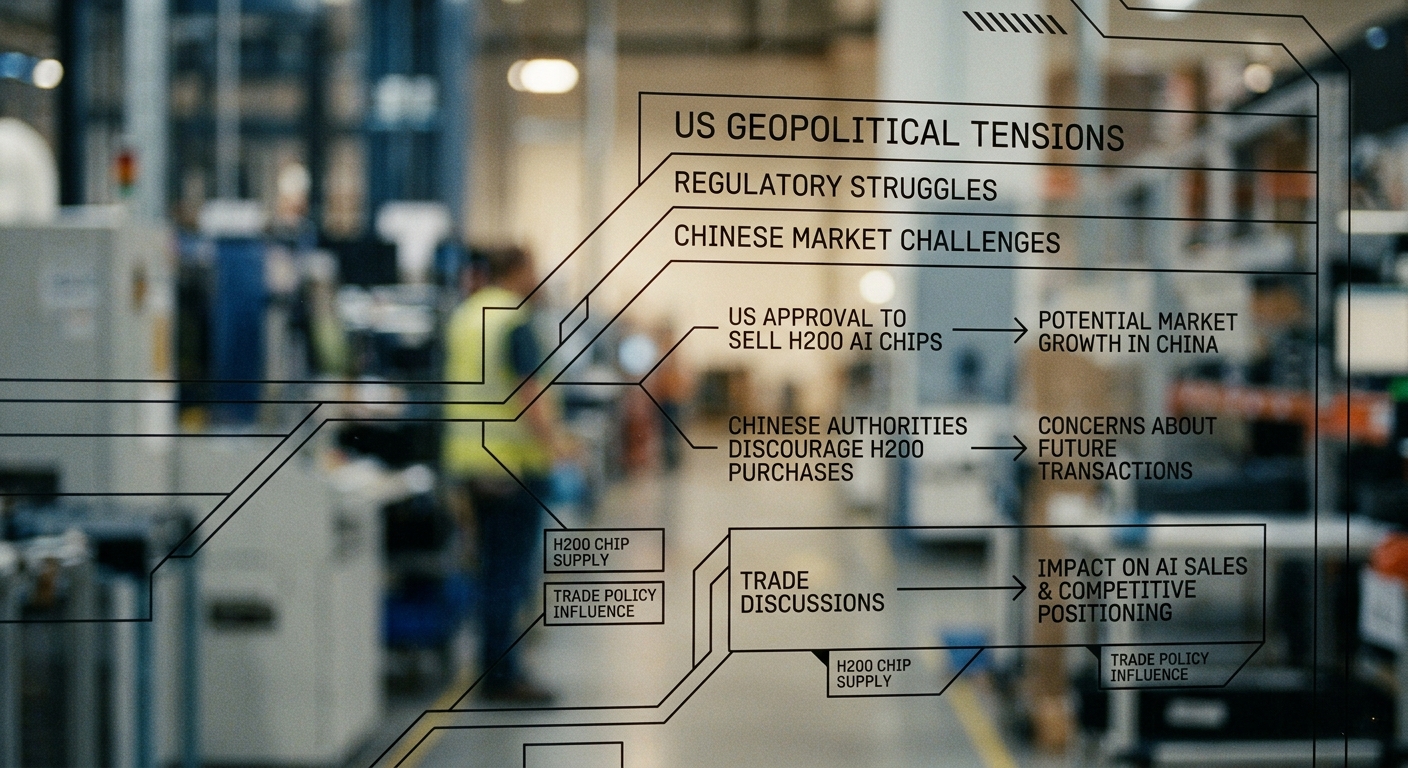
- NVIDIA received U.S. approval to sell H200 AI chips to major Chinese tech firms, indicating potential market growth.
- Chinese authorities have discouraged local firms from purchasing H200 chips, raising concerns about NVIDIA's future transactions in China.
- CEO Jensen Huang's trade discussions highlight NVIDIA's role in U.S.-China relations, impacting sales and competitive positioning in AI.
NVIDIA Corporation (NVDA) is making pivotal moves in navigating the complexities of the Chinese market. The U.S. Commerce Department's recent decision permitting NVIDIA to sell its H200 AI chips to several major Chinese technology companies signals potential growth for NVIDIA in a crucial market. However, this approval arrives amid a backdrop of rising geopolitical tensions and regulatory scrutiny. Notably, shortly after this approval, Chinese authorities discouraged local firms from proceeding with purchases of the H200 chips, raising concerns among investors about future transactions and NVIDIA's market access in China. CEO Jensen Huang's participation in high-level trade discussions has previously stirred expectations regarding improved sales prospects; however, tangible progress remains uncertain as actual orders have not yet materialized. As the company prepares to report its quarterly earnings, analysts and investors are closely monitoring the implications of these developments on NVIDIA's performance and its competitive position within the rapidly evolving AI landscape.
This decision allows NVIDIA to penetrate a market that holds considerable promise for expansion, especially considering China's ambitions in artificial intelligence and computing technology. Despite the U.S. regulatory green light, the hesitance of Chinese companies to move forward emphasizes the dual-edged nature of these developments. The broader implications include potential challenges back home as well, where the increasing intricacies of U.S.-China relations could impact NVIDIA’s strategic operations for years to come. Huang's presence in diplomatic engagements underscores the importance of technology companies in broader geopolitical dialogues, making NVIDIA's situation a key indicator of future trends in U.S.-China tech relations.
As NVIDIA prepares to discuss its financial results, stakeholders are particularly interested in how these geopolitical factors may influence its outlook. Anticipation is building around the prospects of sales growth driven by AI demand and significant partnerships. Yet, the uncertainties in China weigh heavily on the company's immediate future, as successful navigation of these market challenges is critical for sustaining NVIDIA's leadership in AI technologies. Overall, NVIDIA's ability to adapt and respond to these global dynamics could define the company's trajectory in the months and years to come.
Related Cashu News

Monolithic Power Systems Joins Russell Top 200 Index, Boosting Market Position Amid AI Demand
In late June 2026, Monolithic Power Systems, Inc. (MPWR) undergoes a pivotal transformation as it is added to the Russell Top 200 Index and Russell Top 200 Growth Benchmark. This significant index mig…

AMD's Strategic Positioning Fuels Growth in the Expanding AI Market
Advanced Micro Devices, Inc. (AMD) solidifies its position as a key player in the artificial intelligence (AI) sector as it benefits from a significant demand for advanced computing power. Recent repo…

Ambarella Dominates Edge AI Market with Record Revenue and Growing Sales in AI Technologies
Ambarella Inc (Ticker: AMBA) continues to establish its dominance in the rapidly evolving field of Edge AI technology, with recent results indicating a strong upward trajectory in its operational perf…

KLA Corporation Positioned for Growth Amid Semiconductor Market Demand and Innovation Strategies
KLA Corporation (Ticker: KLAC) is currently experiencing significant momentum within the semiconductor equipment sector. The company, known for its advanced process control and yield management soluti…