
Oracle's Bold AI Ambition
ED
Editorial
Cashu Markets·4 min read
TL;DR
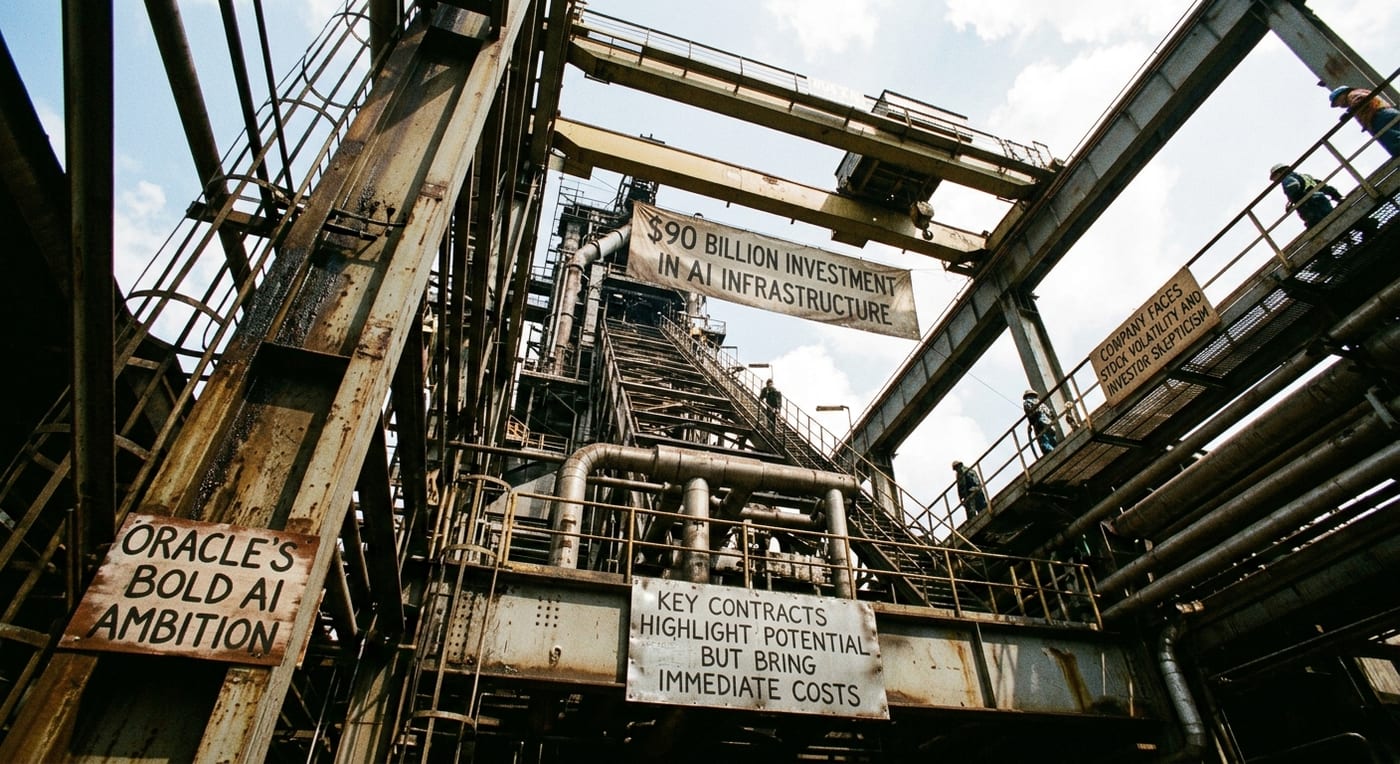
- Oracle invests $90 billion in AI infrastructure.
- Company faces stock volatility and investor skepticism.
- Key contracts highlight potential but bring immediate costs.
Oracle Corporation ( ORCL) is navigating a turbulent financial landscape as it boldly invests in artificial intelligence (AI) infrastructure. With a staggering commitment of around $90 billion aimed at revolutionizing its services, Oracle is betting on a future that hinges on the success of its AI initiatives and cloud expansion. However, this ambitious strategy has not come without its challenges. The company's stock, which soared to unprecedented heights, has also experienced alarming declines, underlining the market's mixed sentiments regarding Oracle's operational costs and growth potential. As the tech giant continues to evolve, understanding the intricacies of its investments in AI and the accompanying implications for its financial performance is paramount. This article delves into Oracle's strategic maneuvers, addressing investor apprehensions while shedding light on its growth trajectory.
The Cost of AI Expansion
Oracle's vast financial commitment to AI is indeed a double-edged sword. Intended to strengthen its market position, such an investment raises concerns about operational sustainability. Oracle's plan involves a significant capital expenditure, with approximately $70 billion earmarked for enhancing its infrastructure. Despite a strong backlog of $638 billion—up 359% from a year earlier—investors remain wary as they weigh the implications of Oracle's capital outlay against its current stock performance.
In a previous discussion on Oracle's AI efforts, concerns were raised about the overall financial impact of such extensive spending. While ambitious investments can drive growth, they also lead to cash flow pressures, as highlighted by Oracle's recent struggles with its financial metrics. After a peak valuation of $345.72, Oracle's stock has faced approximately a 65% decline, reflecting skepticism surrounding its ability to manage the costs associated with its expansive AI strategy.
Securing High-Profile Contracts
Notably, Oracle's focus on AI has led to lucrative contracts that, on paper, should bolster its revenue streams. The $7 billion agreement with the Pentagon for comprehensive software services illustrates the potential upside of Oracle's strategy. However, the paradox lies in the market's tepid reaction; investors seem more fixated on upcoming costs than anticipated revenue gains from such lucrative contracts.
Oracle's high-profile contract has been perceived as a dual-edged sword, where the promise of significant future earnings collides with the immediate financial strain of fulfilling these contracts. This underscores an ongoing trend within the industry where companies face scrutiny over large-scale commitments amid broader economic uncertainties.
Market Reaction: A Mixed Bag
The stock market has exhibited unpredictable reactions to Oracle's stock performance, reflecting deeper concerns about its operational strategy and sustainable growth. Following the announcement of high-spending initiatives for AI, Oracle's stock tumbled. Even as the company reported stimulating growth metrics—like a substantial uptick in remaining performance obligations—investors appear focused on potential pitfalls.
Context matters, especially when juxtaposed with Oracle's significant capital allocation aimed at AI. Despite showcasing an ambitious roadmap that anticipates revenue growth from $67.4 billion this fiscal year to approximately $90 billion by fiscal 2027, skepticism highlights the capital-intensive nature of these ventures. Market sentiments have shifted significantly, as the stock guidance for fiscal 2027 reflects a more cautious approach alongside anticipated earnings adjustments, prompting discussions about the long-term implications.
The Road Ahead: Weighing Prospects and Risks
Looking ahead, Oracle must navigate a challenging landscape where the stakes are highest. The ambitious $90 billion investment in AI may provide transformative potential, yet it carries considerable risk as the company balances operational costs against potential revenue growth.
This journey toward an AI-centric focus will demand careful management of resources, particularly given the ominous market response. Furthermore, following the revised timeline for their energy supply initiative designed to support AI operations, Oracle's ability to adhere to deadlines and maintain stable operational standards will be paramount. Investors will be keenly waiting to assess how these developments play out, shaping their outlook on Oracle's long-term business viability.
Conclusion
Oracle Corporation stands poised at a critical juncture, armed with ambitious plans to capture the AI marketplace while grappling with significant investor skepticism. The company's strategic investments are indeed a gamble—one that could yield high rewards or further challenges as operational costs mount. As stakeholders evaluate Oracle's future, analyzing its response to market demands and operational pressures will be crucial in determining its trajectory going forward. For more insights on Oracle's intricate AI strategy, you can explore further details here. The same pressure is reflected in recent reporting on the issue, which helps explain why the company's pricing decisions remain under scrutiny.