
Peabody Energy Faces Uphill Battle Ahead
ED
Editorial
Cashu Markets·4 min read
TL;DR
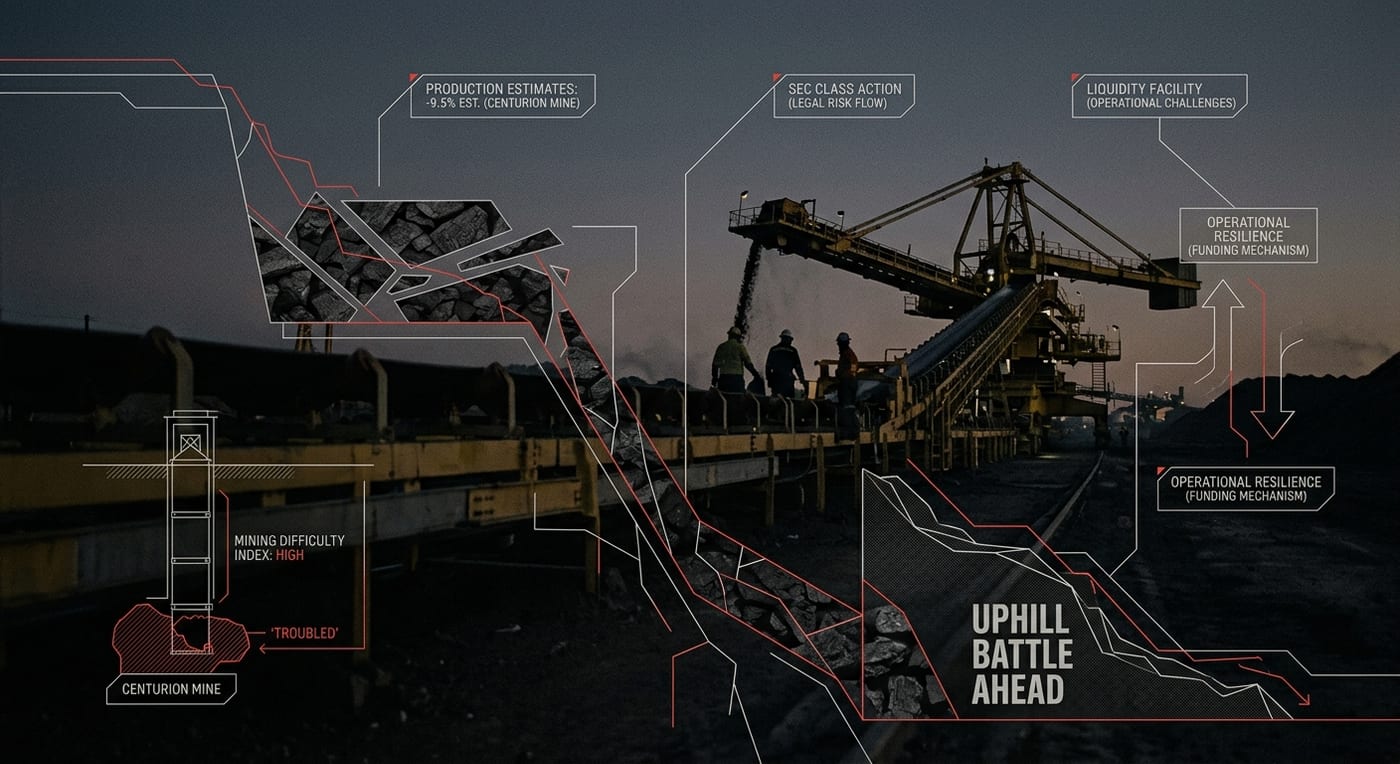
- Peabody Energy faces a significant drop in coal production estimates due to troubles at Centurion mine.
- A securities class action lawsuit has been filed alleging misleading statements and investor harm.
- The company has secured a financial facility to improve liquidity amid increasing operational challenges.
Peabody Energy Corporation (BTU) is currently maneuvering through a turbulent period marked by production challenges, investor dissatisfaction, and potential legal ramifications.
As the coal industry faces shifting dynamics, Peabody's operational setbacks are exacerbated by a series of miscalculations surrounding its Centurion mine in Queensland, Australia.
This article explores the implications of these setbacks on Peabody's financial outlook and broader market positioning, contextualizing its struggles within the ongoing sector challenges and investor sentiment.
Production Challenges at Centurion Mine
At the core of Peabody Energy's issues lies its Centurion mine, which was initially projected to produce about 700,000 tons of coal in the first quarter of 2026. However, management has recently slashed this production estimate to a mere 250,000 tons due to significant commissioning challenges that have hampered its operations. This dramatic downward revision—announced on March 30, 2026—resulted in a near 10% drop in Peabody's stock price, reflecting severe investor disappointment.
The miscommunication surrounding the operational status of the Centurion mine has extended beyond mere production issues. Investor confidence has been severely impacted as continuous reassurances of the mine's progress have been proven misleading. The expectation that the project was "on time and on budget" has not aligned with the reality of the mechanical and electrical faults that continue to persist, thus raising flags among stakeholders.
Legal and Financial Ramifications
The aftermath of these production shortfalls has sparked legal scrutiny, with a securities class action lawsuit already filed against Peabody for alleged misleading communications regarding its operational capabilities. This lawsuit primarily encompasses investors who purchased Peabody's stock between October 14, 2024, and May 4, 2026. The plaintiffs argue that Peabody's executives made materially false statements about the company’s business health, particularly relating to the Centurion mine’s challenges.
As outlined in the complaint, the assertions of profitable investment made by Peabody have led to significant losses once the operational realities became clear. Investors saw their share value plummet following the disclosure of production issues, evidencing a troubling trend where company forecasts did not align with actual capabilities. With the stock closing at $25 on May 5, down from $39.50, shareholders are now poised to seek accountability.
Financial Outlook and Liquidity Strategies
Amid these challenges, Peabody Energy has secured a A$700 million surety bond facility, aimed at bolstering liquidity and navigating the turbulent waters of increased operational costs and diminished production numbers. This financial maneuver is crucial as the company attempts to stabilize amid declining margins and investor pressure. That backdrop echoes earlier coverage of the issue, especially around how pricing, strategy, and demand feed into the current story.
These financial arrangements may provide a temporary cushion, yet how Peabody leverages this to address fundamental operational weaknesses remains to be seen. Analysts will be watching closely to see if Peabody can successfully implement its recovery strategy or if it will continue to grapple with the repercussions of its production missteps.
Industry Context and Future Direction
The coal industry, in which Peabody operates, is inherently volatile, grappling with regulatory pressures and shifting demand patterns influenced by broader economic transitions toward renewable energy sources. This context heightens the stakes for Peabody as it faces not only internal challenges but also external market shifts that threaten its long-term viability.
The struggles faced by Peabody Energy are emblematic of the industry's broader dilemmas. How the company reacts in the near term—particularly regarding investor relationships and operational transparency—will likely dictate its trajectory. Investors remain on alert, questioning management's ability to deliver on promises made in the past while managing the ramifications of production errors and legal challenges.
In conclusion, Peabody Energy Corporation stands at a pivotal juncture, with its stock performance highly dependent on the company's ability to navigate the complexities of operational recovery, legal accountability, and broader industry trends. The same pressure is reflected in recent reporting on the issue, which helps explain why the company's pricing decisions remain under scrutiny.