
Peabody Energy's Current Turmoil Explained
ED
Editorial
Cashu Markets·5 min read
TL;DR
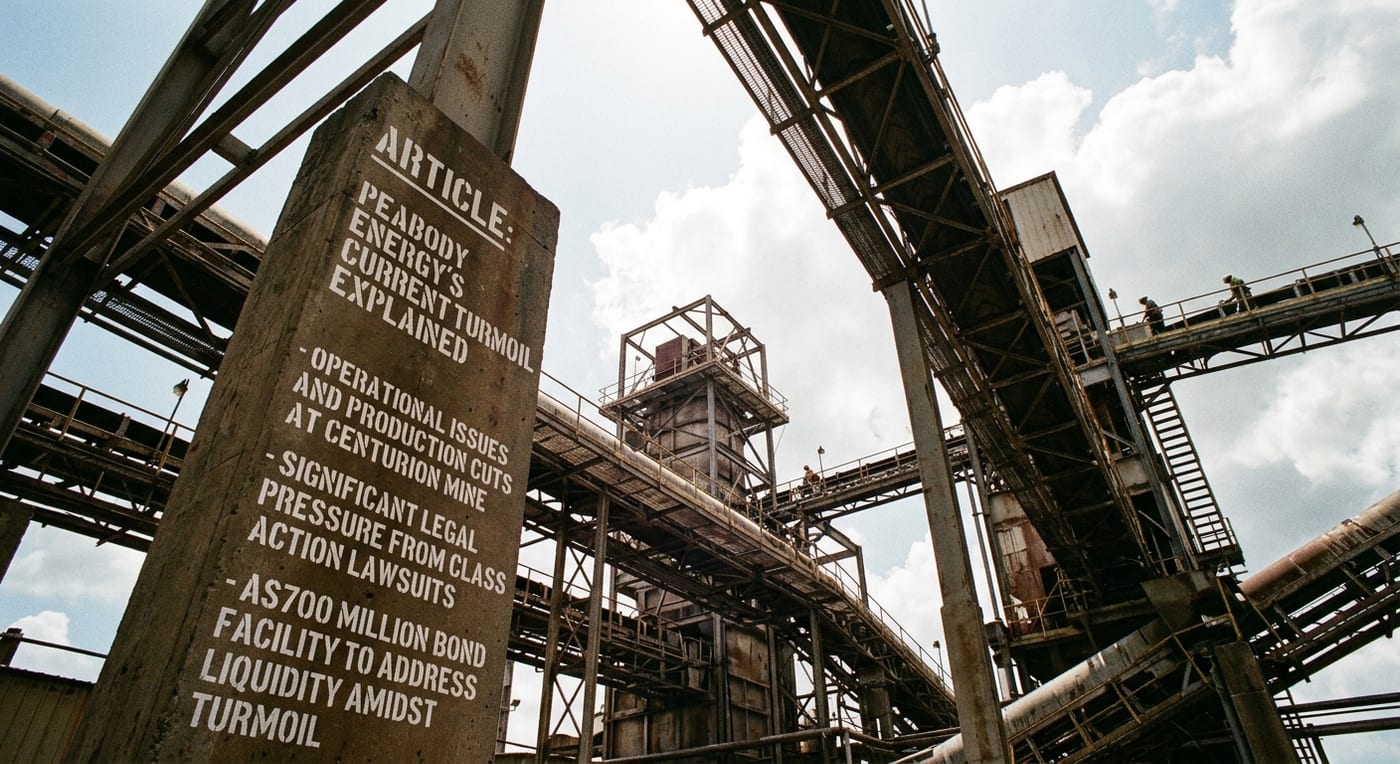
- Peabody Energy's operation at Centurion mine faces severe production cuts.
- The company is under significant legal pressure from class action lawsuits.
- A recent A$700 million bond facility aims to improve liquidity amidst turmoil.
Peabody Energy Corporation (BTU) is facing a challenging phase characterized by significant operational setbacks and legal issues that have raised serious concerns regarding the company’s future in the coal industry. The firm is currently navigating substantial hurdles primarily linked to its Centurion mine in Queensland, Australia, which was seen as a critical asset intended to bolster its production capabilities and market position. This article delves into the specifics of Peabody's operational difficulties, the surrounding legal landscape, and the implications for its financial outlook and investor relations.
Understanding the Centurion Mine Challenges
At the heart of Peabody Energy’s troubles is its Centurion mine, which was initially projected to deliver approximately 700,000 tons of coal during the first quarter of 2026. However, recent announcements have revealed a drastic revision: expected output has now been downgraded to around 250,000 tons due to unforeseen mechanical and electrical commissioning challenges. This significant reduction in output represents a nearly 64% cut and has resulted in an immediate negative response in the stock market. On March 30, 2026, following this alarming news, Peabody's stock experienced a steep decline—plummeting nearly 10% in a single day. Investors are understandably concerned, as this revision highlights operational inefficiencies that the company had previously not disclosed.
The adverse impact of these challenges cannot be overstated. Peabody Energy had positioned the Centurion mine as a cornerstone of its growth strategy, promising robust returns amid a competitive market. However, article highlights demonstrate that the operational struggles may jeopardize not only the mine's productivity but also the wider operational integrity of the corporation.
Legal Pressures Mount
The challenges at the Centurion mine have been compounded by an increasingly aggressive legal environment. Peabody Energy is embroiled in multiple class action lawsuits alleging securities fraud. The lawsuits claim that the company and its executives made materially false and misleading statements about the operational readiness of the Centurion site, concealing significant challenges that were adversely affecting its output potential.
One notable lawsuit alleges that throughout a defined class period—October 14, 2024, to May 4, 2026—Peabody's leadership continued to project confidence in the mine's rapid ramp-up to full production while withholding critical information regarding the technical delays. This legal pressure is significant as any adverse ruling could further destabilize the company’s finances and investor confidence. The lawsuits seem to reflect a broader sentiment of distrust among investors, particularly following the significant stock price drops correlated with announcements regarding the mine's productivity.
Financial Maneuvers and Liquidity Strategy
Amid these operational and legal challenges, Peabody Energy is also undertaking strategic financial maneuvers to bolster its liquidity and financial stability. The company successfully secured a A$700 million bond facility aimed at addressing immediate financial needs and maintaining operational flexibility. The nature of this arrangement indicates that Peabody is prioritizing its short-term financial health, which may be necessary to navigate both the current turmoil in operations and the legal battles that lie ahead.
However, the implications of such financial maneuvers need careful scrutiny; while accessing capital can provide temporary relief, it can also reflect deeper struggles within the company’s overall operational strategy. Recent articles have previously detailed how Peabody's ability to stabilize its finances through such maneuvers is essential for its longer-term viability. Continued cost management and financial oversight are critical as the company maneuvers through this tumultuous environment.
The Investor Outlook
Investor sentiment towards Peabody Energy is growing increasingly negative in light of the operational setbacks and legal disputes. Stock analysts have noted that while Peabody remains a competitor in the coal market, the current issues at hand pose significant concerns regarding its profitability and operational viability. The drop in stock value amid the announcements regarding Centurion has left many investors questioning the company’s future and leadership credibility.
For potential investors, understanding the complexities surrounding Peabody Energy's operational hurdles and legal entanglements is critical. The ongoing class action lawsuits, in addition to falling production estimates, serve as critical indicators of the company’s stability in a volatile market environment. Investors are advised to keep abreast of the unfolding situation, particularly as imminent legal challenges and operational adjustments may significantly impact stock performance and market positioning.
As Peabody navigates through these challenges, the next few months will be pivotal. With their ability to rebound from operational mishaps and legal scrutiny in question, the coming quarter will be crucial for the company and its investors. The operational overhaul required at the Centurion mine, coupled with the need for clear and transparent communication with stakeholders, may indeed define the trajectory of Peabody Energy Corporation in the near future.
In summary, Peabody Energy Corporation’s current struggles highlight the precarious balance of navigating operational challenges while maintaining investor confidence amidst legal disputes. With its future in the balance, the company must focus on transparency, operational efficiency, and financial viability to reassure stakeholders and stabilize its market position going forward. The same pressure is reflected in recent reporting on the issue, which helps explain why the company's pricing decisions remain under scrutiny.