
Peabody Energy's Current Turmoil Unveiled
ED
Editorial
Cashu Markets·5 min read
TL;DR
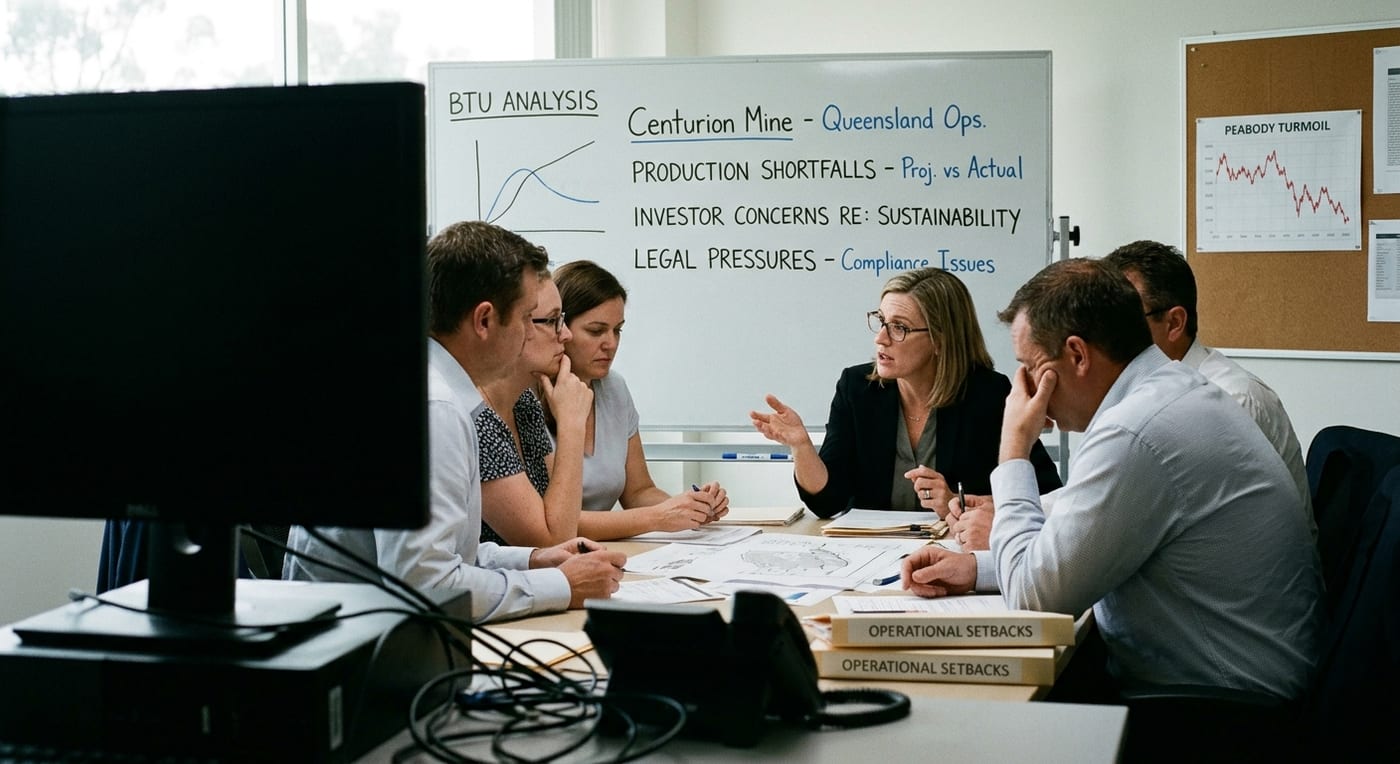
- Peabody Energy Corporation ( BTU ) is currently navigating a challenging phase characterized by significant operational setbacks and mounting legal pressures that threaten its long-term viability.
- Central to Peabody's difficulties is the Centurion mine in Queensland, Australia, which was initially projected to bolster production capacity.
- However, recent revelations about severe production cuts have raised serious concerns among investors and industry analysts alike.
Peabody Energy Corporation (BTU) is currently navigating a challenging phase characterized by significant operational setbacks and mounting legal pressures that threaten its long-term viability. Central to Peabody's difficulties is the Centurion mine in Queensland, Australia, which was initially projected to bolster production capacity. However, recent revelations about severe production cuts have raised serious concerns among investors and industry analysts alike. The scenario is compounded by a wave of class action lawsuits alleging misleading statements from the company’s executives, further complicating the landscape for investors and stakeholders.
## Operational Challenges at Centurion Mine
The Centurion mine, once viewed as a beacon of potential growth for Peabody Energy, has become a source of significant distress. Initially, this asset was anticipated to produce around 700,000 tons of coal in the first quarter of 2026. However, recent estimates have tumbled to just 250,000 tons, representing a staggering cut of nearly 64%. This downgrade stems from unforeseen mechanical and electrical commissioning challenges that have delayed the mine’s ramp-up to full production capacity. Peabody’s announcement on March 30, 2026, which confirmed this drastic revision in output expectations, spurred immediate repercussions—PTU’s stock plummeted nearly 10% in a single day.
This stark reduction not only sends shockwaves through Peabody's operational outlook but also has a far-reaching impact on investor confidence. The Centurion mine was positioned to provide a significant boost to the company's overall production capabilities, and its failure to do so poses a critical risk to Peabody’s competitive standing in the coal market. The depth of this operational impasse was further articulated in the article "Peabody Energy's Ongoing Troubles" which discusses the dwindling expectations from this pivotal asset and its implications for Peabody's production capacity.
## Legal Pressures Intensify
Compounding the operational challenges, Peabody Energy is currently battling significant legal issues that have exacerbated the company’s precarious situation. A range of class action lawsuits has emerged, targeting the company’s executives over allegations of issuing materially misleading statements regarding the Centurion mine’s prospects. The core of these lawsuits rests on claims that executives misrepresented the operational readiness of the mine, leading investors to acquire shares at artificially inflated prices.
The community of shareholders is particularly concerned due to statements made during the class period from October 14, 2024, to May 4, 2026. These statements suggested a robust output capacity for the Centurion mine, which has since been revealed to be exaggerated. According to the lawsuits, the stock price of Peabody fell significantly when the truth about the production forecasts was unveiled—demonstrating a direct connection between the misleading information provided and the subsequent financial losses experienced by investors. Further insights into the legal angles are available in the article "Peabody Energy's Current Turmoil Explained", where the ramifications of these lawsuits on investor trust and company credibility are laid out.
## Financial Maneuvering and Future Outlook
In an attempt to navigate through these turbulent waters, Peabody Energy has taken steps to stabilize its financial position. Recently, the company secured a A$700 million bond facility, which is expected to enhance its liquidity position amidst the ongoing turmoil. This strategic financial maneuver aims to provide the company with the necessary resources to address immediate operational setbacks and fulfill ongoing commitments.
However, while securing additional liquidity may provide a temporary buffer, it does not resolve the underlying issues stemming from the Centurion mine. The considerable reduction in output will inevitably lead to a downward revision of overall revenue projections for the upcoming fiscal periods. Investors have been closely monitoring how management plans to restore confidence in the company's long-term operational capabilities, especially in light of the significant challenges faced by the Centurion mine. These adjustments raise critical questions regarding Peabody's strategic direction and overall viability in the highly competitive coal sector.
The current volatility of PTU's share price is a testament to the uncertainty that envelops the company. Following the announcements regarding production cuts and legal challenges, investor sentiment has deteriorated, resulting in considerable stock price fluctuations. As outlined in another article, the class action lawsuits represent a direct challenge to Peabody's accountability and reputation within the financial markets, which will be crucial for any future recovery efforts and investor relations. An analysis of the shareholder implications can be found in the article "BTU DEADLINE NOTICE", which urges affected investors to consider their legal rights in light of the ongoing litigation.
## Conclusion
Peabody Energy Corporation stands at a crossroads. The confluence of operational challenges at the Centurion mine and significant legal pressures presents a formidable barrier to recovery. As the company strives to stabilize its finances through targeted financial maneuvers, the future remains uncertain. For stakeholders, understanding the evolving landscape surrounding Peabody Energy is essential as they navigate this complex situation. The coming months will be critical for the company as it works to regain trust and operational efficiency in a sector that's becoming increasingly competitive and scrutinized.