
Peabody Energy's Ongoing Challenges and Legal Issues
ED
Editorial
Cashu Markets·4 min read
TL;DR
- Peabody facing severe operational challenges with the Centurion mine.
- Class action lawsuits filed due to alleged misleading statements.
- A$700 million bond facility secured to enhance liquidity.
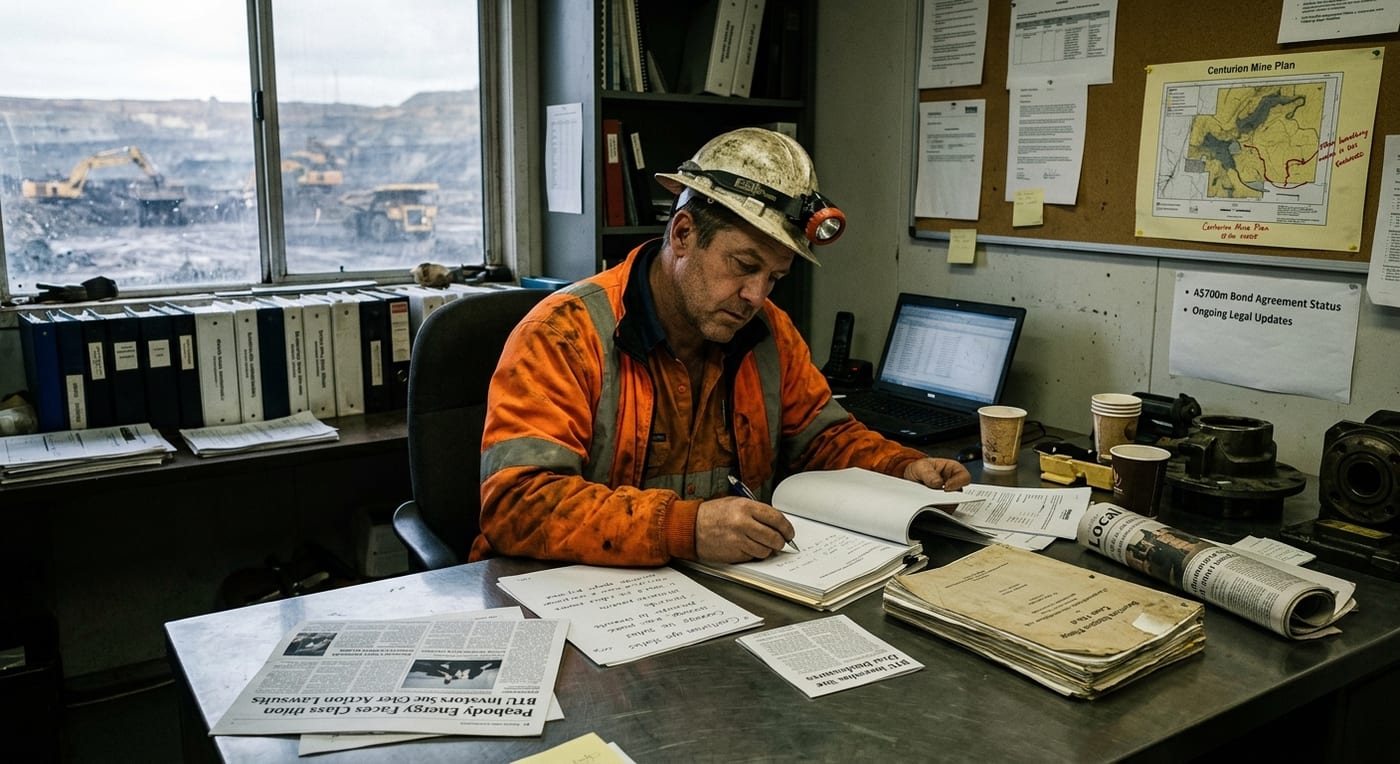
Peabody Energy Corporation (BTU) is navigating a turbulent phase marked by significant operational and legal challenges, particularly surrounding its Centurion mine in Queensland, Australia. These problems are not only impacting its production capabilities but also shaking investor confidence and leading to class action lawsuits.
Overview of Centurion Mine's Production Setbacks
The crux of Peabody’s current struggles lies in its Centurion mine, where production estimates have plummeted dramatically. Initially, the mine was expected to produce about 700,000 tons of coal in the first quarter of 2026; however, due to unforeseen commissioning challenges, this estimate has been revised down to just 250,000 tons. This substantial cut was announced by Peabody on March 30, 2026, and it triggered a sharp decline in the company's stock price, reflecting growing investor dissatisfaction and concerns about the firm’s operational competence.
These commissioning issues are primarily mechanical and electrical in nature, severely hindering the necessary ramp-up to full operation. Such operational miscalculations raise alarms not only about the immediate output of the Centurion mine but also about Peabody's overall financial health and market perception. As highlighted in previous analyses, such drastic adjustments in production forecasts invariably affect the company’s revenue flow, creating a ripple effect on investor trust.
Legal Ramifications and Class Action Lawsuits
Compounding Peabody's operational difficulties, the company faces multiple class action lawsuits for allegedly misleading statements made to investors regarding production capacities and operational timelines. According to the lawsuits, Peabody's executives offered overly optimistic assessments about the Centurion mine while failing to disclose the severe operational challenges being faced. This alleged lack of transparency has culminated in a significant erosion of investor confidence.
On March 30, 2026, after the production estimate was slashed, Peabody's stock tumbled about 10%, evidencing the market's immediate reaction to the newly disclosed challenges. The downward trajectory did not stop there; on May 5, 2026, another announcement of failure to meet ramp-up expectations further exacerbated the situation, resulting in another decline of approximately 5.7%. The lawsuits argue that these disclosures reveal a pattern of misleading communication that violated the trust of shareholders.
Investors who purchased Peabody’s stock during the designated class period—October 14, 2024, to May 4, 2026—have been encouraged to join the lawsuit, which aims to seek compensation for the financial losses incurred due to these alleged deceptions. As indicated by legal representatives, those affected have until August 24, 2026, to participate, underscoring the urgency surrounding this situation.
Financial Flexibility and Future Outlook
To navigate these tumultuous waters, Peabody has secured a A$700 million surety bond facility, which is intended to bolster its liquidity during this challenging period. This financial lifeline provides some reassurance to investors regarding the company’s ability to withstand immediate cash flow issues; however, long-term recovery hinges on resolving the production setbacks at Centurion. The firm’s strategy moving forward will likely focus on addressing the mechanical and operational inefficiencies plaguing the mine, aiming to stabilize production outputs and restore investor confidence.
Moreover, as the coal industry at large faces scrutiny and evolving market dynamics, Peabody's challenges with the Centurion mine become increasingly critical. As market demand for metallurgical coal—a key component in steel production—continues to fluctuate, the company's ability to adapt and deliver on production promises will be essential for maintaining its competitive edge.
In this landscape of uncertainty, Peabody must not only rectify its operational flaws but also improve its transparency with investors to rebuild trust. The historical context of legal complaints and financial injuries emphasizes the importance of clear communication and reliability in leadership decisions. As the company navigates these hurdles, stakeholders and investors alike will watch closely for signs of recovery and strategic pivots that may indicate future performance.
Conclusion
In summary, Peabody Energy Corporation finds itself at a crossroads, with significant operational setbacks threatening its production capabilities and legal challenges jeopardizing investor relations. The future outlook hinges on effective management of these issues, the restoration of production confidence at the Centurion mine, and a commitment to transparency going forward. As such, investors should remain vigilant and informed as Peabody works through these turbulent challenges in the coal market. The same pressure is reflected in recent reporting on the issue, which helps explain why the company's pricing decisions remain under scrutiny.