
Peabody Energy's Ongoing Legal and Operational Struggles
ED
Editorial
Cashu Markets·4 min read
TL;DR
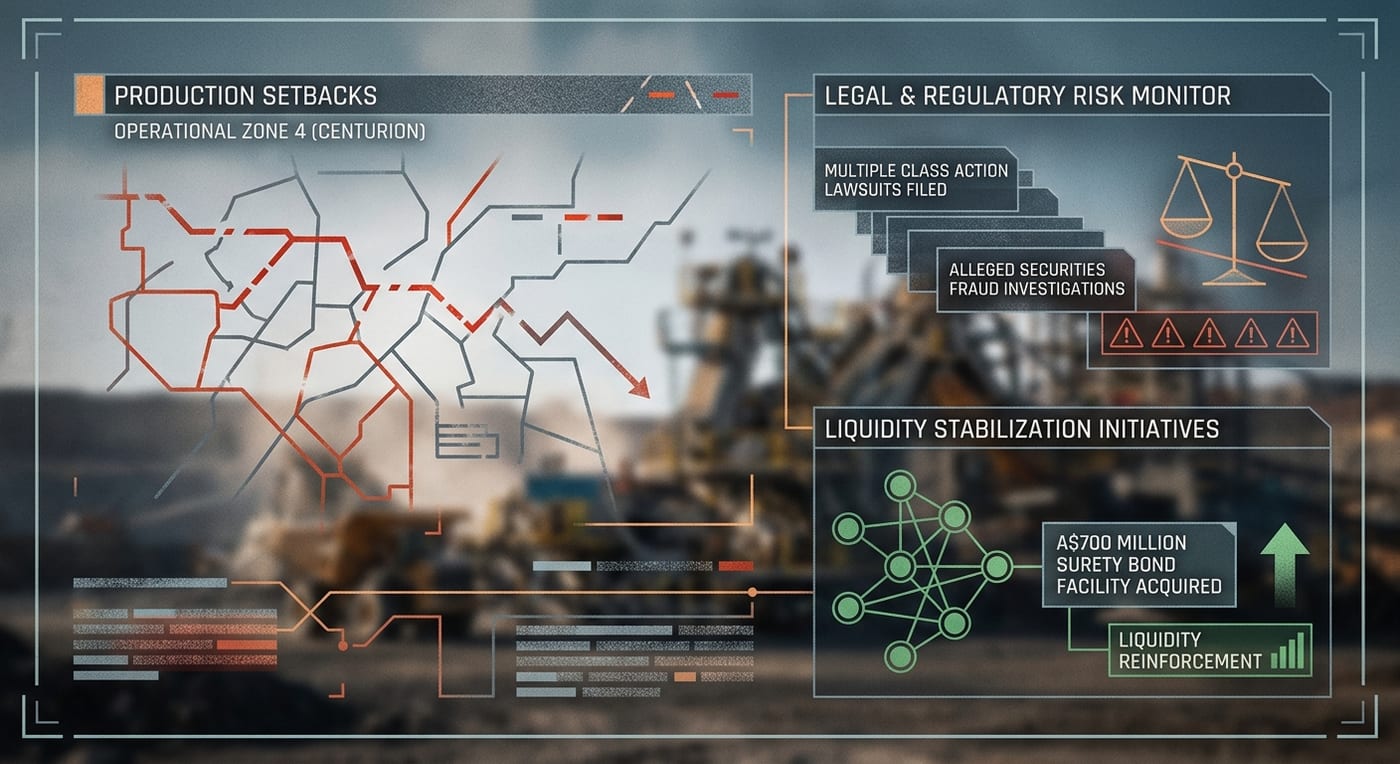
- Significant production setbacks at Centurion mine hamper Peabody's operations.
- Multiple class action lawsuits filed for alleged securities fraud impacting investor confidence.
- A$700 million surety bond facility acquired to bolster liquidity during operational challenges.
Peabody Energy Corporation (BTU) is navigating a tumultuous segment of its operational history, dominantly influenced by significant setbacks at its Centurion mine located in Queensland, Australia. The challenges emerging from the Centurion mine have critical implications not only for the company's operations but also for its financial health and investor relations.
Overview of the Centurion Mine’s Challenges
The Centurion mine was expected to produce approximately 700,000 tons of coal in the first quarter of 2026, a projection that has since been downgraded to just 250,000 tons due to unforeseen commissioning challenges. This drastic cut to production estimates was officially communicated by Peabody on March 30, 2026, leading to an immediate negative reaction in the stock market, with Peabody’s share price experiencing a sharp decline.
The operational difficulties at Centurion stem from a mixture of mechanical and electrical problems, which have hindered the necessary ramp-up of operations. As a result of this situation, the company's larger financial outlook has come into question, raising concerns for shareholders and potential investors about the sustainability of Peabody's earnings moving forward. Notably, on May 5, 2026, the mine's output expectations were further reduced, deepening the gloom surrounding Peabody's operational efficacy and plans.
Legal Implications Amidst Operational Challenges
In addition to its operational struggles, Peabody Energy is currently facing legal pressures from multiple class action lawsuits alleging securities fraud. The lawsuits claim that Peabody knowingly provided misleading information about the operational capacity and timeline of the Centurion mine, creating an artificially inflated stock price that has since corrected itself with the announcement of production cuts.
The legal issues first came to light as these operational setbacks were communicated, with several law firms mobilizing to file suits on behalf of investors. Specifically, the allegations state that Peabody falsely assured investors that the Centurion project was “on time and on budget,” a narrative that proved to be misleading as more internal difficulties came to light. These developments have generated substantial investor dissatisfaction and have led to an erosion of trust in the company's management.
Investor Reactions and Financial Outlook
Following the revelation of the production downgrade, Peabody’s share price tumbled nearly 10% in one trading session, reflecting the immediate market reaction to the negative news. This substantial decline highlighted the fragility of investor confidence in Peabody, particularly as more details about operational mismanagement emerged. Analysts have pointed out that the financial strain from legal settlements, if found liable, may further complicate the company's ability to recover operationally and financially.
Moreover, Peabody has reacted to these challenges by securing a A$700 million surety bond facility, aimed at enhancing liquidity amidst these trying times. This measure reflects an attempt by the company to stabilize its balance sheet in the face of declining production and increasing legal costs.
Connecting Operational Issues to Broader Market Trends
The Centurion mine's circumstances also resonate with broader trends in the coal industry, where regulatory changes and shifting demand dynamics are emerging as significant factors. The global transition towards renewable energy sources has resulted in a diminishing market for coal, leading firms like Peabody to face greater scrutiny over their operational viability and sustainability in the future.
Peabody’s management has indicated that despite the current problems at Centurion, the company remains committed to adjusting its operations in line with market requirements. However, the latest adjustments have resulted in reduced expectations for production throughout the year, with projections now set at 2.5 million tons, down from earlier estimates of 3.5 million tons for the year—further complicating investor sentiment.
Conclusion: The Path Ahead for Peabody Energy
In conclusion, Peabody Energy Corporation finds itself at a crucial junction. The compounding difficulties stemming from the Centurion mine's operational challenges and the associated legal battles present significant obstacles to recovery. Investors are left weighing the potential of Peabody’s long-term viability against the immediate challenges the company faces. With market confidence shaken and the shadow of a potential legal fallout looming large, Peabody's management will have to work diligently to restore credibility while navigating this particularly rocky road. The same pressure is reflected in recent reporting on the issue, which helps explain why the company's pricing decisions remain under scrutiny.