
Peabody Energy's Ongoing Struggles
ED
Editorial
Cashu Markets·4 min read
TL;DR
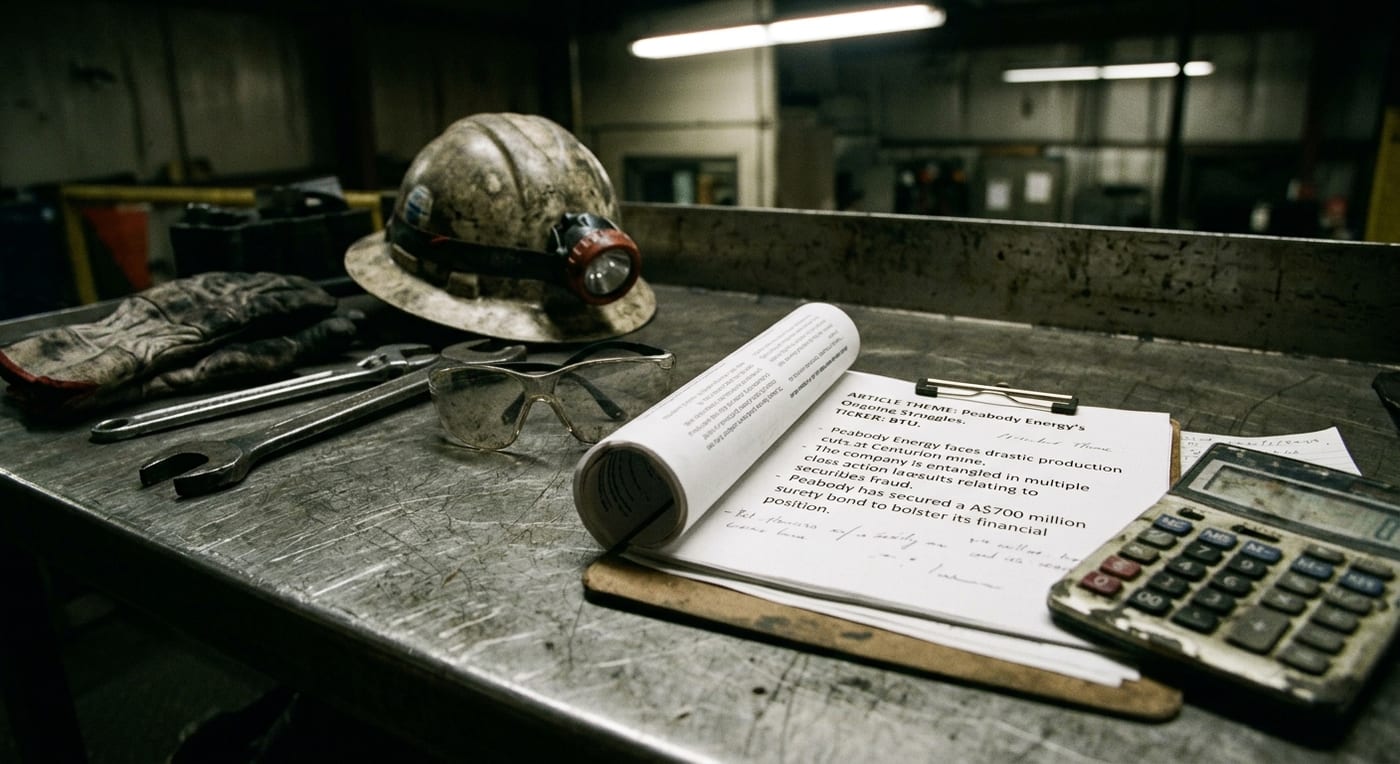
- Peabody Energy faces drastic production cuts at Centurion mine.
- The company is entangled in multiple class action lawsuits relating to securities fraud.
- Peabody has secured a A$700 million surety bond to bolster its financial position.
Peabody Energy Corporation (BTU) currently finds itself grappling with significant operational and legal challenges that threaten its market position and investor confidence. Central to the company's plight is its Centurion mine in Queensland, Australia, where production forecasts have been dramatically slashed due to unforeseen commissioning issues. In this article, we explore the critical aspects of Peabody's current situation, the repercussions on its financial outlook, and the broader implications for its stakeholders.
Overview of the Centurion Mine's Challenges
The Centurion mine was initially projected to produce about 700,000 tons of coal in the first quarter of 2026. However, after an announcement made on March 30, 2026, this estimate was downgraded to a mere 250,000 tons due to "greater-than-anticipated mine commissioning challenges." This significant cut resulted in an immediate negative reaction in the stock market, with Peabody's share price experiencing a sharp decline of approximately 9.7% on the day the news broke. Investor dissatisfaction is evident in the continued decline of Peabody's stock price, reflecting growing concerns about the firm's operational capabilities.
The issues at Centurion are primarily mechanical and electrical in nature, severely hindering the necessary ramp-up of operations. Such operational miscalculations reflect broader systemic issues within Peabody's management framework and operational planning. As outlined in previous reports, including the article on Peabody Energy's turmoil with production and legal battles, these challenges have called into question the company's strategic plans to assert itself as a leader in the coal sector.
Legal Pressures Amplifying Operational Struggles
The challenges at Peabody Energy are not just confined to production setbacks; they are compounded by serious legal pressures. The company is currently facing multiple class action lawsuits for allegedly misleading investors about the conditions at the Centurion mine. Investors who purchased shares between October 14, 2024, and May 4, 2026, have launched legal actions for securities fraud, asserting that Peabody's management provided overly optimistic production forecasts while withholding critical information about operational difficulties.
The action against Peabody also highlights the alleged discrepancies between reported performance and actual production capabilities of the Centurion mine. For many investors, these lawsuits reflect an erosion of trust in Peabody's leadership and its ability to navigate through tough times.
Financial Outlook and Investor Relations
Peabody's operational struggles have raised critical questions about its financial health. After the downgrading of Centurion's production forecast and subsequent revelations of ongoing issues, analysts predict a turbulent financial landscape for the company. The forecasted annual tonnage of coal from Centurion has been slashed further, from an optimistic initial guidance of 3.5 million tons to merely 2.5 million tons for the year. Such adjustments are indicative of not only a diminished production capacity but also a concerning trend regarding cost escalations linked to commissioning delays.
Peabody secured a A$700 million surety bond facility in an effort to enhance financial liquidity amid these challenges. However, the commitment to tackle these operational and legal hurdles could result in further resource diversions, potentially affecting the company's long-term strategic initiatives as they allocate significant manpower and capital to address the immediate crises.
Implications for Stakeholders
The ongoing turmoil at Peabody Energy has wide-ranging implications for its stakeholders, including investors, employees, and customers. For investors, the persistent decline in share price and the prospective fallout from ongoing lawsuits adds to the uncertainty surrounding the company's viability. Employees are also affected by the organization’s struggles which could lead to potential layoffs or restructuring as management attempts to streamline operations.
Furthermore, customers who rely on Peabody's coal for energy supply must consider how these setbacks might impact their contracts and supply agreements. The expectation of reliable coal supply could wane as Peabody works to navigate through these operational and legal mazes. The connection between operational capabilities and customer satisfaction in commodity sectors like coal cannot be overlooked.
Conclusion
As Peabody Energy Corporation (BTU) navigates this tumultuous chapter marked by operational challenges at the Centurion mine and looming legal battles, stakeholders remain on high alert. The severity of these challenges illustrates a broader narrative about corporate integrity, operational competence, and the unpredictable nature of commodity-based industries. While Peabody is working diligently to streamline its processes and regain investor trust, the road ahead appears to be fraught with difficulties that will require strategic foresight and robust management to navigate successfully. The same pressure is reflected in recent reporting on the issue, which helps explain why the company's pricing decisions remain under scrutiny.