
Peabody Energy's Operational Woes
ED
Editorial
Cashu Markets·5 min read
TL;DR
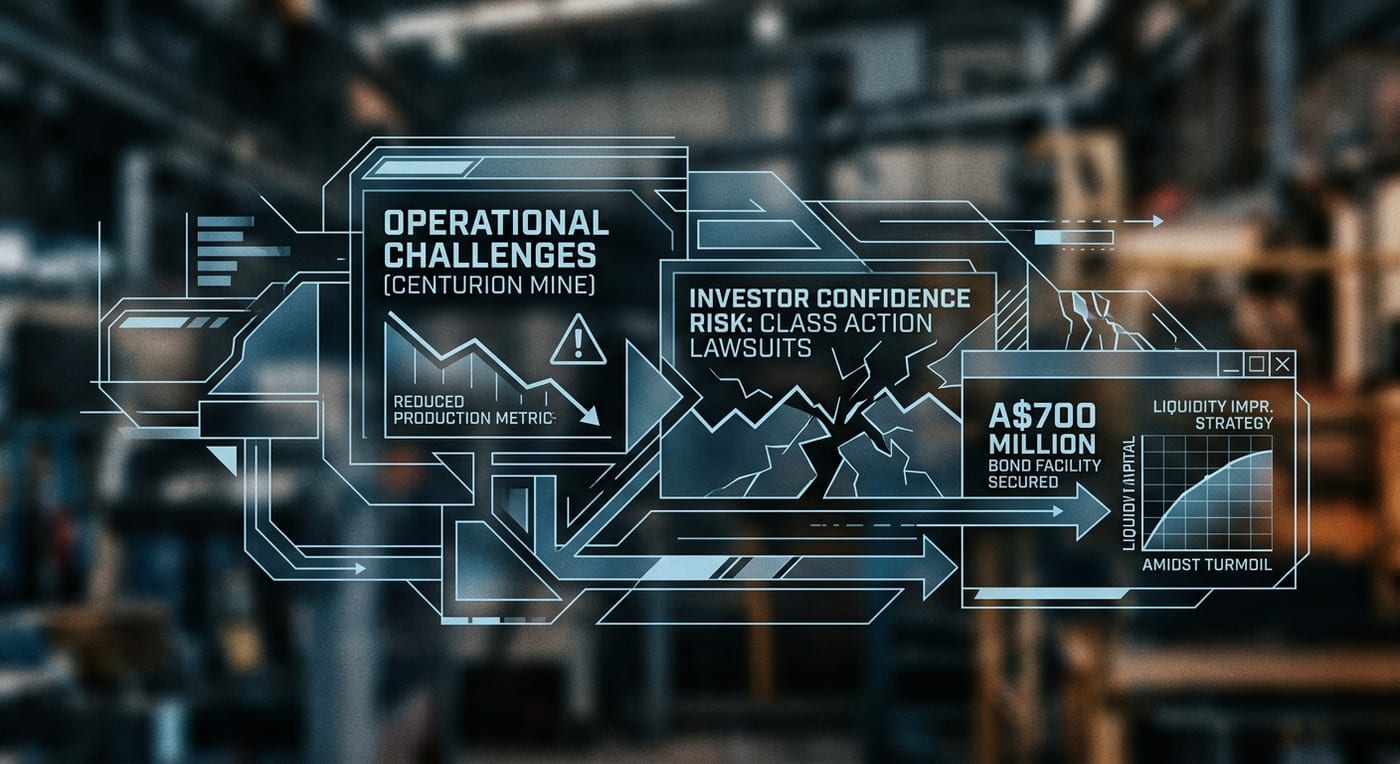
- Peabody Energy faces significant operational challenges at the Centurion mine.
- Class action lawsuits threaten investor confidence amid production cuts.
- A$700 million bond facility secured to improve liquidity amidst turmoil.
Peabody Energy Corporation (BTU) finds itself in a precarious position as it grapples with significant operational challenges, particularly concerning its Centurion mine in Queensland, Australia. Once seen as a potential cornerstone for expansion, this asset has turned into a source of turmoil for the company and its investors. This article explores the latest developments surrounding Peabody, its financial implications, and what the future may hold for this long-standing player in the coal industry.
The Centurion Mine's Troubling Outlook
The Centurion mine was initially projected to deliver approximately 700,000 tons of coal by the first quarter of 2026. However, recent revisions indicate that expected output may plummet to around 250,000 tons due to various mechanical and electrical commissioning challenges. This reduction of nearly 64% has understandably alarmed investors and analysts alike. Peabody Energy had targeted the Centurion project as a significant growth engine, yet it now poses critical risks to the company’s anticipated production metrics.
Peabody's operational difficulties at the Centurion mine extend beyond just lower output estimates; they have also led to increased scrutiny from investors. Recent class action lawsuits allege that the company misled shareholders concerning the viability and performance metrics of the mine. The lawsuits claim executives presented overly optimistic forecasts while failing to disclose the myriad challenges that were beginning to affect operations. The penalties of this alleged misinformation have had immediate repercussions, leading to stock price declines that reflect diminishing investor confidence in the management's ability to steer the company through its current difficulties. Such legal developments could impede Peabody's recovery and reshape its operational strategies moving forward.
In a detailed examination of Peabody's production analysis, recent reports have illustrated the stark consequences of the announcement regarding the Centurion mine. Following the release of news related to the production cuts, Peabody’s stock experienced a 9.7% drop, indicative of market sentiment turning sour due to anticipated revenue losses. This situation places increased pressure on Peabody to address operational setbacks and restore both production levels and investor trust.
Legal Challenges Compound Financial Troubles
Adding another layer of complexity to Peabody's woes are the mounting legal challenges stemming from the operation at the Centurion mine. There is a significant wave of class action lawsuits against the company, with plaintiffs alleging that Peabody consistently provided misleading information regarding its operational capabilities and future growth. Investors who purchased shares from October 14, 2024, to May 4, 2026, during this time frame are encouraged to seek legal recourse.
The lawsuits assert that statements made by Peabody's management did not align with the realities of the company's performance metrics. Citing the drastic downgrades in production outlook and the company's failure to achieve previously set goals, stakeholders are pressing for accountability. On March 30, 2026, Peabody announced it would expect to produce merely 250,000 tons from Centurion instead of the earlier anticipated 700,000 tons. This, coupled with a later cut in the full-year sales outlook from 3.5 million tons to 2.5 million tons, further exacerbates concerns among investors.
These developments carry considerable weight, not just for Peabody's short-term financial stability but also creatively impact its long-term business strategy. The company needs to navigate these turbulent waters judiciously to regain the confidence of its investors and restore robust operational performance that has characterized the firm historically.
Financial Maneuvers for Stability
In light of these ongoing challenges, Peabody is engaging in significant financial maneuvers to stabilize its liquidity and manage its operational setbacks. Recently, the company secured an A$700 million bond facility to enhance its financial positioning amid the turmoil surrounding the Centurion mine. This strategic move is aimed at providing a buffer against expected revenue shortfalls due to the production issues plaguing the mine.
Liquidity management has become a vital focal point for Peabody Energy, a necessity exacerbated by the substantial declines in production and revenue projections. This bond facility could offer a lifeline for Peabody, enabling it to function operationally while it works through the myriad challenges posed by Centurion. Moreover, this financial maneuver is crucial for maintaining investor relations during a tumultuous period.
However, even with the bond facility, the company faces an uphill battle to rebuild its reputation among investors and the public. Regulatory scrutiny in the wake of class actions could further entrench operational challenges, leading Peabody to re-evaluate its corporate governance strategies and investor communications.
Outlook for Investors
Moving forward, the prospects for Peabody Energy hinge on a combination of effective crisis management and operational accountability. The challenges presented by the Centurion mine could become a defining moment for the company, determining its trajectory within the competitive coal market and influencing investor sentiment for years to come.
The road ahead will require a heightened focus on transparency and realistic guidance from Peabody's executives, along with a commitment to addressing operational challenges directly. If the company can stabilize its output, manage its legal issues, and restore confidence among investors, it may navigate through the current turbulence and emerge as a reformed entity capable of adapting to a challenging energy landscape. In the meantime, stakeholders continue to monitor the ongoing developments closely, weighing their options against an uncertain backdrop. The same pressure is reflected in recent reporting on the issue, which helps explain why the company's pricing decisions remain under scrutiny.