
Regenxbio Advances NAVSUNLI Gene Therapy for Hunter Syndrome with FDA Support and Upcoming BLA Resubmission
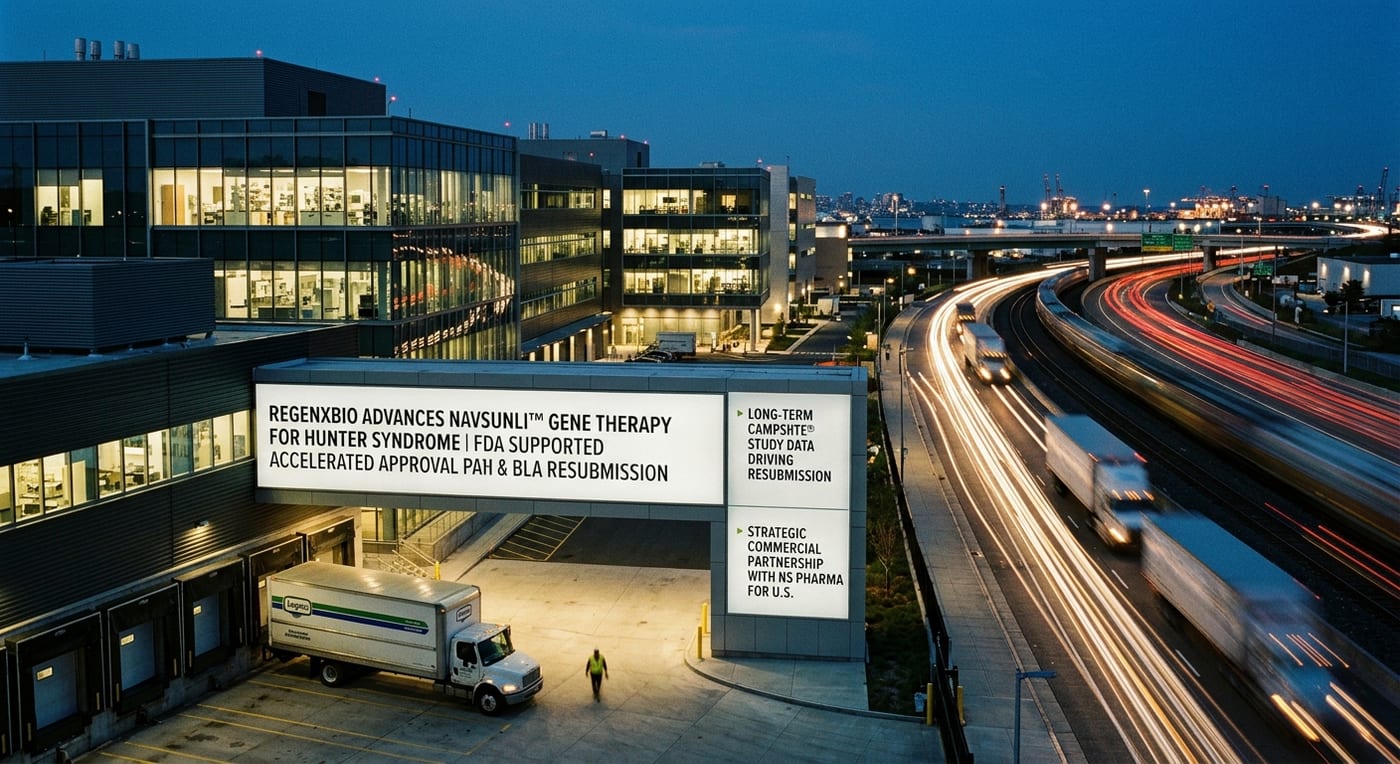
- Regenxbio aligns with FDA for accelerated approval of NAVSUNLI™ (RGX-121) for treating Hunter syndrome.
- Existing long-term data from CAMPSIITE® study allows BLA resubmission without additional patient studies.
- After potential approval, Regenxbio partners with NS Pharma for NAVSUNLI commercialization in the U.S.
Regenxbio (RGNX) is making significant strides in the field of gene therapy with its recent alignment with the U.S. Food and Drug Administration (FDA) concerning the potential accelerated approval of NAVSUNLI™ (clemidsogene lanparvovec-sngl, RGX-121). This innovative therapy is specifically designed to treat Mucopolysaccharidosis II (MPS II), commonly referred to as Hunter syndrome. Following a positive dialogue with the FDA regarding the agency's February 2026 Complete Response Letter, Regenxbio receives confirmation that existing long-term data from the CAMPSIITE® study is sufficient for the review process without requiring additional patient enrollment or studies. This advancement allows the company to prepare for the resubmission of its Biologics License Application (BLA) and underscores the urgency of providing therapeutic solutions for patients suffering from this rare disease.
FDA's Renewed Commitment to Rare Disease Therapies
CEO Curran Simpson emphasizes the FDA's commitment to expediting the review of new therapies for rare disorders, reflecting an encouraging shift in regulatory responsiveness. Hunter syndrome is a devastating condition that affects around 2,000 individuals worldwide, with annual diagnoses primarily among infants. Reinforcing the therapeutic potential of NAVSUNLI, the FDA has bestowed upon it important designations, including Orphan Drug and Fast Track, indicative of its promise in addressing significant unmet medical needs. The anticipated Type A meeting with the FDA scheduled for July positions Regenxbio well for a timely resubmission in the third quarter of 2026, potentially accelerating patient access to this innovative gene therapy.
Strategic Partnership for Commercialization
Following a potential approval, Regenxbio plans to engage in a strategic partnership with NS Pharma, Inc., which will be responsible for the commercialization of NAVSUNLI in the United States. Importantly, Regenxbio will maintain rights to any proceeds from the Priority Review Voucher associated with the therapy. This collaborative approach aims to optimize the distribution of NAVSUNLI while ensuring that the company continues to benefit from the continuing developments in rare disease therapeutics. The successful navigation through the BLA resubmission process highlights Regenxbio's dedication to delivering groundbreaking treatments that improve the lives of those affected by Hunter syndrome, and emphasizes the ongoing evolution of rare disease therapies in the modern medical landscape.
Related Cashu News
Institutional Interest Grows in Protagonist Therapeutics Amid Revenue and Efficiency Improvements
Protagonist Therapeutics (Ticker: PTGX) is seeing a growing interest from institutional investors, indicating a strengthening position within the biopharmaceutical sector. Recent reports highlight tha…

Ionis Pharmaceuticals Highlights Long-Term Efficacy and Safety of Olezarsen for Hypertriglyceridemia
Ionis Pharmaceuticals (Ticker: IONS) shares promising long-term data on its RNA therapy olezarsen, designed to treat severe hypertriglyceridemia. The recent findings from an ongoing extension study hi…

Voyager Therapeutics: Promising Growth in Gene Therapy for Neurological Diseases Amid Financial Challenges
Voyager Therapeutics positions itself as a growth option in the gene therapy sector, particularly in the treatment of neurological diseases. The company's recent performance reveals critical insights…

Qiagen NV Advances QIAcuity Digital PCR Ecosystem with Enhanced Tools and Automation.
Qiagen NV (Ticker: QGEN) enhances its QIAcuity digital PCR ecosystem with significant advancements recently announced. The new tools expand gene expression capabilities, allow for improved multiplexin…