
Revitalizing QSR: The Future of Restaurant Brands
ED
Editorial
Cashu Markets·5 min read
TL;DR
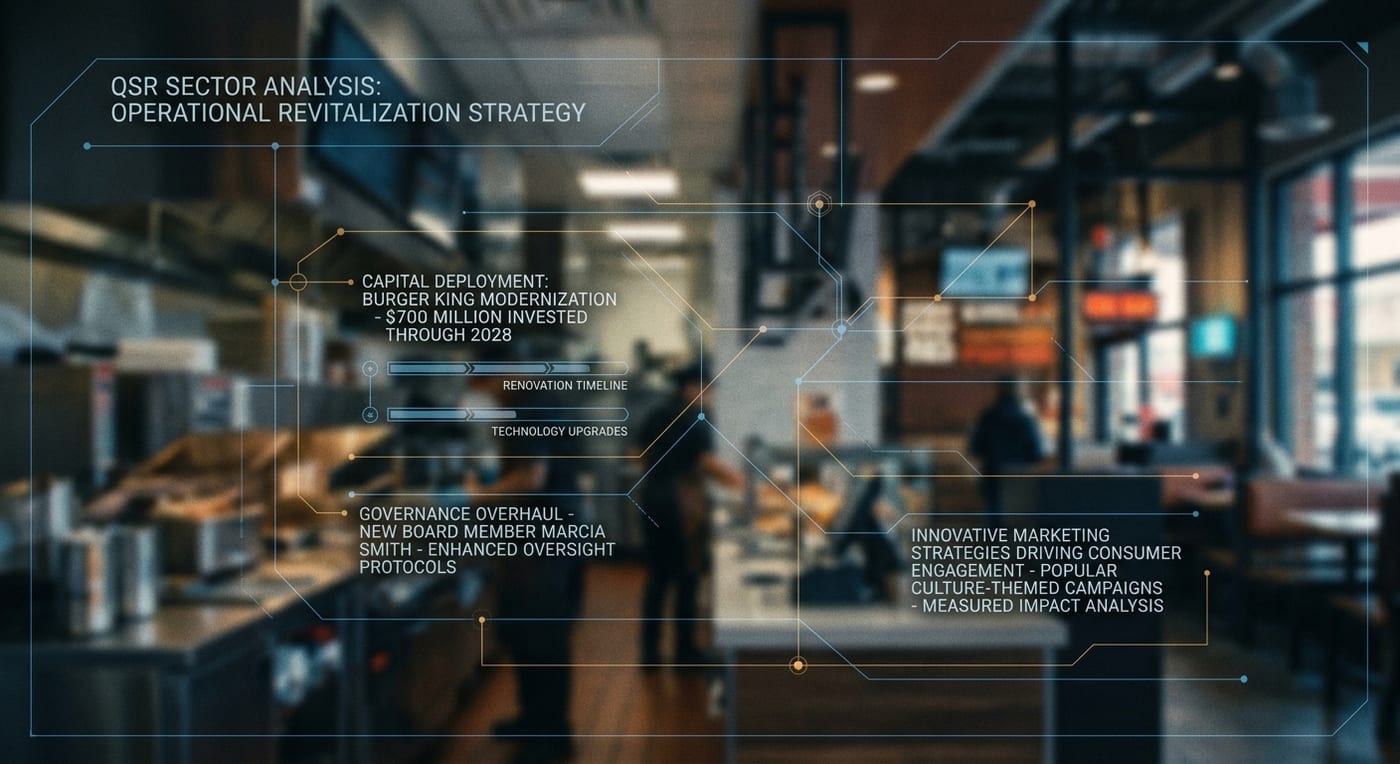
- Major investment in Burger King's modernization set for $700 million through 2028.
- Governance overhaul featuring new board member Marcia Smith to strengthen oversight.
- Innovative marketing strategies driving engagement, including popular culture-themed campaigns.
Restaurant Brands International Inc. (QSR) is embarking on a strategic transformation amid a rapidly evolving landscape in the quick-service restaurant industry. At the heart of this transformation is the company's commitment to revitalizing its flagship brand, Burger King, and enhancing its overall governance practices. This article explores how these initiatives are poised to influence both operational performance and investor confidence in the company moving forward.
The Competitive Landscape
In the highly competitive quick-service restaurant (QSR) sector, brands like McDonald's and Wendy's present formidable challenges to Restaurant Brands International. The flagship brand, Burger King, faces the pressure of adapting to changing consumer preferences and intensifying market competition. The company has recognized that simply holding a diverse portfolio of brands is insufficient for long-term success. This realization has prompted a shift towards a more dynamic approach to brand management, which includes significant investments in modernization and marketing.
Reclaiming the Flame
To fortify its market position, Restaurant Brands has launched the 'Reclaim the Flame' program, aiming to enhance Burger King's overall experience and offering. With a planned investment of up to $700 million through 2028, the initiative focuses on upgrading restaurant infrastructure, enhancing kitchen technology, and driving innovative marketing efforts. By modernizing its locations and improving operational efficiency, the brand aspires to rejuvenate its appeal to consumers while also increasing the profitability of its franchises. This massive commitment underscores the company's intent to not only improve operational efficiency but also to cultivate a more inviting customer experience, which is crucial for attracting younger demographics.
The investments made through the 'Reclaim the Flame' initiative are designed to address immediate operational challenges while fostering long-term growth. As highlighted in a recent article about the revitalization of Burger King, the focus on modernization clearly signals that Restaurant Brands is determined to reclaim its competitive edge in a crowded marketplace. The successful execution of these strategies could provide Burger King with a much-needed boost in both market share and consumer loyalty.
Governance in Transition
Concurrently, Restaurant Brands is placing significant emphasis on enhancing its corporate governance. The recent election of Marcia Smith to its board of directors is a strategic move aimed at bolstering oversight and addressing investor concerns related to its franchise-heavy business model. In response to an increasingly scrutinizing investor landscape, this decision illustrates the company's commitment to stronger governance and operational transparency.
As noted in discussions surrounding governance at Restaurant Brands International, strong board representation is essential to navigating the complexities of its business structure. The integration of new board members with expertise in the franchise sector is expected to yield benefits such as improved oversight on operational practices and risk management strategies. Such measures are vital as Restaurant Brands continues to navigate the challenges that come with being heavily reliant on franchise operations, an area that requires agile and informed governance to sustain growth and mitigate risks.
Strategic Marketing Initiatives
Marketing strategies have also taken center stage in Restaurant Brands' approach to revitalization, especially as the company is keen to engage younger consumers. A notable recent campaign includes the launch of Mandalorian-themed kids' meals at Burger King: a tactical initiative that merges popular culture with customer engagement efforts. Such marketing efforts not only have proven to enhance customer interaction but have also translated into improved same-store sales metrics.
This aligns with the broader objective of utilizing innovative marketing strategies to connect with target demographics in effective and meaningful ways. By anchoring its marketing initiatives in popular culture while simultaneously revamping program investments, Restaurant Brands is showcasing how modern QSR brands can leverage trends to enhance consumer loyalty.
Long-Term Prospects
As Restaurant Brands International works on these fronts, it continues to face challenges brought forth by macroeconomic conditions and rising operational costs. The broader economic environment has pressured many QSR operators, pushing them to find ways to maintain margins without compromising on quality or customer experience.
However, through its revitalization efforts and focus on governance, Restaurant Brands seeks to stabilize and grow in an environment marked by uncertainty. If the company can successfully navigate these hurdles while executing its strategic initiatives effectively, it stands to solidify its market position and enhance shareholder value.
Conclusion
The future of Restaurant Brands International hinges on its ability to successfully execute its transformative strategies, which include the revitalization of Burger King and a commitment to strong corporate governance. As it navigates these initiatives, the company will not only improve its operational framework but could also emerge as a resilient player amidst a challenging industry landscape.
In summary, Restaurant Brands International Inc. is on a decisive path toward transformation by addressing both operational efficiency and governance transparency. With substantial investments in modernization and a focus on reconnecting with consumers through effective marketing, the company is striving to reinvent its narrative in the competitive QSR landscape. The same pressure is reflected in recent reporting on the issue, which helps explain why the company's pricing decisions remain under scrutiny.