
Rivian Automotive: Challenges and Opportunities Ahead
ED
Editorial
Cashu Markets·5 min read
TL;DR
- Rivian capitalizes on domestic production amid tariff pressures.
- Recent capital raise sparks investor concern over dilution.
- The company integrates AI to enhance vehicle development and sustainability.
Rivian Automotive, Inc. (https://cashumarkets.com/stock/rivn) has emerged as a noteworthy player in the electric vehicle (EV) landscape, yet it grapples with distinct challenges that significantly impact its operations and investor outlook. As competition intensifies and economic conditions fluctuate, Rivian's strategic decisions and resulting financial implications remain critical metrics to monitor.
A Strategic Move Amidst Tariff Landscape
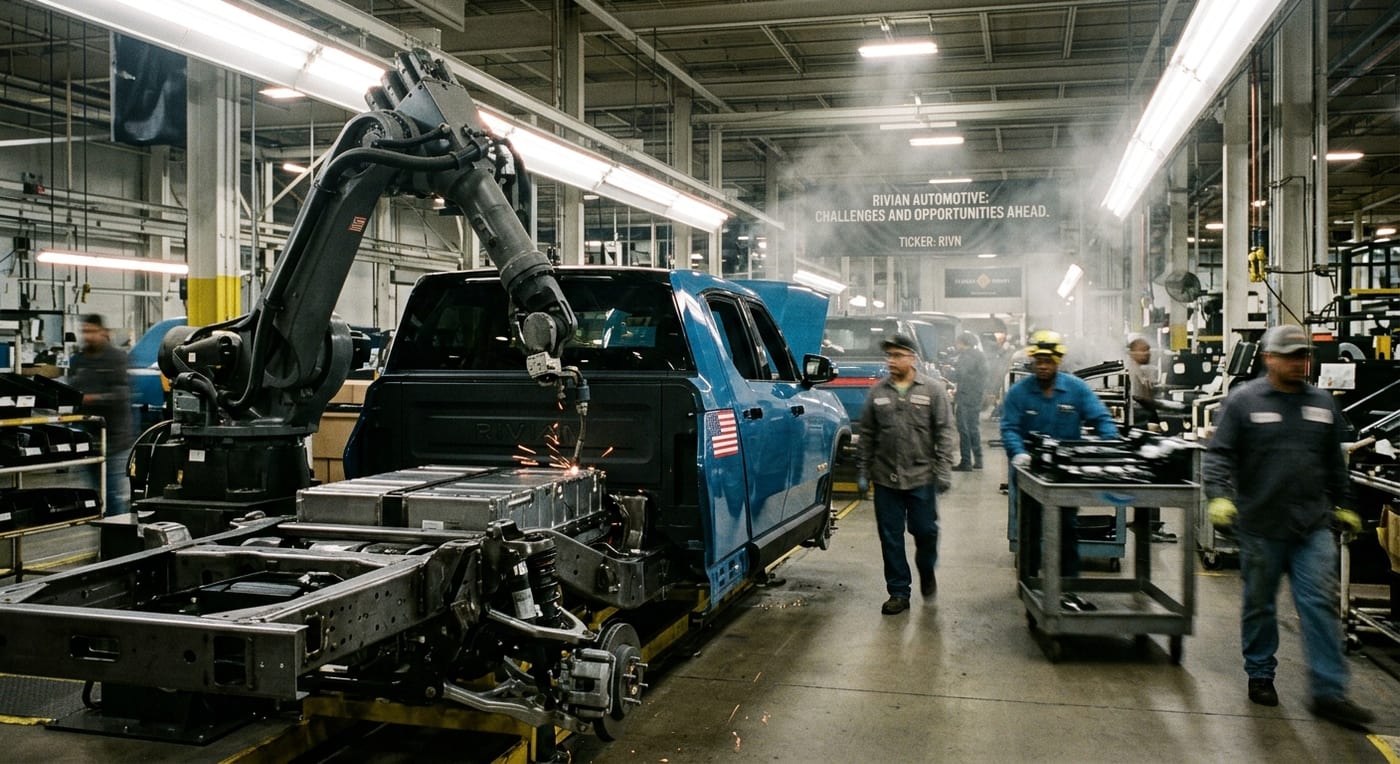
In recent times, Rivian has carved out a significant niche for itself by focusing on domestic production at its Illinois facility. With the U.S. government announcing a 25% tariff on imported vehicles, Rivian's commitment to manufacturing within the country provides it an edge over competitors like General Motors and Ford, who are more heavily reliant on overseas production. This tariff context leads to potential cost increases ranging from $5,000 to $10,000 per vehicle for Rivian’s rivals, thereby allowing the company to maintain competitive pricing and enhance its market presence.
However, despite the benefits of this approach, Rivian faces considerable financial hurdles, signaling a complex interplay between opportunity and risk. A report highlighted that Rivian's Altman Z-score is currently at -1.09, suggesting a heightened risk of bankruptcy within the next two years. This alarming indicator raises concerns among investors regarding the company's financial stability, particularly as it actively seeks to expand its market share in the burgeoning EV sector. The company's commitment to sustainability and local manufacturing may align with broader market trends, but the looming financial risks complicate its growth narrative. As previously discussed in Rivian Automotive: Navigating Tariff Challenges with Domestic Production Amid Financial Risks, Rivian's strategies are intrinsically linked to potential financial strains that should be monitored closely.
Sales Performance and Production Costs
Rivian's recent financial results indicate that the company delivered 12,194 vehicles in the second quarter of the fiscal year, surpassing its guidance of 9,000 to 11,000 deliveries. This remarkable performance prompted Rivian to increase its full-year delivery forecast to 65,000 to 70,000 units, a significant leap from an earlier target of 62,000 to 67,000. This uptick in deliveries, especially within its popular pickup truck and delivery van segments, demonstrates Rivian's growing ability to meet market demand.
However, alongside rising sales, production costs also surged, a scenario that has rattled investors. Recent market reaction saw Rivian's shares plummeting by more than 10% after the company announced plans to sell 75 million shares to raise capital. This strategic financial move is aimed at funding growth initiatives and providing equity contributions related to a loan from the U.S. Department of Energy. Unfortunately, such dilution often raises eyebrows among shareholders, and this time, it led to a sharp share price decline as investors reacted unfavorably to the prospect of increased shares in the market. According to a detailed analysis, the company faces skepticism regarding its long-term profitability, as each positive milestone often seems accompanied by new shares for sale, casting doubts on its capacity to cultivate sustained value for investors. The sequence of events reflects uncertainties discussed in the Rivian Automotive's Competitive Advantage Amidst New Tariffs and Financial Challenges, highlighting the delicate balancing act Rivian must maintain to assure stakeholders.
Technological Integration and Market Differentiation
Rivian's growth strategy is also heavily intertwined with technology advancements, particularly in artificial intelligence (AI). The company is leveraging AI to refine vehicle development and enhance manufacturing processes—efforts that could provide a competitive edge in the fast-evolving EV space. The adoption of AI allows for more efficient design workflows and simulations capable of predicting vehicle performance while identifying potential design flaws early in the process. These innovations are critical in driving reliability and cost-effectiveness, supporting Rivian's commitment to providing high-quality electric vehicles.
Moreover, Rivian's unique offerings, such as the electric commercial vans developed for fleet operators, further distinguish it in a crowded marketplace. The commercial vans, being built with safety, sustainability, and operational efficiency in mind, align seamlessly with the increasing consumer demand for green transportation solutions. This strategic focus on commercial functions may help fortify Rivian's market stronghold against competitors that cater to more generic urban commuting needs. Such targeted differentiation underscores the importance of developing niche markets in sustaining long-term growth. Insights into Rivian's initiatives were recently highlighted in the article titled Rivian Automotive Leverages AI to Transform Vehicle Development and Enhance Sustainability, reiterating the progressive steps Rivian is pursuing towards embedding technology into its growth model.
Conclusion
As Rivian Automotive, Inc. navigates its operational landscape, the interplay of opportunities and challenges defines its path to sustained growth. The company’s domestic production strategy amid tariff pressures, rising sales alongside hefty production costs, and technological advancements present a multifaceted narrative. Observing how Rivian addresses these challenges and capitalizes on market opportunities will be crucial for investors and industry watchers alike. While the potential exists for Rivian to become a key player in the EV market, the accompanying risks and hurdles will require deft management and strategic foresight to realize its ambitions successfully. The same pressure is reflected in recent reporting on the issue, which helps explain why the company's pricing decisions remain under scrutiny.