
Rivian's Financial Maneuvers Amid Market Turbulence
ED
Editorial
Cashu Markets·5 min read
TL;DR
- Rivian raises $1.4 billion through share sale amid financial scrutiny.
- The company’s focus on domestic production offers competitive pricing advantages.
- Record vehicle deliveries enhance investor interest, despite dilution concerns.
Rivian Automotive, Inc. RIVN has positioned itself as a formidable contender in the electric vehicle (EV) industry, showcasing innovative approaches to production and market strategy. However, the company finds itself navigating through a complex array of financial challenges and the overarching dynamics of the automotive sector that influence its operational outlook and investor sentiment. In recent months, Rivian's journey has been characterized by pronounced stock fluctuations, capital raises, and a pronounced pivot towards domestic manufacturing, all amid evolving industry conditions that present both risks and opportunities. This article delves into the various facets of Rivian's current standing within the EV market, highlighting how recent strategic decisions impact its growth trajectory and investor relations.
The Capital Raise and Its Implications
In July 2026, Rivian announced a capital raise involving the sale of approximately 75 million shares. This decision, while aimed at bolstering the company’s finances to support ongoing projects and initiatives, opened the door for investor concern regarding potential dilution of existing shares. The stock saw a sharp decline, plummeting by over 10% in response, reflecting market apprehension about continual financial instability despite positive indicators from vehicle deliveries. Subsequent reports indicated that Rivian had delivered 12,194 vehicles in Q2, exceeding projections and prompting an upward revision of its full-year delivery estimates to between 65,000 and 70,000 units.
Investors' skepticism towards the capital raise seems to stem from the company's ongoing struggle to achieve sustained profitability amid what many consider a capital-intensive business model. Recent analyses highlighted a staggering $9 billion negative cash flow projected through 2029, implying Rivian's pressing need for additional funding to withstand operational costs. Remarkably, the stock's decline post-announcement suggests that while Rivian's strategies to prepare for high demand for its mid-market R2 electric sports utility vehicle (ESUV) are sound, the market remains wary of the financial repercussions that could accompany necessary capital adjustments. The current sentiment echoes observations that despite Rivian's pushing into more favorable production and sales figures, the structural challenges in achieving profitability continue to loom large over its operational horizon.
A Competitive Edge in Domestic Production
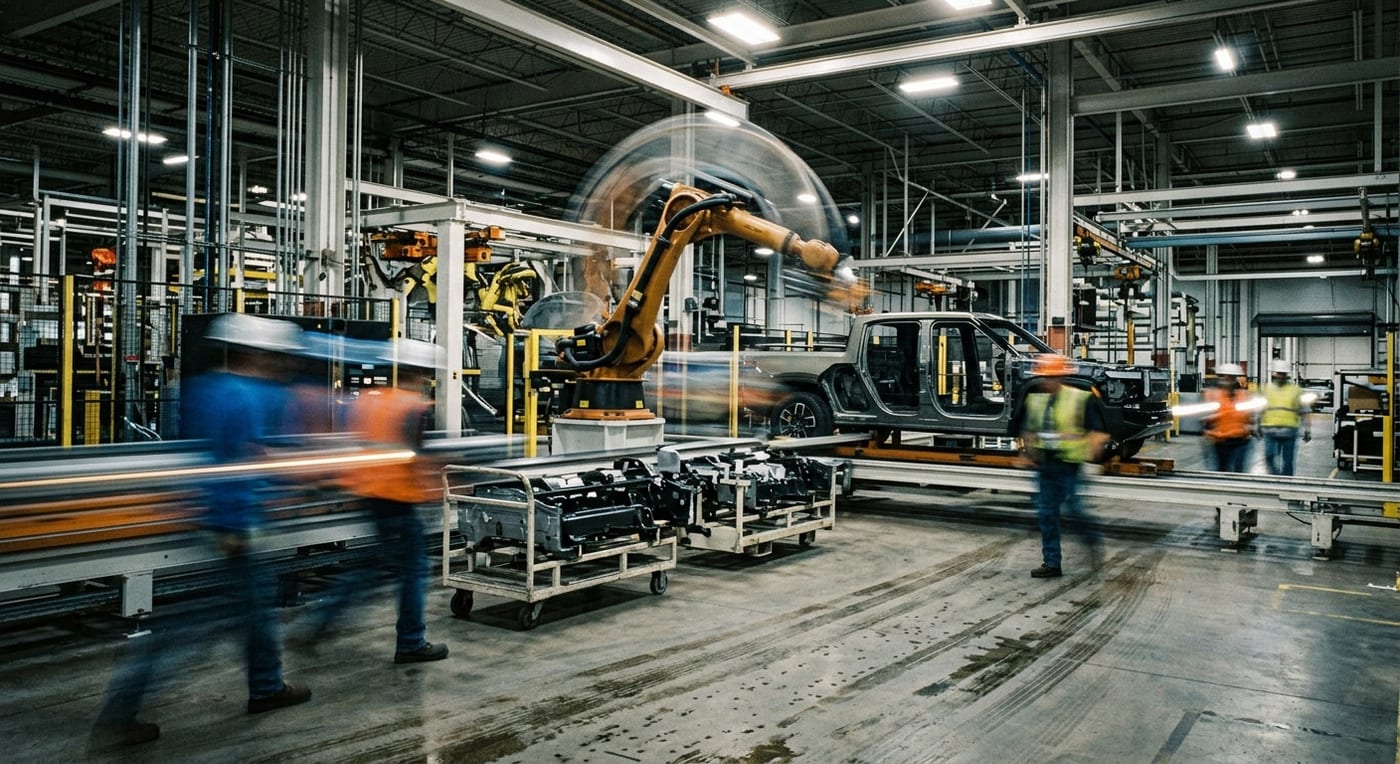
Rivian's focus on domestic production, bolstered by current tariff structures favoring manufacturers that operate within U.S. borders, adds a layer of competitive advantage. With the U.S. government enforcing a 25% tariff on imported vehicles, Rivian's strategy to leverage its Illinois facility for the majority of its manufacturing could shield it from excess costs that competitors, such as General Motors and Ford, face. These tariffs could escalate costs by $5,000 to $10,000 per vehicle for rivals reliant on overseas production, thereby allowing Rivian to maintain more competitive pricing while appealing to environmentally conscious consumers who prioritize domestically produced goods. The potential for market capture through this pricing flexibility aligns well with Rivian's strategic intentions, as detailed in the earlier analysis of its market positioning against traditional automakers.
Nonetheless, while Rivian stands to gain from tariffs insulating its pricing strategy, the financial landscape remains riddled with risks. Investors have exhibited a cautious optimism, driven both by the promise of production expansion and the clouds of diminished cash reserves and capital concerns. The recent report that Rivian has suspended its 2027 profitability target to reevaluate cost structures in light of escalating R&D spending lends a sobering perspective to the situation.
The Broader Market Context
The dynamics of the broader automotive market play an integral role in shaping Rivian's future. With an increasing array of competitors, including established and emerging players in the EV space, Rivian's branding targeted towards the adventure and utility segments becomes paramount. Differentiating itself from competitors focused on urban commuting, Rivian aims to carve out a niche that resonates deeply with consumers seeking rugged, all-terrain vehicles. The company's innovative approach, especially as it incorporates advanced technologies including artificial intelligence, positions it to streamline manufacturing processes, enhance vehicle performance, and ultimately, improve consumer satisfaction. This detailed integration of technology as a core component of development aligns with market trends towards digitized and efficient production practices, further supporting Rivian's vision of a sustainable automotive future.
However, with the continuous pressure from market dynamics, Rivian's ability to stay ahead hinges on its adroit response to evolving consumer preferences and competitive strategies. The recent adversity in stock performance could very well reflect overarching market sentiment that prioritizes financial stability and profitability while demanding agility in evolving operational constraints. The company's capacity to navigate these tumultuous waters may directly correlate with its dedication to enhancing production technology, as evidenced by its investment in AI to improve both vehicle reliability and manufacturing efficiency.
Conclusion: A Path Forward for Rivian
In summary, Rivian Automotive, Inc. faces a challenging but potentially rewarding path forward as it seeks to strengthen its position in the increasingly competitive EV landscape. The recent capital raise, while inconsistent with immediate market confidence, represents a strategic move towards securing necessary liquidity amidst an environment marked by innovation and risk. Rivian's emphasis on domestic production amid adverse tariff conditions offers a significant opportunity to capture market share, provided it can manage its financial hurdles effectively. As Rivian continues to align its vehicle offerings with the adventurous spirit of its target market, it must remain vigilant in addressing profitability concerns and enhancing operational efficiency to assure investors of its long-term viability and growth prospects. The same pressure is reflected in recent reporting on the issue, which helps explain why the company's pricing decisions remain under scrutiny.