
Rivian's Resilience Amid Financial Challenges
ED
Editorial
Cashu Markets·5 min read
TL;DR
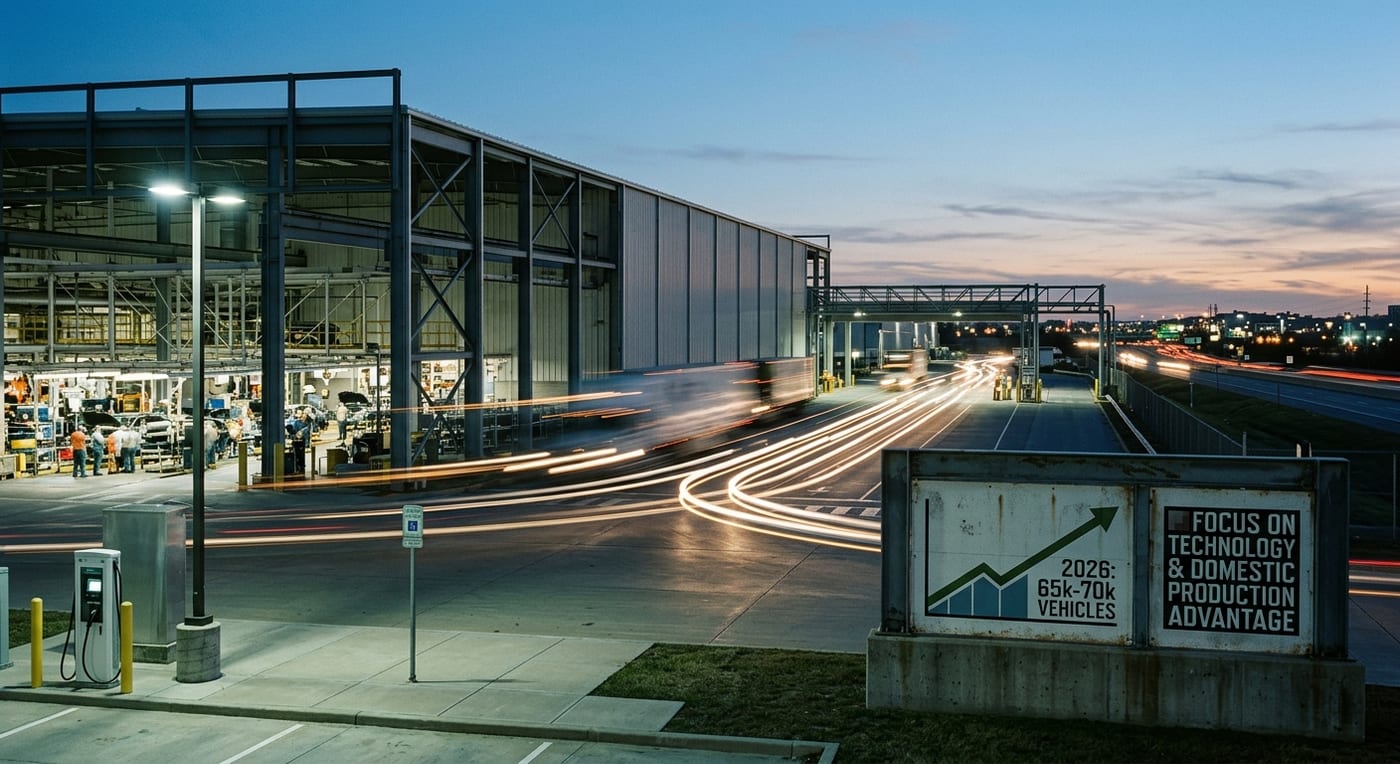
- Rivian expects to deliver 65,000 to 70,000 vehicles in 2026.
- The company strategically reduces capital expenditures while focusing on technology development.
- Rivian leverages domestic production advantages against tariff challenges faced by competitors.
Rivian Automotive, Inc. ( RIVN) is forging ahead in the electric vehicle (EV) landscape, braving financial hurdles and increasing market competition. As the company navigates complex economic conditions, its strategies and outcomes merit close examination. Producing vehicles mainly in Illinois, Rivian is striving to establish itself as a leader in the EV sector, especially as traditional automotive giants adapt to emerging market dynamics.
Navigating Market Turbulence
Rivian's recent initiatives highlight its response to an ever-evolving market. With a focus on expanding production capabilities, the company aims to deliver between 65,000 to 70,000 vehicles in 2026. This ambitious target aligns with Rivian's commitment to scaling operations and enhancing its product lineup, including the recent launch of the R2 midsize SUV, which is anticipated to capture a broader consumer base. Notably, Rivian's ability to reduce its spending plans while slightly narrowing loss forecasts signals a desire for financial discipline in challenging market conditions.
The company reported second-quarter results that showcased a mix of achievements and continuing losses. With revenues of approximately $1.14 billion from automotive and $515 million from software and services, Rivian's numbers reflected a strategic focus on both manufacturing and generating ancillary income streams. The slight improvements in loss per share indicate better operational management amidst turbulence. Despite the progress, analysts remain cautious, pointing to significant concerns about Rivian's long-term viability in an increasingly competitive market environment.
Tariff Implications and Competitive Landscape
Rivian’s production strategy is intricately connected to recent governmental tariffs that impose a 25% levy on imported vehicles and parts. This environment has revealed a distinct competitive advantage for Rivian, as its domestic production allows it to avoid these tax implications that could increase costs for competitors like Ford and General Motors. In terms of cost structures, Rivian could present more attractive pricing without the burden of impending tariff hikes.
The financial complications surrounding Rivian cannot be ignored; its Altman Z-score indicates an elevated risk of bankruptcy, a fact that casts a shadow over its optimistic production targets. Nevertheless, maintaining a focus on domestic manufacturing positions Rivian to strategically leverage the tariff scenario as they endeavor to boost market share. Such positioning resonates well in a consumer base increasingly inclined towards products that emphasize local production values and sustainability.
Strategic Investments in Technology
Rivian’s recent reduction in capital expenditures reflects a strategic pivot aimed at enhancing its technological capabilities. By decreasing planned investments from $1.95 billion to a new forecast of $1.7 billion, the company is focusing more on project efficiencies and timing in its spending. The anticipated improvements in Rivian’s hands-free driving system underscore an essential trend within the EV landscape, as companies race to innovate in response to consumer demands for advanced technology.
In this regard, Rivian's flexibility in scaling back on other expenditures while still honing in on software development may position the company favorably among tech-savvy consumers. This added focus is critical as Rivian aims to differentiate itself amidst growing competition not only from established manufacturers but also from up-and-coming players in the EV space. Rivian's dual strategy of refining existing products while investing in future technology may prove vital for its growth trajectory.
Challenges Ahead
Even amidst gradual improvements, Rivian remains under scrutiny from investors wary of its financial health and market adaptability. The company's stock, which is subject to significant volatility, reflects a broader concern regarding the sustainability of its growth strategies. Recent downgrades by analysts have raised eyebrows, prompting questions about how effectively Rivian can convert ambitious project goals into market presence.
Concerns regarding Rivian's capital structure and overall financial condition persist as the industry grapples with growing competition from players like Tesla and established OEMs. As these companies ramp up their production volumes and diversify their models in the EV arena, maintaining a clear and compelling value proposition will be crucial for Rivian to carve out and secure its niche.
Future Outlook
Looking ahead, Rivian's trajectory in the EV market hinges on its ability to navigate complex financial landscapes while simultaneously capturing consumer interest. The increased focus on domestic manufacturing, bolstered by favorable tariff conditions and a robust product lineup, provides a unique opportunity for Rivian to strengthen its market stance. Nonetheless, the road forward is riddled with challenges, and the company’s ability to adapt and thrive amidst adversity will ultimately define its future success.
The competition in the EV sector is intensifying, and Rivian must not only manage its operational efficiency but also foster relationships with investors concerned about its long-term feasibility. As Rivian ventures into this pivotal phase of growth, its strategic decisions—shaped by both market realities and internal assessments—will play a defining role in shaping its future. The same pressure is reflected in recent reporting on the issue, which helps explain why the company's pricing decisions remain under scrutiny.