
Silver Dynamics and Dollar Influence
ED
Editorial
Cashu Markets·5 min read
TL;DR
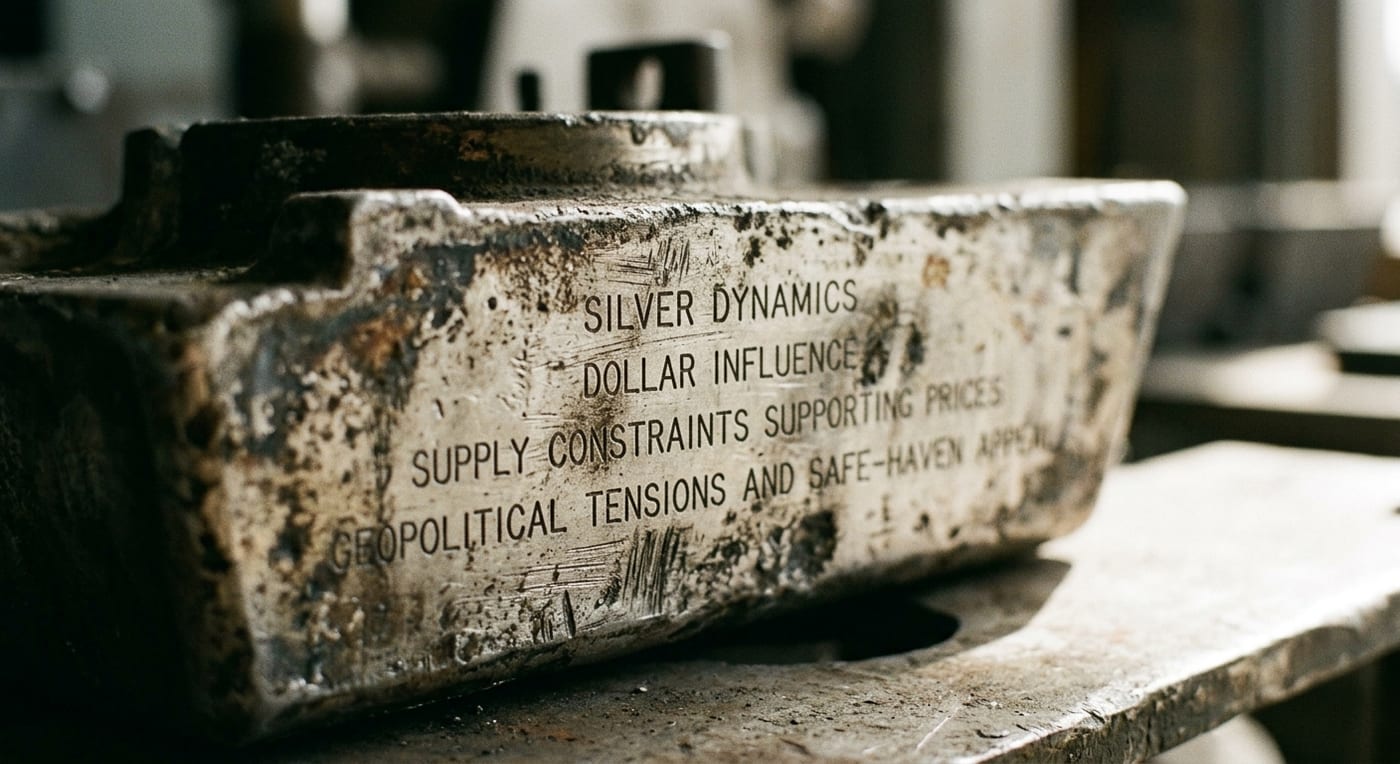
- Silver prices influenced by dollar strength.
- Supply constraints anticipated to support prices.
- Geopolitical tensions reinforcing silver's safe-haven appeal.
Silver (troy ounce) / U.S. Dollar (XAGUSD) is drawing attention as the latest developments come into focus. Silver (troy ounce) / U.S. Dollar (XAGUSD) is drawing attention as macroeconomic complexities influence trading strategies and investor sentiment. The interplay between silver prices and the strength of the U.S. dollar has taken center stage, bringing both opportunities and challenges. Recent dynamics highlight a robust relationship between silver and the U.S. dollar, characterized primarily by an inverse correlation. This article explores these intricate relationships, emphasizing how various factors shape the silver market and its future outlook.
The Inverse Relationship with the Dollar
The fundamental relationship between silver and the U.S. dollar is paramount for understanding price movements. Utilizing historical trends, we see a pattern where a strengthening dollar often leads to declining silver prices. This week exemplified that trend, as silver saw a notable dip, closing down nearly 3% amid rising long-term yields, even when the dollar index hovered around 99.60. The resilience of the dollar, in conjunction with other macroeconomic indicators, has introduced volatility into the silver market.
Interestingly, despite the U.S. dollar maintaining stability, the silver market is influenced by broader factors, including investor demand and geopolitical tensions. Recent reports indicate that silver has faced downward pressure primarily due to macroeconomic uncertainties, as reflected in its reaction to softer inflation data, which temporarily boosted the metal before a decline resumed due to renewed dollar strength. The intricate dance between silver's market dynamics and dollar movements has drawn market analysts' attention, urging them to consider both macroeconomic implications and investor sentiments.
Supply Constraints and Geopolitical Influences
Aside from the dominating influence of the dollar, supply dynamics also significantly impact the silver market. Recent forecasts suggest a looming supply deficit, with projections indicating a shortfall of 46.3 million ounces by 2026. This supply issue arises from the fact that a substantial portion of silver is mined as a byproduct of other metals like lead and zinc, creating a challenging scenario for silver production to react to price changes swiftly. As industrial demand for silver encompasses sectors such as electronics, electric vehicles, and solar energy, the current supply constraints coupled with consistent demand establish a foundational level under current pricing. The report on this shortfall echoes sentiments explored in a previous analysis, underscoring how supply constraints are perpetually interwoven with price dynamics in the silver market.
The geopolitical landscape further complicates these dynamics. As traditional safe-haven assets, silver has seen a boost in demand and price stability in times of heightened tension. Recent global events, including political instability and economic shifts, create a compelling backdrop against which silver’s performance can be analyzed. These tensions not only bolster investor interest but influence broader market sentiment, contributing to fluctuations within the silver trading environment. Moreover, ongoing global uncertainties have prompted strategic buying in silver, with investors seeking refuge amid directional market volatility.
Recent Market Movements and Fed Influence
Recent market movements have pointed toward significant volatility in silver pricing, with prices oscillating due to various external influences, including the Federal Reserve’s monetary policy stance. As the Fed navigates a landscape marked by softening economic indicators, traders remain keenly focused on upcoming reports and announcements, particularly those materializing from the Fed's actions. An example of this was the recent Treasury announcement regarding long-dated bond buyback operations, which simultaneously exerted downward pressure on yields and the U.S. dollar, allowing silver to initiate a rally, nearly regaining a three-dollar dip from earlier lows.
The carryover effect of the Fed's stance on interest rates directly correlates with silver prices. A hawkish tone from Fed meetings often correlates with a strengthened dollar, exerting downward pressure on silver pricing. Conversely, less aggressive tightening encourages investment in precious metals. This complex interplay is amplified in light of emerging inflationary trends and consistent economic indicators that signal the potential for prolonged volatility across markets. In this context, silver has positioned itself as a hybrid asset, responding to broad economic signals while also being influenced by direct industrial usage demands. Such dual pressure notably distinguishes silver from other precious metals, such as gold, which do not possess the same level of industrial demand or supply constraints.
The Future Outlook for Silver Pricing
In the context of these factors, the outlook for silver prices remains nuanced and complex. Current projections suggest that while short-term volatility is likely, the long-term fundamentals supporting a potential price increase are considerably stronger. Factors such as ongoing industrial demand, looming supply deficits, and geopolitical tensions represent firm underpinnings that could support silver pricing over time. As highlighted in preceding analyses, including the recent comprehensive review on market dynamics, silver's inherent value remains resilient despite short-term challenges induced by dollar strength.
As such, investors eyeing the XAGUSD market must keenly monitor both short-term fluctuations and broader economic indicators that could shape future movements. The intersection of industrial demand, supply dynamics, and global economic sentiment will ultimately dictate the trajectory of silver prices. In conclusion, while XAGUSD faces immediate downward pressure in conjunction with a robust U.S. dollar, external factors and fundamental market conditions suggest a fortuitous landscape for silver in the longer term. The same pressure is reflected in recent reporting on the issue, which helps explain why the company's pricing decisions remain under scrutiny.