
Silver's Resilience Amidst Economic Storms
ED
Editorial
Cashu Markets·4 min read
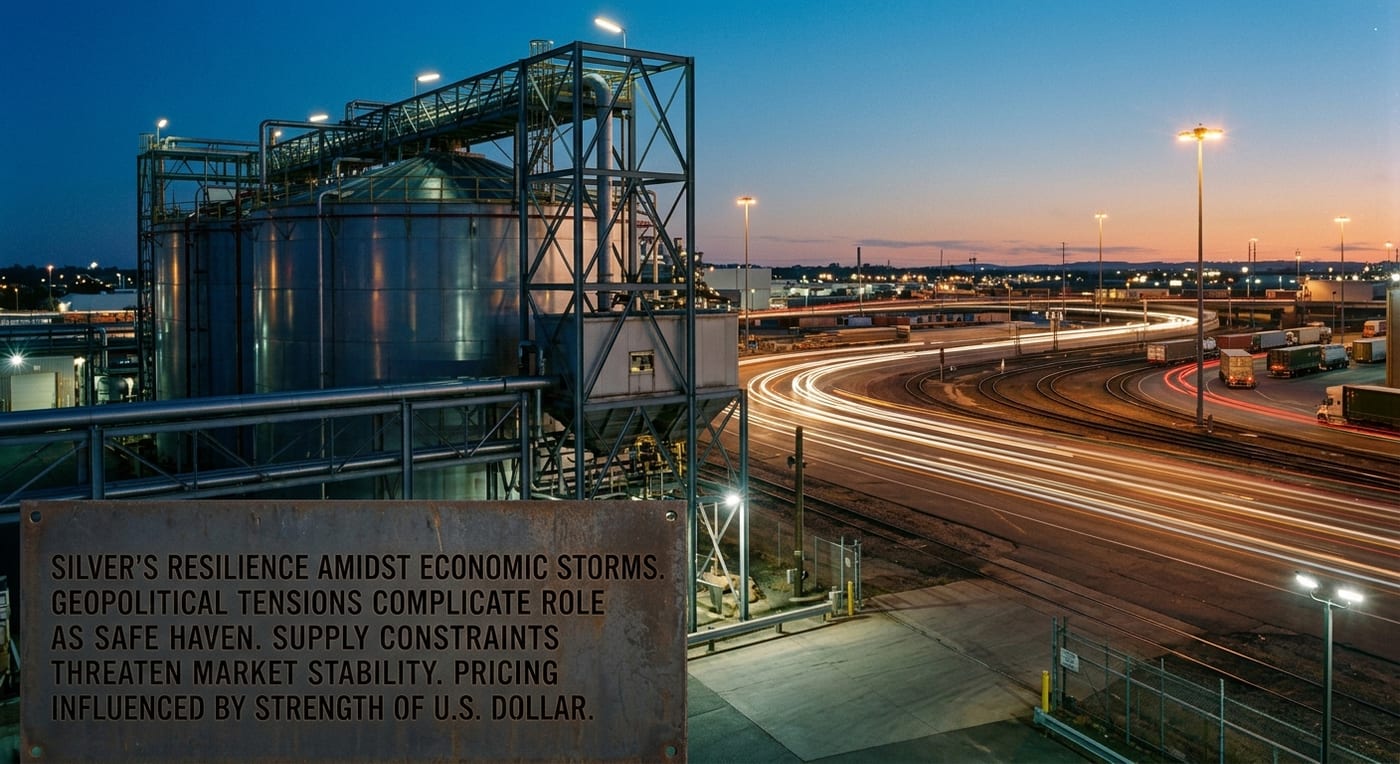
TL;DR
- Silver's pricing is influenced by the strength of the U.S. dollar.
- Geopolitical tensions complicate silver's role as a safe haven asset.
- Supply constraints continue to threaten stability in the silver market.
Silver (troy ounce) / U.S. Dollar (XAGUSD) is drawing attention as the latest developments come into focus. Silver (troy ounce) / U.S. Dollar (XAGUSD) is drawing attention as it navigates the complexities of a volatile economic landscape. With fluctuating geopolitical tensions, evolving monetary policies, and rising inflation pressures, the precious metal's performance hinges on several critical macroeconomic factors. Silver has often been viewed as a safe haven asset, yet its price dynamics are profoundly influenced by the strength of the U.S. dollar, which has shown notable resilience in recent times. Understanding these interconnected factors is crucial for grasping the current trends impacting XAGUSD.
The Dollar's Growing Influence
Historically, silver prices have demonstrated a strong inverse relationship with the U.S. dollar. As the dollar strengthens, silver tends to lose value, making this correlation a fundamental point of analysis for investors. Recent observations indicate that the U.S. dollar is in a strengthened position, propelled by economic data and the Federal Reserve's monetary policy decisions. The Fed's stance, alongside rising Treasury yields, has exerted considerable downward pressure on precious metals, including silver.
As we reflect on this interplay, it becomes evident that the dollar's influence has affected investor sentiment towards silver, complicating its role as a hedge against inflation. Specifically, the relationship has played out amid ongoing geopolitical risks which can often prompt safe haven buying, yet fail to support prices when a robust dollar prevails. In this regard, it is crucial to consider how historical contexts have shown that such environments can quickly shift, impacting the dynamics of XAGUSD prices.
Geopolitical Tensions and Inflation Fears
Geopolitical developments often play a strategic role in shaping silver's market trajectory. Recent events in various oil-rich regions have not only ignited inflationary concerns but also heightened market volatility. Silver's appeal as a safe haven typically increases in such contexts; however, the overarching strength of the U.S. dollar has complicated this narrative. With investors navigating through rising oil prices and persistent inflation, silver's traditional role is put to the test.
The nuanced relationship between geopolitical events, inflation fears, and silver's pricing cannot be overlooked. For instance, whenever tensions escalate, there's a tendency for investors to seek shelter in silver, yet if the dollar is performing well, that flight may be subdued. This contradiction provides a fertile ground for examining how the dynamics of XAGUSD are influenced by external factors like oil prices and political stability.
Supply Constraints and Market Stability
Supply chain issues pose another significant challenge for the silver market. As outlined in previous discussions, the persistent supply constraints continue to threaten the silver market’s stability and pricing resilience. With increased demand from various sectors, including industrial applications in technology and renewable energy, the pressure on supply chains is likely to intensify.
While the demand for silver remains, the production capabilities are challenged, leading to a scenario where prices could become volatile as these competing factors play out. The current market landscape suggests a delicate balance exists—where increased demand must be weighed against constrained supply, reflecting the volatility characteristic of the XAGUSD pricing model. As the industry grapples with these supply issues, the potential for higher prices could emerge if demand does not wane.
The Path Forward for Silver
Looking ahead, the market's trajectory for silver may hinge significantly on the upcoming economic data releases, particularly payrolls and inflation numbers. These indicators have profound implications for the Federal Reserve’s upcoming decisions regarding monetary policy, which in turn affect the dollar and consequently XAGUSD. Analysts anticipate that strong job growth—with firm wage inflation—could bolster the dollar, thereby putting more pressure on silver. Conversely, any signs of slowing growth could ease some of the pressure on silver.
Investors will need to keep a close watch on not only the Fed’s messaging but the overall employment landscape as multiple data points intersect in this complex interplay. Should labor data show weakness, it may lead to a softer dollar, providing a potential respite for silver in the short term. The relationship between these factors reveals a cyclical pattern that investors must carefully monitor to navigate the uncertainties surrounding silver pricing effectively.
Conclusion
Silver's journey amidst these turbulent economic conditions is emblematic of broader themes at play in the commodities market. As XAGUSD continues to grapple with the strengths and weaknesses of the U.S. dollar, geopolitical tensions, and supply chain constraints, its future remains uncertain. However, the potential for price rally amidst a weakening dollar could spark renewed interest in silver, making it a noteworthy asset for investors seeking stability during tumultuous times. Overall, understanding the interconnected dynamics at play will be crucial for all stakeholders as we are witnessing shifts that could redefine silver's market appeal and pricing in the months to come.