
Soluna Holdings (NASDAQ: SLNH): The Wind-Powered Pivot to AI Compute
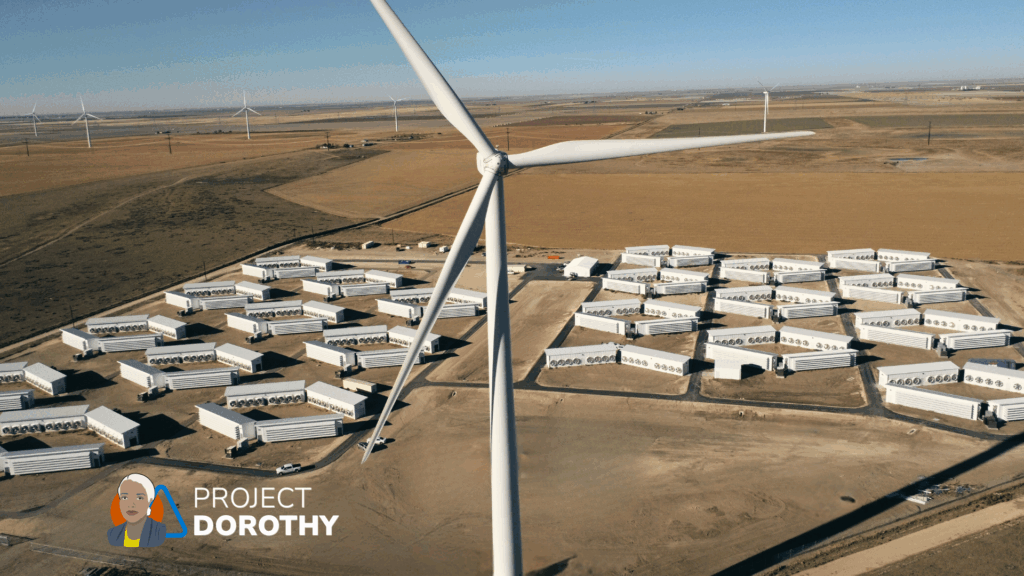
Soluna Holdings (NASDAQ: SLNH) is a small-cap data center operator with a specific structural thesis. Co-locate computing infrastructure directly with renewable energy projects, monetise the "stranded" power that would otherwise be curtailed, and sell the resulting compute to whoever needs it most. For most of the company's history, that customer was Bitcoin mining. In 2026, it is increasingly artificial intelligence.
The pivot is showing up in the numbers. Soluna reported Q1 2026 revenue of $9.4 million, up 58 percent year on year, with data center hosting now the dominant contributor at $6.7 million versus $2.2 million from Bitcoin mining. Hosting is growing. Mining is shrinking under post-halving economics. Management is moving capacity and capital toward the larger opportunity.
For investors looking at SLNH for the first time, here is what the company actually does and where the story sits.
The stranded renewables thesis
Wind and solar projects routinely produce more power than the local grid can absorb. When demand is low or transmission is constrained, that energy gets curtailed, meaning the turbines and panels are deliberately throttled or paid not to produce. The economics of those moments are unforgiving. The renewable operator built a plant designed to sell electricity and is, instead, sitting on idle capacity.
Soluna's pitch is to be the buyer for that energy. The company builds data centers physically adjacent to wind, solar and hydro projects and uses the curtailed or otherwise stranded power to run flexible compute loads. The renewable operator captures revenue on energy that would otherwise be wasted. Soluna gets cheap electricity. The compute customer gets infrastructure that is, structurally, lower-cost than the grid-tied alternative.
That thesis was originally built around Bitcoin mining because Bitcoin loads are interruptible and economically tolerant of variable supply. The same underlying logic now applies to certain categories of AI and high-performance compute workloads.
Watch: How Soluna's stranded-renewables model works
The pivot to AI
Through 2025 and into 2026, Soluna materially shifted its capital allocation toward AI and high-performance computing capacity.
Project Kati in Willacy County, Texas is designed for both Bitcoin mining and AI/HPC, with 166 MW planned across two phases. Kati 1, at 83 MW, was substantially complete as of late 2025. Project Dorothy 3 is a separate planned 300 MW campus targeted specifically at AI compute. The company has also reported partnerships with Blockware (more than 17 MW of deployed capacity) and Sazmining, with the latter including a planned 300 MW AI-focused phase.
The directional move is unmistakable. Bitcoin mining, post-2024 halving, is squeezed on both price and hash competition. AI compute, by contrast, is in the middle of a multi-year build-out where every megawatt of usable power is being competed for. Soluna's bet is that the same physical infrastructure that monetised stranded renewables for crypto can monetise the same energy for AI at higher margins and with longer-tenor customer contracts.
Vertical integration: the Briscoe wind farm
The defining 2026 move was buying the power, not just buying from it.
In April 2026, Soluna acquired the 150 MW Briscoe Wind Farm for $53 million. The deal gives the company direct control of both the energy generation and the compute racks it powers, eliminating the negotiating dynamic that exists when a data center operator depends on a third-party power provider. Management has guided that Briscoe is expected to be immediately accretive, contributing $6-11 million of first-year adjusted EBITDA and $20-24.4 million in annualised revenue.
Briscoe is also the power source for the planned 300 MW Dorothy 3 AI compute campus. The result is a clean vertical: own the wind farm, own the data center, sell the compute.
In parallel, Soluna agreed to acquire the remaining 85.4 percent of Project Dorothy 1A for $16.5 million, financed in part by a $12 million unsecured note due 2027, consolidating full ownership of the Silverton, Texas site.
What is actually working
Q1 2026 produced the cleanest reading of the new model. Hosting revenue ran more than three times Bitcoin mining revenue. Total revenue grew 58 percent year on year. The company reported a 4.3 GW development pipeline and approximately $142 million raised across 2025 to fund the expansion. In May 2026, Soluna regained NASDAQ minimum bid price compliance after a period below the $1.00 threshold, a small but material housekeeping milestone for a small-cap.
The combination is a business moving from a mining-heavy, single-commodity-exposed model to a hosting-heavy, multi-tenant infrastructure model with directly-owned renewable generation behind it.
What to watch
AI customer concentration and contract length. Hosting revenue quality depends on who is signing and for how long. The contract structure matters as much as the revenue line.
Briscoe ramp. The accretion guidance for the wind farm has to show up in EBITDA and cash flow. 2026 and 2027 results will confirm or revise that thesis.
Bitcoin price. The mining business still contributes meaningful revenue. A material BTC move in either direction changes the mix.
Capital structure. Soluna is a small-cap with active M&A and project capex. How future capital is raised (equity, debt, project-level financing) will shape per-share outcomes regardless of operational execution.
The honest read
Soluna is not a pure-play AI infrastructure name and it is not a pure-play crypto miner. It is a small-cap energy-and-compute hybrid in the middle of a strategic transition, with concentrated execution risk and an active capital structure.
What is structurally interesting is the underlying thesis. Stranded renewable energy is a real and growing source of cheap power. AI infrastructure demand is a real and growing source of compute load. Owning both ends of that pipe is a thesis that does not require either macro narrative to reverse, and Soluna is one of the few public-market names structured directly around it.
The ticker is SLNH on the NASDAQ.