
Stablecoin USD Faces Market Evolution
ED
Editorial
Cashu Markets·4 min read
TL;DR
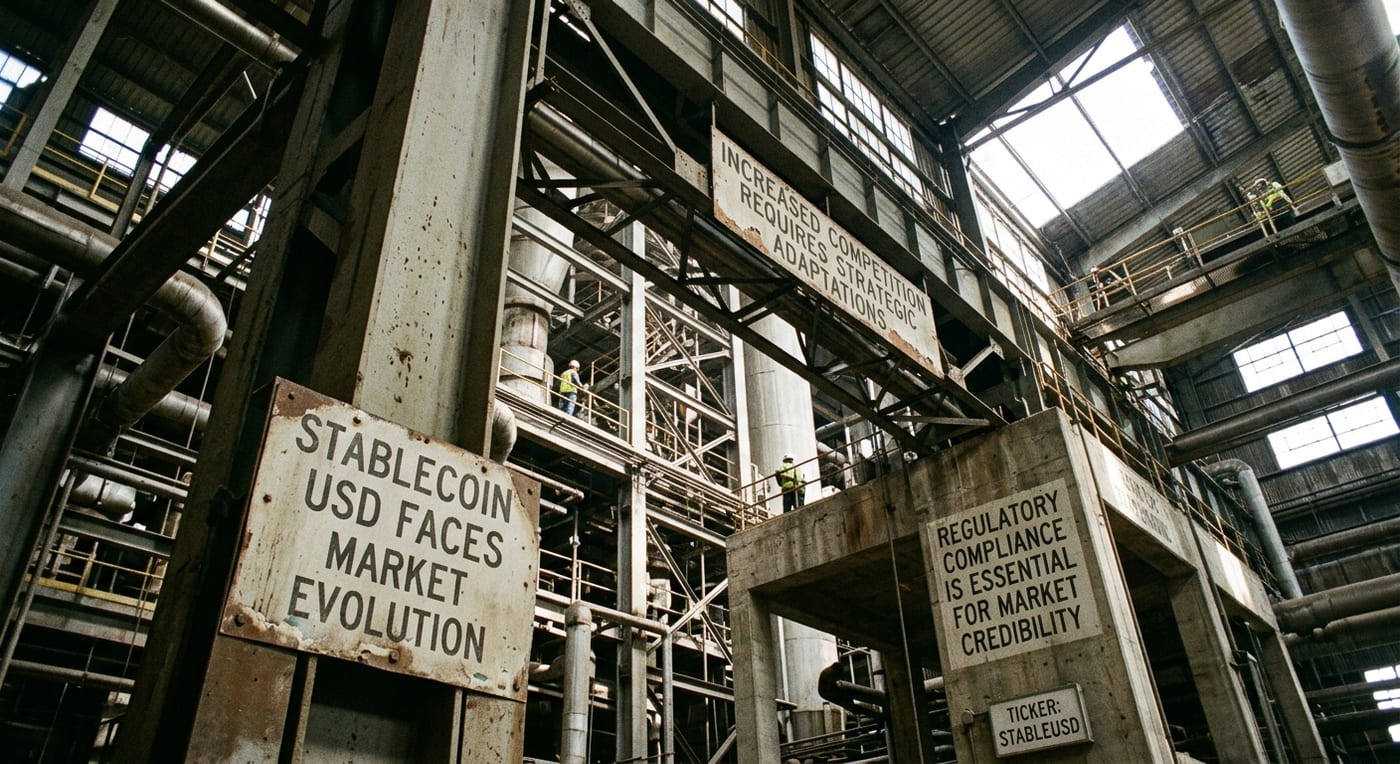
- STABLEUSD navigates a transforming stablecoin landscape.
- Increased competition requires strategic adaptations.
- Regulatory compliance is essential for market credibility.
Stablecoin USD (STABLEUSD) is navigating a rapidly evolving landscape marked by intensifying competition and regulatory complexities. In recent months, the rise of consortium-driven models has posed significant challenges to traditional stablecoin frameworks, compelling STABLEUSD to adapt its operational strategies to maintain market leadership. This article explores the current market dynamics affecting STABLEUSD, the competitive pressures introduced by new entrants, and the strategic innovations required to thrive in this changing environment.
Emergence of Consortium Models
The stablecoin sector has entered a new phase characterized by innovative consortium models which collectively govern and enhance liquidity across the market. Competitors such as Open USD (OUSD) are leveraging these models to attract users with increased governance and liquidity-sharing mechanisms. This shift represents a considerable threat to STABLEUSD's market position, as consumers increasingly favor collaborative models that promise enhanced security and flexibility.
As noted in earlier insights, STABLEUSD must reconsider its current strategies to remain relevant amidst this transformation. The competitive landscape is not just a matter of technological advancement but also concerns consumer trust and the ability of stablecoins to provide seamless transactional experiences. Ensuring robust compliance with regulatory frameworks is essential for STABLEUSD to maintain its foothold in an increasingly crowded market.
Competitive Environment
The competitive terrain for STABLEUSD has been reshaped by a surge of new entrants adopting consortium models, which challenge traditional single-issuer approaches. This transformation creates both opportunities and threats. Increased competition compels STABLEUSD to reassess its operational strategy and innovate to attract a broader user base. The ecosystem surrounding stablecoins is expanding rapidly, especially as institutions seek to adopt more flexible and scalable solutions.
In 2023, the stablecoin market began seeing a significant uptick in institutional adoption. With major players entering the arena — including those utilizing regulatory-compliant frameworks — STABLEUSD faces mounting pressure to enhance its own offerings and partnerships. It is vital for STABLEUSD to leverage new technological advancements and align itself with regulatory expectations to ensure that it retains credibility and relevance.
Regulatory Compliance as a Strategic Imperative
STABLEUSD's operational strategies cannot overlook regulatory compliance, especially as the frameworks governing cryptocurrencies evolve across jurisdictions. The emergence of comprehensive regulations, like the EU's Markets in Crypto Assets (MiCA), has set a precedent for accountability and oversight — something STABLEUSD must integrate into its business model to assure investors and users alike.
As other stablecoin operators, like Circle with its euro stablecoin EURC, illustrate successful navigation through regulatory landscapes, STABLEUSD can use these examples as blueprints. Similarly, partnerships with regulatory bodies and financial institutions can enhance STABLEUSD's market credibility, essential in a climate where trustworthiness and compliance are paramount.
Investors are keenly observing how STABLEUSD reacts to these challenges as it prepares for potential growth. As regulatory guidance becomes clearer, those entities which can quickly adapt may capture a larger share of the market, navigating the complexities that have enveloped the cryptocurrency landscape.
Strategic Partnerships and Innovations
In order to strengthen its competitive positioning, STABLEUSD should explore strategic partnerships designed to bolster liquidity and enhance operational efficiency. Such collaborations can provide the necessary framework to improve liquidity, thus ensuring STABLEUSD remains an attractive option for users.
Previous articles have highlighted how STABLEUSD has grappled with competitive pressures, particularly against the backdrop of consortium models gaining traction. By forging alliances, STABLEUSD can access new markets while simultaneously benefiting from shared resources, ultimately enabling it to respond more effectively to user demands and market fluctuations.
Innovative technologies can also facilitate better integration with platforms and exchanges critical for enhancing liquidity. As competitors innovate and adapt to the changing regulatory landscape, STABLEUSD's ability to keep pace with technological advancements will significantly affect its market relevance.
Future Outlook
As the demand for stablecoins continues to rise, driven by the increasing reliance on digital assets for transactional efficiency, the outlook for STABLEUSD hinges on its adaptability to evolving market conditions. Competitive pressures demand that STABLEUSD ramp up its innovation strategies while maintaining a clear focus on compliance.
In the context of broader market developments, the stablecoin landscape is transitioning as more users look for reliable and secure options for conducting transactions. This highlights an opportunity for STABLEUSD to reinforce its value proposition, by potentially expanding its service offerings to meet diverse consumer needs.
In summary, STABLEUSD is at a pivotal intersection where strategic adaptations can significantly influence its future viability in the ever-competitive stablecoin market. The combination of regulatory compliance, innovative partnerships, and technological integration will determine its potential trajectory in upcoming years. As consumer preferences evolve and competitors adapt, STABLEUSD must remain agile to capitalize on emerging trends and maintain its position in this fast-paced market. The same pressure is reflected in recent reporting on the issue, which helps explain why the company's pricing decisions remain under scrutiny.