
Stanley Black & Decker Restructures for Efficiency and Long-Term Growth Amid Market Challenges
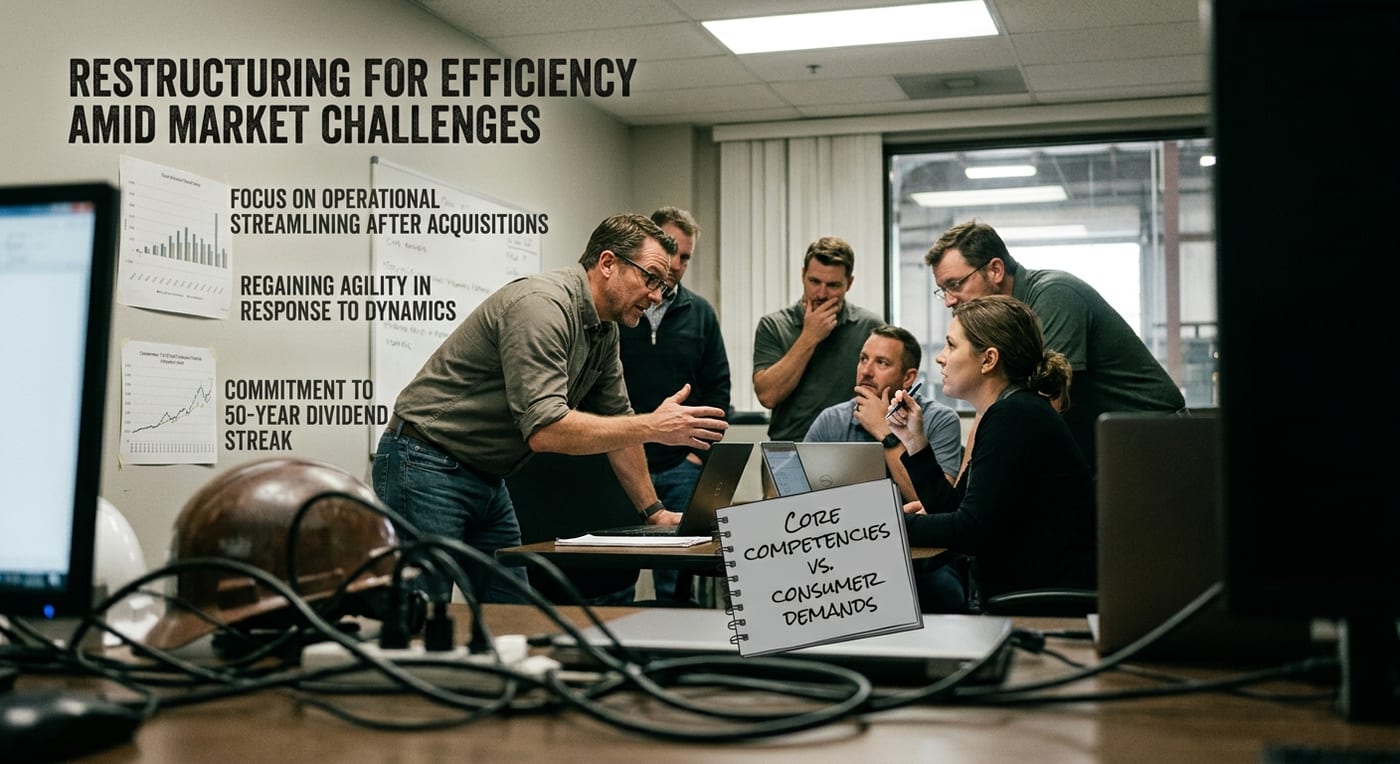
- Stanley Black & Decker is restructuring for operational efficiency and profitability after expansive acquisitions.
- The company is committed to maintaining its 50-year dividend streak, signaling confidence to investors.
- Restructuring aims to enhance core competencies and agility in response to market dynamics and consumer demands.
Stanley Black & Decker (SWK) is undertaking a critical phase of restructuring focused on enhancing operational efficiency and profitability. This strategic shift follows a series of aggressive acquisitions that expanded the company’s portfolio but also necessitated a reevaluation of its operational framework. By divesting non-core assets, Stanley Black & Decker aims to sharpen its business focus and streamline operations, thereby aligning resources with its strategic objectives. This initiative is not just about cutting costs; it is a comprehensive strategy to position the company for long-term stability and growth amidst changing market conditions.
Integral to this restructuring approach is Stanley Black & Decker's commitment to maintaining its impressive 50-year streak of dividend payments. This ongoing commitment signals confidence in its operational resilience and financial health, appealing particularly to income-seeking investors. As the company restructures, the focus on dividends reflects a balanced approach, aiming to return value to shareholders while navigating the complexity of an evolving industrial landscape. Through this strategy, Stanley Black & Decker works to reassure investors of its long-term viability despite challenges in the immediate term.
The implications of this restructuring extend beyond the financial metrics. By honing in on core competencies and shedding non-essential operations, the company can better respond to market dynamics and innovate within its primary business areas. The emphasis on operational efficiency supports a more agile organization, capable of adapting to shifts in consumer demand and technological advancements. This transformation not only positions Stanley Black & Decker favorably in the competitive landscape but also enhances its ability to deliver value to customers and stakeholders alike.
In another development, the company has successfully navigated a decline in share price over the recent month, which dropped by 3.19%. Despite this short-term volatility, the long-term outlook remains more promising, signified by a 3.78% increase over the last 90 days. This resilience is noteworthy in the context of the broader market trends that often dictate company performance.
Looking ahead, Stanley Black & Decker’s strategic reorientation and unwavering commitment to its dividend policy could yield positive outcomes as the company continues to adapt. With a remarkable 22.75% total shareholder return over the past year, stakeholders remain cautiously optimistic about the robustness of the company's future strategies and their potential to foster renewed growth.
Related Cashu News

Howmet Aerospace Reports Strong Q4 Earnings Amid Aerospace Demand Surge and Market Challenges
Howmet Aerospace (Ticker: HWM) continues to assert its position as a leader in the aerospace manufacturing sector, demonstrating resilience and adaptability in a competitive landscape. Recently, Howme…

Atkore Settles Antitrust Claims for $50 Million Over PVC Pipes, Aiming for Financial Stability
In a significant legal decision, Atkore Inc. (Ticker: ATKR) has agreed to a US$50 million settlement regarding antitrust claims related to PVC pipes. This settlement addresses the claims from three pu…

BWX Technologies Secures $1.4 Billion Contracts in U.S. Naval Nuclear Propulsion Program
BWX Technologies (Ticker: BWXT) secures a pivotal role in the U.S. Naval Nuclear Propulsion Program through a series of contracts exceeding $1.4 billion. This commitment emphasizes the importance of n…

Babcock & Wilcox Partners with TerraSpark on Ambitious Energy Campus Amid Legal Challenges
Babcock & Wilcox Enterprises (Ticker: BW) is currently making headlines with its recent collaboration with TerraSpark to develop the TerraSpark Energy Campus in West Virginia. This ambitious project a…