
Super Micro's Surge in AI Demand
ED
Editorial
Cashu Markets·5 min read
TL;DR
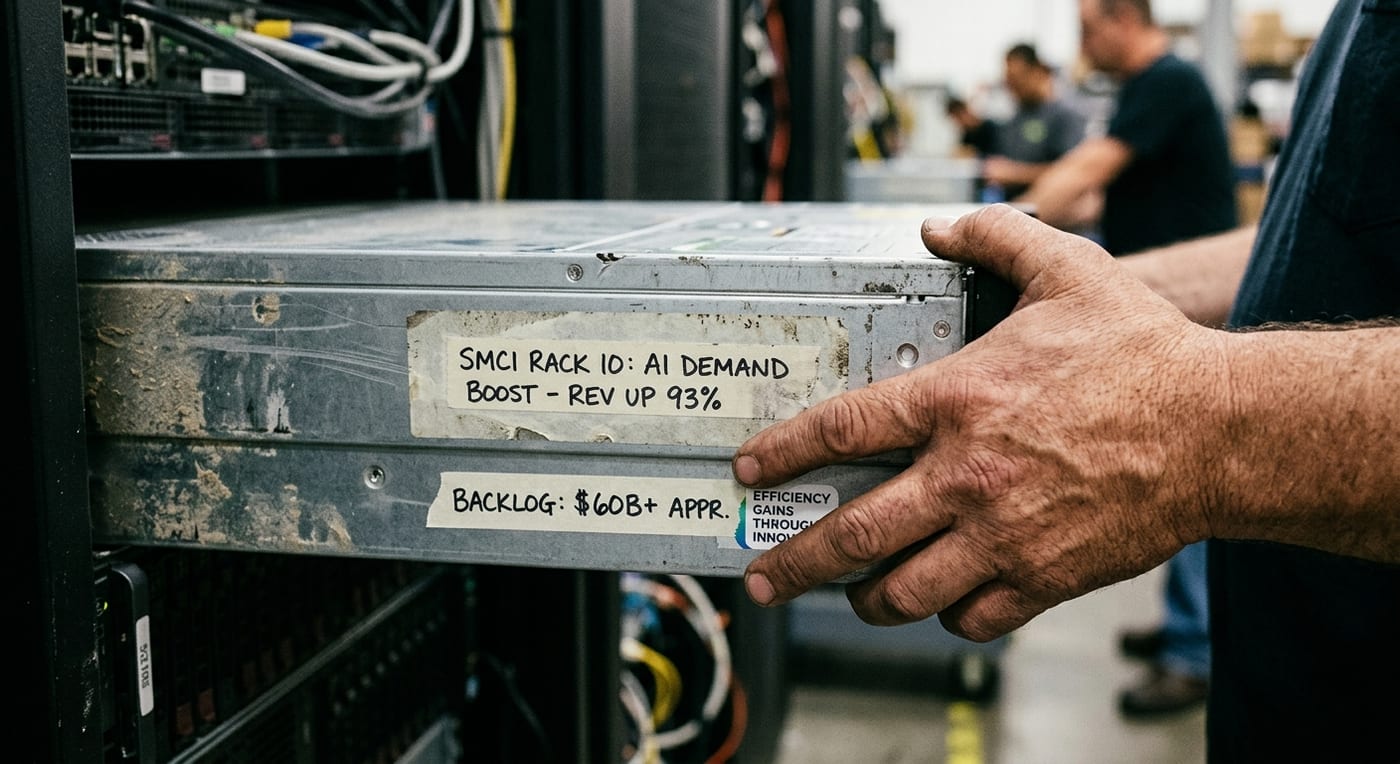
- Super Micro reports a 93% revenue increase, driven by AI demand.
- A backlog of over $60 billion supports ambitious revenue forecasts.
- Strategic innovations in AI infrastructure enhance operational efficiency.
Super Micro Computer, Inc. (SMCI) is drawing attention as the latest developments come into focus. Super Micro Computer, Inc. (SMCI) has become a pivotal player in the booming artificial intelligence (AI) server market, showcasing remarkable growth and strategic innovation. The company's latest financial performance report for fiscal Q4 2026 highlights an astonishing revenue increase of 93% year-over-year, totaling $11.1 billion, albeit slightly below market expectations. Nonetheless, it is the company's guidance for fiscal 2027 that has captured investors' attention, with projections ranging from $65 billion to $72 billion in revenue, indicating a significant growth trajectory driven largely by an unprecedented backlog of over $60 billion in AI orders.
Record Backlog as a Growth Catalyst
The extraordinary backlog has solidified Super Micro's standing in the AI and high-performance computing (HPC) sectors. Notably, the recent surge in orders correlates directly with increased demand for infrastructure capable of supporting advanced AI workloads. This substantial order influx not only validates Super Micro's market strategy but also provides a robust foundation for future revenue growth. The shift toward AI has prompted a series of strategic advancements within the company, leveraging their innovative Data Center Building Block Solutions® (DCBBS), which are tailored to meet specific demands in AI workloads.
In a previous article, the significance of this backlog was underscored, stating that "Super Micro reported a backlog exceeding $60 billion in AI orders," reflecting how these innovations may solidify market dominance as AI continues to gain traction. Without doubt, the growing order volume highlights a transformative period for Super Micro. As the demand for sophisticated AI solutions heightens, the company's ability to fulfill these orders will be critical to maintaining investor confidence and revenue growth.
Financial Performance and Strategic Investments
Despite the dip in anticipated earnings due to a mixed quarterly earnings report, Super Micro managed to impress by reporting a profit per share of $1.70 — significantly higher than analyst expectations. The gross margin bounced back in this quarter, hitting 17.5%, which has been attributed primarily to a richer mix of enterprise customers and broader adoption of DCBBS. These impressive financial metrics are crucial as they demonstrate not only stability but also an improved operational efficiency that can cater to the emerging demands in the AI sector.
However, the pathway to achieving the ambitious fiscal 2027 revenue targets is laden with challenges. Super Micro will need to ensure that its order book translates into actual sales — a dynamic that can be affected by various macroeconomic factors. The market's reaction post-revenue report indicates a wary optimism among investors, reflecting concerns about the sustainability of such growth rates amidst potential market volatility.
Innovations Tailored for AI Infrastructure
Super Micro's commitment to remaining at the forefront of AI infrastructure innovation is manifested through its advanced product offerings. The company's recent launch of the DCBBS Blueprint, designed for NVIDIA's Vera Rubin NVL4 platform, enhances its ability to support extensive AI workloads. This groundbreaking architecture allows for the integration of a staggering 1,152 GPUs and 576 CPUs within a single system. Such configurations position Super Micro as a go-to provider for organizations that demand extensive computational capabilities, especially in research-intensive environments.
The launch of the DCBBS and its positioning in the marketplace represents a calculated move to capture a larger share of the growing AI pie. By enabling organizations to effectively scale their AI capabilities, Super Micro not only demonstrates innovation but also addresses the urgent infrastructural needs emerging from AI advancements.
Challenges and Cash Flow Considerations
While the buzz around Super Micro's backlog and growth potential is substantial, investors remain vigilant regarding cash flow dynamics. Throughout the fiscal year, the company faced significant cash burn totaling $6.65 billion, raising questions about how effectively it can maintain a positive cash flow moving forward. Management's forecast for fiscal Q1 2027 between $14.5 billion to $15.5 billion provides some assurance; yet, analysts continue to express caution, suggesting that the company may revert to cash burn as it scales production to meet demand.
The planned growth requires carefully managing expenditures against revenue realizations, particularly since servers are typically built and shipped before customer payments are received. This cash flow strain is essential for investors to monitor, as it will considerably affect Super Micro's ability to sustain operations effectively during rapid expansion periods.
In summary, despite recent performance volatility, Super Micro Computer, Inc. (SMCI) remains poised for transformational growth within the AI server space. The projected revenue guidance for fiscal 2027, supported by a robust backlog and innovative solutions, signals a promising outlook. However, continued focus on managing cash flow and operational efficiency will be pivotal in solidifying its position as an industry leader within the AI infrastructure landscape. The same pressure is reflected in recent reporting on the issue, which helps explain why the company's pricing decisions remain under scrutiny.