
Target's Strategic Growth Amid Retail Challenges
ED
Editorial
Cashu Markets·5 min read
TL;DR
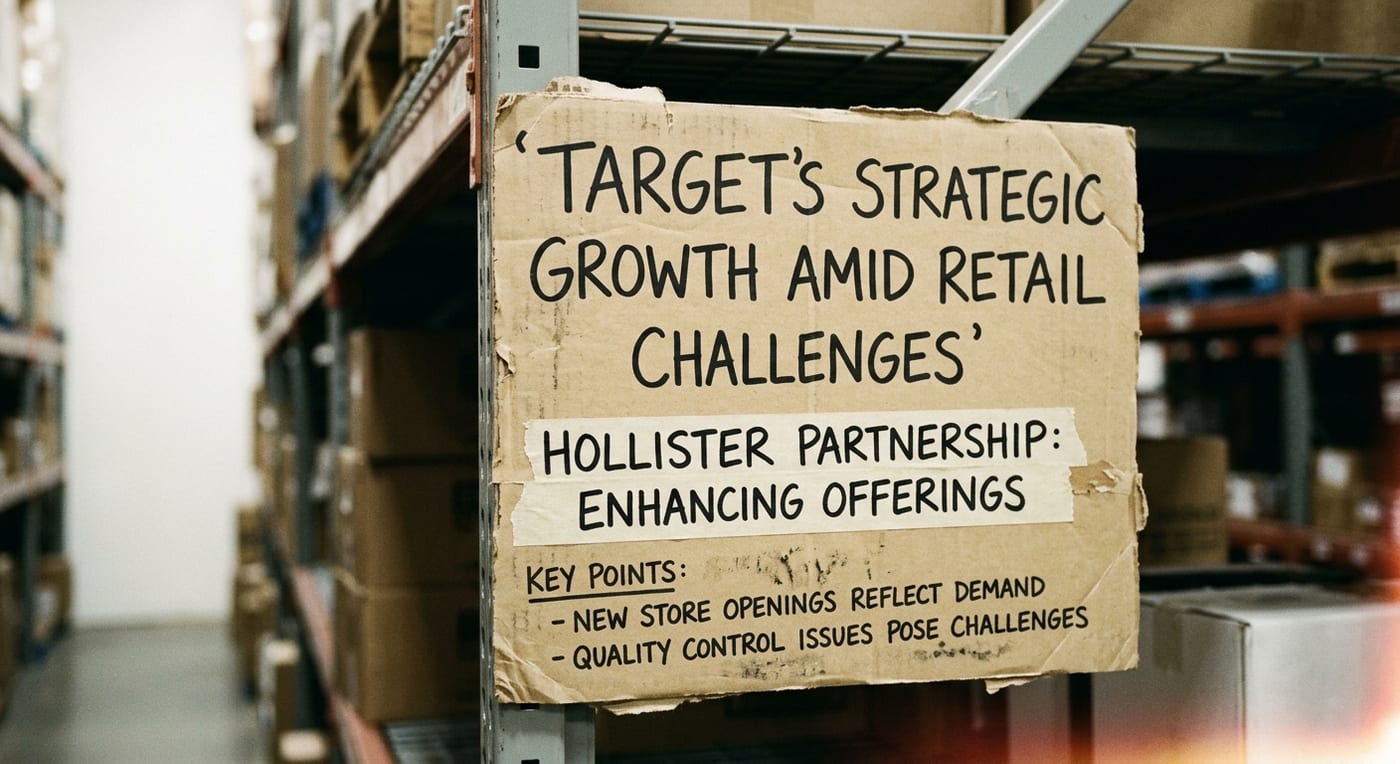
- Target's partnership with Hollister enhances product offerings.
- New store openings reflect confidence in market demand.
- Quality control issues pose significant operational challenges.
Target Corporation ( TGT) continues to navigate a complex retail landscape marked by evolving consumer preferences, intense competition, and operational challenges. As one of the most prominent retailers in the United States, Target is engaging in a series of strategic initiatives aimed at bolstering its market presence and brand appeal. This piece explores Target’s recent collaborations, expansion plans, and quality control challenges, examining how these factors will shape its future.
Strategic Collaborations to Enhance Product Offerings
In recent months, Target has made headlines with its partnership with Abercrombie & Fitch's Hollister brand, launching The Hollister Collection, which is expected to resonate strongly with younger consumers. This collection, featuring over 60 lifestyle-focused apparel and home décor items, reflects Target's efforts to integrate fashion with home goods, appealing to modern consumers' aesthetic preferences. The collaboration is a significant move for Hollister, marking its entry into the home décor market while simultaneously enhancing Target’s product diversity and positioning.
The partnership aligns with Target's strategy of attracting diverse shopper demographics by offering exclusive collections that reinforce its brand prestige. This approach aims to capture back-to-school shoppers, ultimately contributing to a stronger financial performance as the holiday season approaches. Similar initiatives have been noted in Target's releases around expanding its home goods offerings, which have made substantial contributions to its revenue streams during quarters marked by typical retail challenges.
Additionally, Target's recent plans to open 11 new stores, highlighted in this previous article, reflects its continued intent to capture market share in the retail sector. The new stores represent an investment in growth, indicating Target's confidence in its operational strategies despite the backdrop of economic uncertainty facing many retailers.
Navigating Quality Control Challenges
However, not all news has been positive for Target. The recent recall of its Up & Up brand baby wipes due to contamination issues has raised serious questions about the company's quality control processes. This incident emphasizes the critical need for Target to reinforce its supply chain oversight, especially as it heavily relies on private label products. The recall not only poses operational challenges but can also significantly impact consumer trust and brand loyalty, vital currencies in the highly competitive retail environment.
As detailed in a recent article, this event demonstrates the consequences of lapses in product safety and consumer assurance which can lead to broader implications for Target’s market perception. To mitigate the fallout from such incidents, it is essential for Target to enhance its quality control measures and communicate effectively with consumers regarding its safety protocols.
Financial Performance and Investor Confidence
Despite these operational hurdles, investor confidence in Target appears to remain strong. Recent reports indicate a surge in institutional investment, with institutional ownership among investors rising to approximately 79.73%. This renewed faith in the company comes after a string of solid earnings, where Target posted earnings of $1.71 per share, illustrating its ability to adapt to ongoing challenges in the retail environment.
The strong institutional backing reflects broader sentiments of optimism regarding Target's strategic direction. Institutions such as Mattson Financial Services have noted significant increases in their holdings, further reinforcing the narrative that Target is poised for growth amidst adversity. As discussed in this earlier piece, this trend signifies a collective inclination among investors to maintain long positions in a company that has historically demonstrated resilience.
Strategic Enhancements Under Creative Leadership
In a bid to further refine its brand and product development, Target made a landmark appointment by bringing on board Isaac Mizrahi as its first creative director. His role, which encompasses mentoring and guiding product development, signals Target's commitment to strengthening its design identity. With a creative mind like Mizrahi at the helm, there is potential for innovative new offerings that can resonate well with both existing and new customers alike.
This appointment follows a broader trend of leveraging creative leadership to enhance brand appeal and market competitiveness, establishing a strategic framework that others in the retail sector may look to emulate. Target’s proactive steps in hiring and design development highlight its dedication to nurturing talent and creating an environment conducive to innovative product offerings.
Conclusion: A Path Forward
Target Corporation is at a crossroads, balancing the challenges of quality control and competitive pressures with strategic initiatives aimed at enhancing brand loyalty and market presence. As the company successfully expands its product offerings through collaborative partnerships and innovative leadership, it also faces the daunting task of rebuilding consumer trust following quality control setbacks.
Going forward, Target must continue to adapt its strategies to the evolving retail landscape while simultaneously addressing fundamental operational challenges. The reinforcement of its quality control systems and successful navigation of its ambitious growth plans will be critical as Target strives to maintain its status as a leading retailer in the United States. As it moves ahead, the focus on cohesive integration of design-led products, expansion in physical footprint, and commitment to consumer safety will be paramount. The same pressure is reflected in recent reporting on the issue, which helps explain why the company's pricing decisions remain under scrutiny.