
Tesla Files Trademark for AI Computing System 'Megapod' Amidst Growing Demand for AI Technology
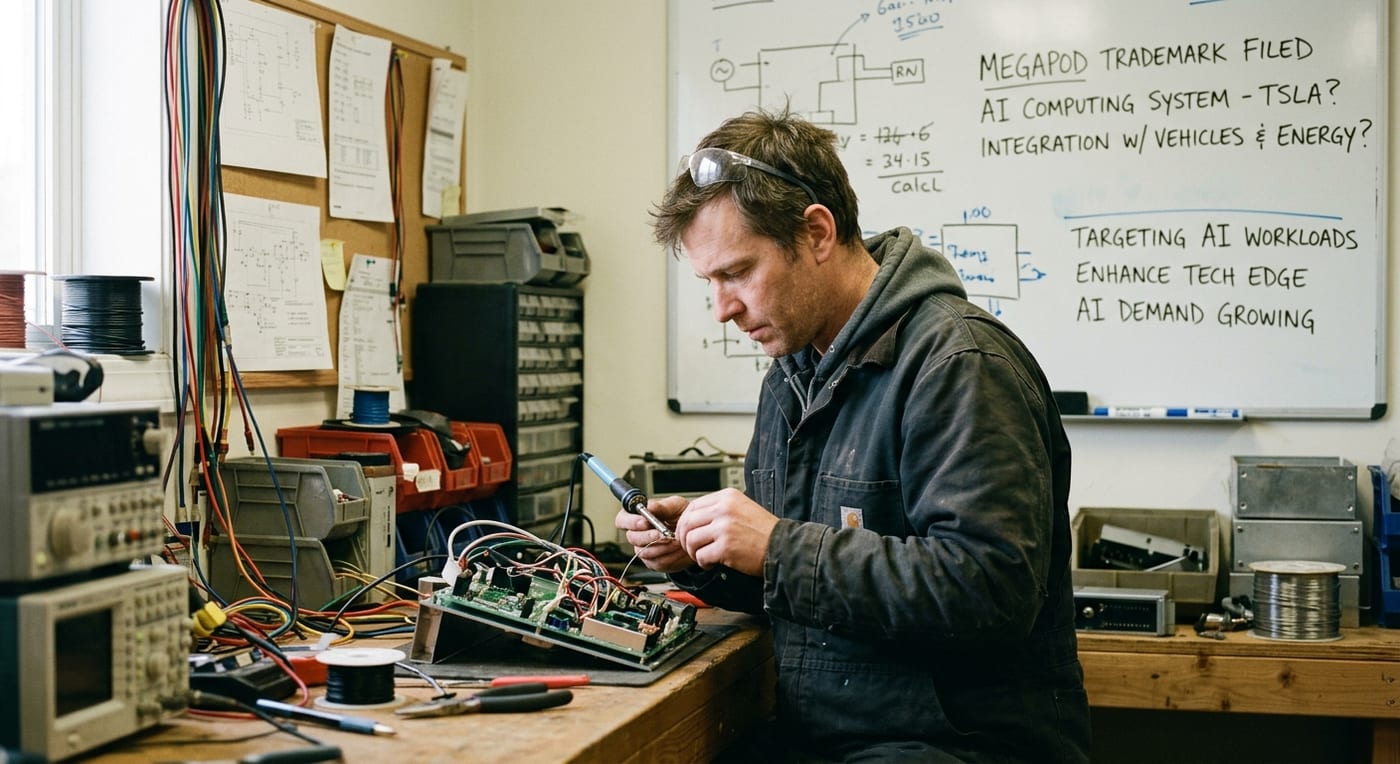
- Tesla files a trademark for 'Megapod', a computing system targeting AI workloads, marking its entry into AI computing.
- The 'Megapod' aims to enhance Tesla's technological edge and operational capabilities in the growing AI market.
- Tesla's strategy integrates 'Megapod' with its vehicles and energy products, reinforcing its leadership in AI and electric vehicles.
Tesla Inc. (TSLA) makes headlines this week as it takes a significant step in artificial intelligence development with the filing of a trademark for a new product named 'Megapod.' This self-contained computing system is positioned to cater specifically to AI workloads, marking Tesla's entry into the fiercely competitive AI computing space traditionally dominated by industry giants such as Nvidia. The 'Megapod' trademark filing, first reported by a user on social media, highlights Tesla's strategic pivot towards self-sufficient AI solutions, particularly following the discontinuation of its in-house AI training computer, Dojo.
The introduction of 'Megapod' comes at a time when demand for AI technology is surging across various sectors, with Tesla aiming to tap into this expanding market. By developing its own computing system, Tesla not only seeks to enhance its operational capabilities but also strengthen its technological edge in an environment where AI is becoming critical for numerous applications, from autonomous driving to energy management. Analysts see this move as a potential game-changer that could bolster Tesla's innovation profile and lead to improved efficiencies in its AI-driven services.
Furthermore, the 'Megapod' system is expected to integrate closely with Tesla's broader technology strategy, which includes plans for enhancing the functionality of its vehicles and energy products through advanced AI applications. This ambition aligns with Musk's vision of making significant contributions in not just the automotive sector but also in how technology can improve lives across different spheres, from transportation to energy sustainability. As Tesla navigates this new avenue, it reinforces its status as a leader not only in electric vehicles but also in pioneering AI technologies that could redefine the future landscape of both markets.
The discussions surrounding Tesla's 'Megapod' filing underscore the growing intersection of automotive innovation and AI technology, reflecting a trend where electric vehicle manufacturers are increasingly prioritizing advancements beyond conventional vehicle offerings. The potential implications of this development resonate throughout the tech and automotive industries, suggesting a roadmap of relentless innovation and adaptation to emerging technological demands.
In related news, as Tesla continues to expand its product lineup, the company's achievements in sustainable manufacturing practices and the integration of AI capabilities into its production systems remain a key focus. With increasing competition in the EV market, particularly from established automotive entities pivoting towards electric power, these innovations will be vital for maintaining Tesla's competitive advantage and market leadership.
Related Cashu News

Gentherm Enhances Thermal Management Solutions Amid Growing Demand for Automotive Climate Control
Gentherm focuses on innovative solutions and continues to gain attention within the thermal management technology sector. The company's latest initiatives emphasize enhancing operational efficiency an…

Gentex Joins AFFOA to Innovate Military Helmet Manufacturing with Sustainable Textiles
Gentex Corporation (Ticker: GNTX) joins an elite group of innovators in the textile industry as part of the recent award announcement by AFFOA (Advanced Functional Fabrics of America, Inc.). Selected…

Lear Corporation Wins 2026 Ford Supplier of the Year Award for Sustainability Excellence
Lear Corporation (Ticker: LEA) receives the prestigious recognition as the 2026 Ford Supplier of the Year in the Sustainability category at Ford Motor Company's Supplier Awards & Summit, held in Detro…

Toyota Partners with State Farm to Streamline Claims Process Using Vehicle Data Sharing
Toyota Motor is making significant advancements in partnership with State Farm to enhance the claims processing experience for Toyota and Lexus vehicle owners. Innovative Claims Processing Collaborati…