
Tesla's Continual Evolution Amidst Challenges
ED
Editorial
Cashu Markets·5 min read
TL;DR
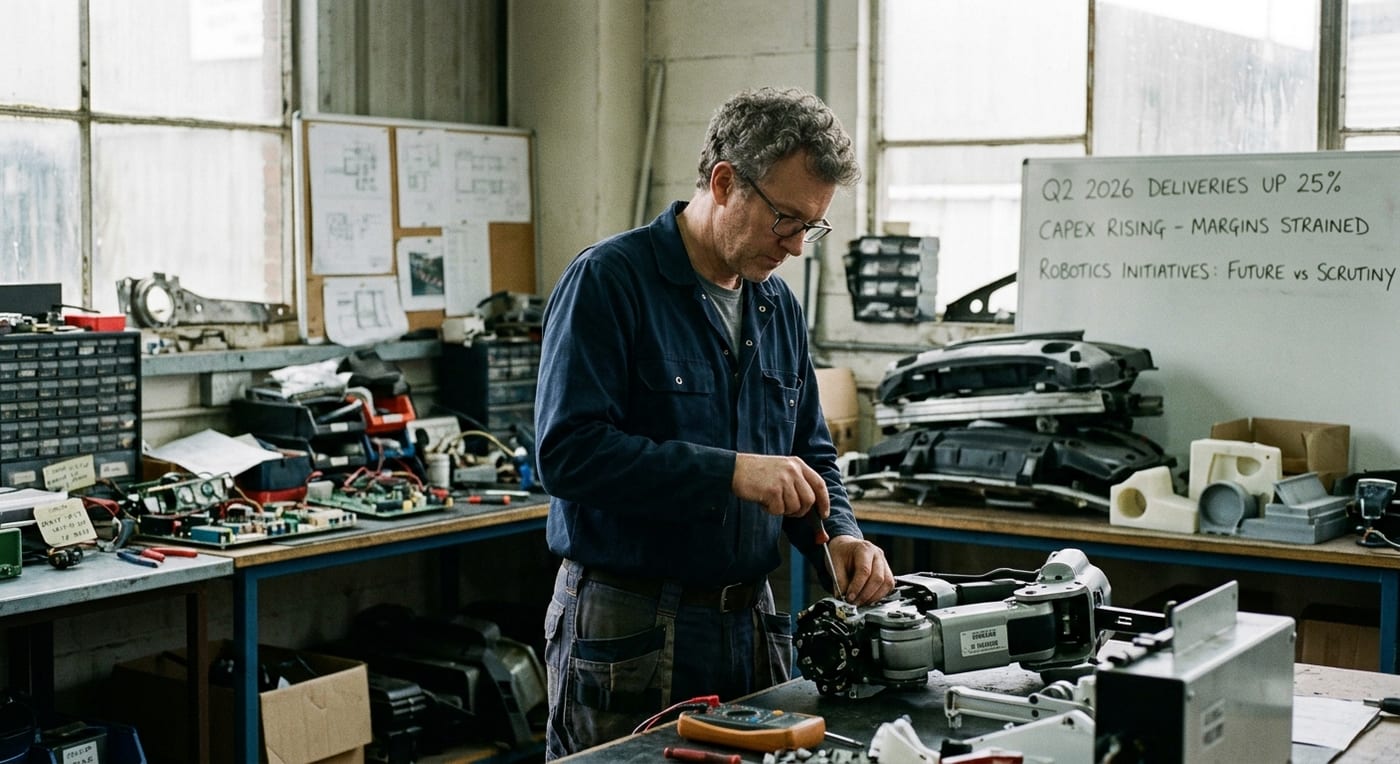
- Tesla delivered 480,126 vehicles in Q2 2026, a 25% increase.
- Rising capital expenditures are straining profit margins and investor sentiment.
- The company's ambitious robotics initiatives could redefine its future but face scrutiny.
Tesla, Inc. ( TSLA) has positioned itself at the forefront of the electric vehicle (EV) revolution, yet it finds itself at a critical crossroad amid increasing competition and ambitious expansions into robotics and autonomy. The company recently reported a remarkable 25% year-over-year increase in vehicle deliveries for Q2 2026, reaching 480,126 units. Despite this positive uptake, investor sentiment has been fragile due to rapidly rising capital expenditures and a significant decline in profit margins. As the automotive landscape continues to evolve, the intricate dynamics within Tesla's operations reveal both opportunities and challenges that the company must navigate. That backdrop echoes earlier coverage of the issue, especially around how pricing, strategy, and demand feed into the current story.
A Strong Performance, But At What Cost?
In its latest earnings report, Tesla showcased commendable growth figures, with total revenue surpassing $28 billion, a 26% increase year-over-year. However, an alarming 57% decrease in operating income has tested the waters of investor confidence. The company's operating margin fell drastically to 1.4%, with non-GAAP earnings per share (EPS) of $0.33, missing analysts' expectations of $0.53. This stark contrast illustrates the strain that escalating operational costs have imposed on Tesla's finances, illustrating a narrative familiar to those following the company's latest ventures.
This performance maintains a delicate balance between burgeoning vehicle sales and heightened expenditures, particularly in research and development for autonomous technology and robotics. Much of the capital has been channeled into initiatives such as the development of the Optimus humanoid robot, a project that integrates Elon Musk's vision for the future of automation and seeks to revolutionize Tesla's production capabilities. The commitment to these transformative technologies represents a long-term strategy, albeit a risky one that investors have been observing with caution.
The Robotics Reckoning
As Tesla expands into robotics, it aims not only to transform its manufacturing processes but also to establish new revenue streams that could reshape its business model. The Optimus project could become a cornerstone of this strategy, highlighting a dual focus on advancing EV technology and incorporating innovative automation solutions. However, the market response to Tesla’s ambitious plans has been mixed. Investor apprehensions have been fueled by the hefty expenses associated with these initiatives without immediate profitability in sight.
The pressing question remains: How will these innovations contribute to the bottom line? The company faces competition that is not only technological but also economic, as rivals such as Rivian and Lucid Motors introduce compelling alternatives to the market. This vigorous rivalry places additional strain on Tesla to maintain its pricing power and profit margins while it innovates.
Economic Conditions and Consumer Sentiment
The macroeconomic environment presents both challenges and opportunities for Tesla. With rising oil prices, consumers are increasingly gravitating toward electric vehicles, significantly benefiting Tesla as it consistently ranks as the most recognizable EV brand. Despite the significant uptick in delivery numbers, consumer demand for Tesla vehicles is intricately linked to broader economic trends and fuel price fluctuations.
Tesla’s ability to sustain its market position hinges on its understanding of these external influences. If economic conditions lead to persistent inflation and reduced consumer spending, the demand for luxury items, including Tesla’s higher-end models, may come under pressure. Nonetheless, the increasing public awareness regarding sustainability positions electric vehicles as a more attractive option relative to traditional internal combustion vehicles, thereby propping up demand.
Investor Sentiment: A Balancing Act
Tesla's stock has endured a tumultuous 2026, dropping nearly 30% year-to-date amidst rising skepticism about its high valuation juxtaposed with disappointing profitability metrics. Despite the company’s impressive growth in vehicle deliveries, the stock's performance reflects deeper investor concerns about underlying fundamentals. With shares currently trading at a trailing P/E ratio around 290, questions about the sustainability of price levels amidst poor earnings have led many analysts to adopt a cautious stance.
As highlighted in a previous article, rising capital expenditures and heightened operational costs have compounded investor anxiety. The financial implications of Tesla's expansive ambitions are becoming evident, as the push for innovation necessitates extensive funding at a time when profit margins are under pressure. Investors are increasingly wary, especially when assessing the prospects of product lines still in development, such as the anticipated Robotaxi and next-gen autonomous features.
The Road Ahead: Strategy and Vision
Looking ahead, Tesla’s strategic maneuvering is essential to ensure its sustained growth and market leadership. The commitment to robotics and AI signifies the company's intent to not only innovate but also redefine its industry presence amidst shifting market dynamics. The introduction of a long-wheelbase Model Y, aimed at captivating the SUV market, reflects Tesla's approach to countering stiff competition while continuing to cater to a growing consumer base.
However, as the journey unfolds, Tesla must ensure that its ambitious plans do not distract from the core business of electric vehicles. Balancing investments between groundbreaking projects and sustaining the flagship EV market will be crucial in retaining investor and consumer confidence.
Conclusion: A Pivotal Moment for Tesla
Tesla stands at a pivotal moment; it must navigate its ambitions cautiously while carefully tracking the financial ramifications of its investments. The company’s decision to embark on a dual path of increasing production while also investing in groundbreaking AI and robotics will be tested by an evolving competitive landscape and changing consumer sentiment. As Tesla endeavors to maintain its edge, the integration of new technologies will be a journey littered with challenges that, if managed adeptly, could herald a new era for the leading electric vehicle manufacturer. Investors and observers alike will be keenly watching how Tesla adapts and reshapes its strategy in these dynamic times. The same pressure is reflected in recent reporting on the issue, which helps explain why the company's pricing decisions remain under scrutiny.