
Tesla's Future: EVs, AI, and Strategic Shifts
ED
Editorial
Cashu Markets·5 min read
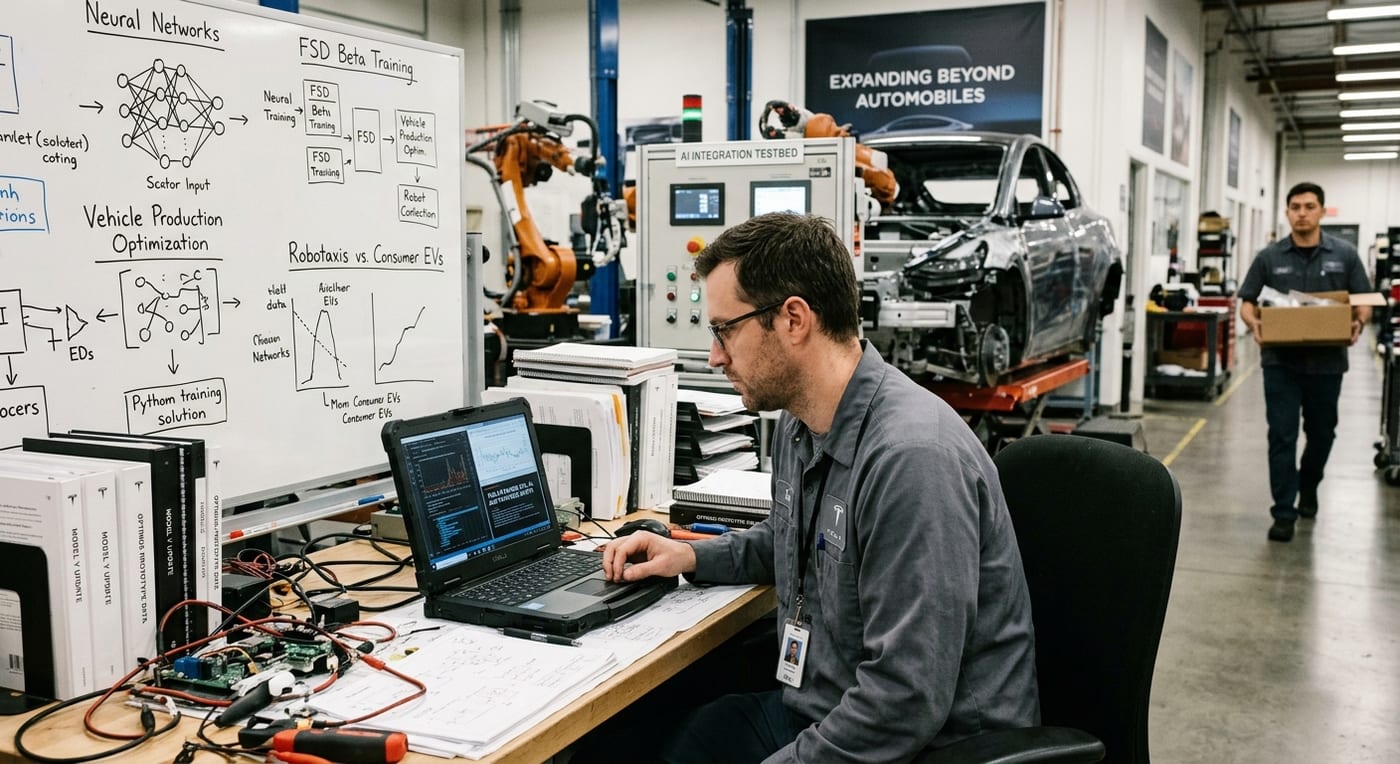
TL;DR
- ( TSLA ) has consistently been at the forefront of the electric vehicle (EV) revolution, captivating investors and consumers alike with innovative technology and ambitious projects.
- Recently, however, the company has begun to navigate new waters that include significant shifts in its production strategies and future business direction.
- As Tesla continues to expand its horizon beyond automobiles, understanding these developments is key to grasping the company's trajectory and potential market impact.
Tesla, Inc. (TSLA) has consistently been at the forefront of the electric vehicle (EV) revolution, captivating investors and consumers alike with innovative technology and ambitious projects. Recently, however, the company has begun to navigate new waters that include significant shifts in its production strategies and future business direction. As Tesla continues to expand its horizon beyond automobiles, understanding these developments is key to grasping the company's trajectory and potential market impact.
### Shifting Focus: From Cars to Robots
In a notable change, Tesla is redirecting its production focus from the well-established Model S and Model X lines to the budding field of robotics. The company's Fremont facility is set to pivot towards manufacturing Optimus humanoid robots, aligning with CEO Elon Musk's vision of integrating automation into everyday life. This shift not only signifies a diversification of Tesla's product lineup but also reflects its commitment to innovation in the technological landscape. The modular design of the production line for the Optimus robots illustrates Tesla's ambition to seize opportunities beyond traditional automotive manufacturing.
This strategic redirection sheds light on how Tesla intends to leverage its manufacturing capabilities for future growth. Combining electric vehicles with advanced robotics places Tesla in a unique position to dominate in both sectors, potentially leading to new avenues of revenue generation and market leadership. As competition heats up, particularly from companies like Rivian, which is now exploring similar avenues with its autonomous R2 SUV targeted at consumers seeking affordable electric vehicles, Tesla’s flexibility could provide a competitive edge.
### AI: The Core of Tesla's Ambitions
Tesla’s embrace of artificial intelligence (AI) continues to define its growth strategy. The company's recently announced 'Megapod'—a self-contained AI computing system—indicates a proactive approach to developing in-house technology. This is crucial as demand for AI applications surges globally. Tesla's endeavor not only aims to enhance its own operational capabilities but also to potentially lead the industry in AI-powered autonomous driving technologies. The focus on AI integration suggests that Tesla is not merely an automotive manufacturer; it is evolving into a comprehensive technology entity.
The strategic importance of AI cannot be overstated, as it is a central driver of Tesla’s projected future profits. Analysts predict that full autonomy in driving could result in a multitrillion-dollar market, positioning Tesla favorably in an expansive and lucrative landscape. As it stands, Tesla's autonomous driving software is believed to be among the most advanced globally, a fact that sets it apart from other industry players. This differentiator is critical as Tesla entrenches itself deeper into the AI domain.
### Financial Hurdles: The Road Ahead
Despite showcasing its technological advancements and production capabilities, Tesla faces significant financial scrutiny. The company's valuation, now hovering around $1.5 trillion, raises questions among some analysts regarding the sustainability of its ambitious targets given high current multiples against its actual earnings. Notably, market reactions to Tesla’s sales reports reveal a dissonance: even after reporting strong vehicle delivery numbers, the stock saw a notable downturn. Such trends imply investors may be recalibrating their expectations, probing deeper into the earnings potential instead of merely celebrating volume growth.
Moreover, Tesla's lower operating margins have contributed to a careful analysis regarding valuation. With a reported margin of just 4.2% in the first quarter, pressures mount as investors weigh the feasibility of future profitability amid burgeoning competition. Even as Rivian's R2 model gains traction by targeting the mid-market segment with a lower price point than Tesla's existing models, the latter’s premium positioning may become more challenging.
### The Role of Energy: Beyond Automobiles
Tesla's ambitious plans extend into energy solutions, emphasizing a broader commitment to sustainability. The activation of Foreign Trade Zone protocols at its Texas facility exemplifies this push, allowing for enhanced production of energy storage solutions such as the Megapack. This move places Tesla at the forefront of renewable energy technologies while fostering on-demand energy solutions essential for its growth.
Integrating energy management into its business model further underscores how Tesla aims to balance its automotive endeavors with impactful contributions to the renewable energy sector. Collaborations, such as with Sunrun for a virtual power plant initiative, illustrate Tesla's vision of intertwining its automotive technology with broader energy applications.
### Investor Sentiment and Market Expectations
As Tesla navigates these multifaceted transitions, investor sentiment remains a pivotal concern. With predictions of a potential merger between Tesla and SpaceX gaining traction, speculation continues to swirl around how such an integration could reshape market dynamics. Analysts are intrigued by the possible synergies between the two companies, particularly in utilizing SpaceX's advancements in AI infrastructure to enhance Tesla's automotive and energy solutions.
However, the prospect of these opportunities must be balanced against the inherent risks. Shareholder concerns over the viability of ambitious projects, especially amid ongoing discussions regarding profitability and operational efficiency, necessitate a cautious approach. As Tesla embarks on this innovative journey, clarity and execution will be watchwords for sustaining investor confidence.
### Conclusion: Preparing for the Future
In essence, Tesla's evolving landscape reflects a bold pursuit of innovation and diversification. As the company transitions into robotics, embeds AI deeper into its operations, and explores new energy solutions, it remains crucial for investors to understand the evolving nature of its business strategy. Balancing ambitious visions with tangible financial realities will ultimately dictate Tesla’s path forward. As the market evolves, so too will expectations of how Tesla can leverage its expansive ambitions into sustainable growth and profitability, making it a critical player in the future intersection of transportation, energy, and technology. The same pressure is reflected in recent reporting on the issue, which helps explain why the company's pricing decisions remain under scrutiny.