
Tesla's Innovative Shift to Robotics and SUVs
ED
Editorial
Cashu Markets·4 min read
TL;DR
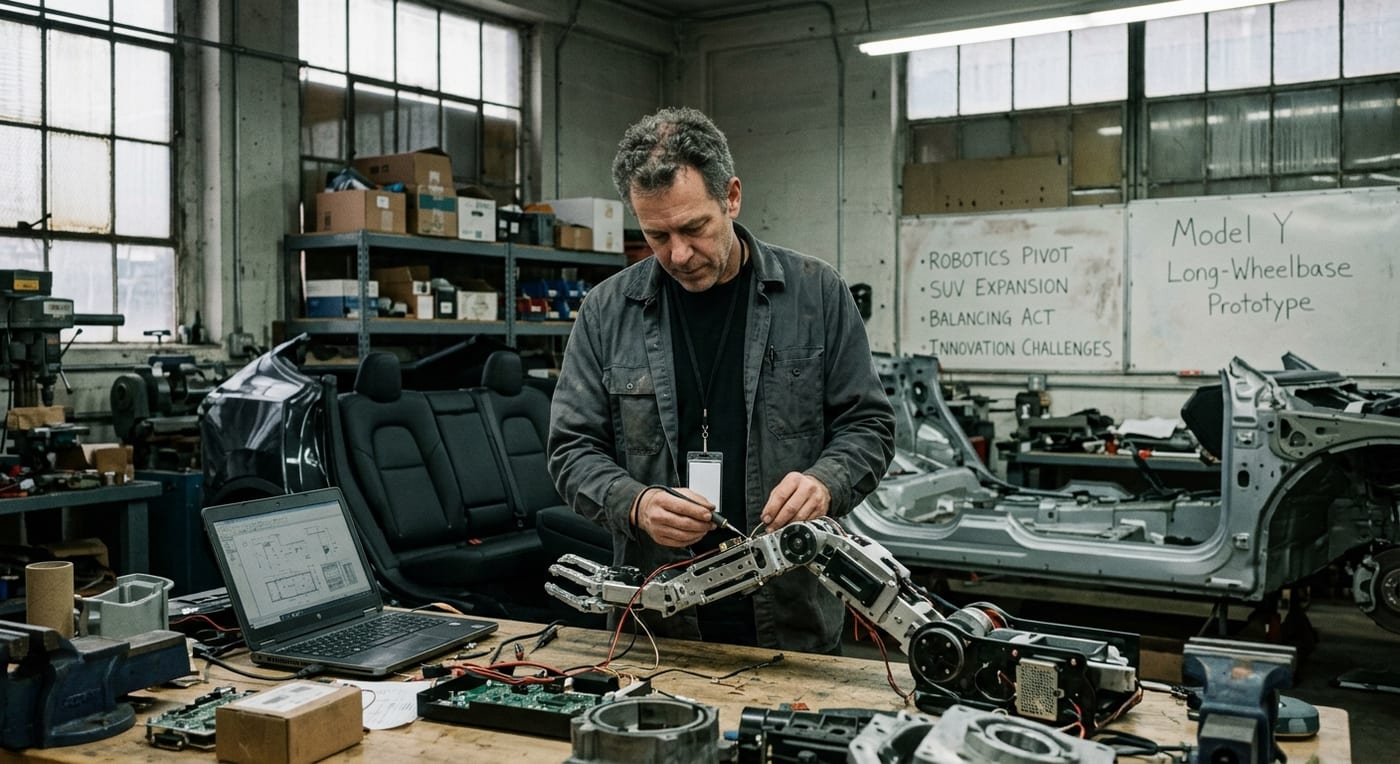
- Tesla pivots to robotics alongside expanding SUV offerings.
- Introduction of long-wheelbase Model Y counters competition.
- Balancing innovation with traditional automotive challenges.
Tesla, Inc. ( TSLA) is navigating a transformative era as it pivots from pure electric vehicle production to integrating advanced technologies, including robotics, while expanding its model offerings. This significant shift stems from the company’s need to adapt to an evolving market landscape characterized by increased competition and changing consumer demands. That backdrop echoes earlier coverage of the issue, especially around how pricing, strategy, and demand feed into the current story.
Embracing Robotics and AI
Tesla's recent revelations around its production strategies underscore a profound transformation within the company. The decision to redirect a portion of its manufacturing capabilities toward humanoid robotics aligns with CEO Elon Musk's vision of an automated future. The Optimus project, based at the Fremont facility, represents Tesla's commitment to leveraging its engineering prowess beyond automobiles. This shift also illustrates a broader strategy to incorporate artificial intelligence (AI) into multiple facets of the business, which was recently highlighted in previous discussions about Tesla's ambitions with AI and robotic technology.
With this new direction, we see an alignment with the company's long-term objective of positioning itself at the vanguard of not just the electric vehicle (EV) market but also the burgeoning field of robotics. As Tesla aims to enhance automation in everyday lives, the introduction of humanoid robots can create additional revenue streams and potential cost efficiencies in its production and operational processes. The market's reaction to these moves will be closely monitored by investors while emphasizing the drastic shift towards a more technology-oriented business model.
SUV Market Dynamics
Parallel to its robotics initiative, Tesla is also expanding its SUV offerings, most notably with its long-wheelbase Model Y. Priced at $61,990, this version is tailored to meet growing consumer demand for family-oriented vehicles. This strategic move represents a critical countermeasure against competitors entering the electric SUV space. By broadening the Model Y lineup, Tesla aims to solidify its foothold in a segment that is increasingly lucrative and competitive. As competition intensifies with both established automakers and new entrants, Tesla's expansion strategy becomes essential for maintaining its leading position in the EV market.
At a time when many automotive companies are slashing prices to capture market share, Tesla's pricing strategy appears to reflect a more calculated approach. Their ability to maintain margins has remained a focal point of investor discussions, especially as Tesla’s competitors grapple with pricing wars and increasing production costs.
Challenges and Opportunities Ahead
Despite Tesla's aggressive strategies, the transition comes with challenges. The need to balance its core automotive business while venturing into robotics can create internal pressures as the company reallocates resources and human capital. Additionally, the competitive landscape is shifting rapidly. Rivals not only in the EV sector but also those venturing into robotics pose unique challenges that Tesla must navigate effectively.
Tesla's attempts to pivot towards robotics and an expansion of its automotive lineup reflects the company's effort to address current market challenges while preparing for future opportunities. However, as competitors solidify their positions in both the EV and robotics markets, Tesla's response and adaptation will be crucial.
Insights from Strategic Shifts
The pivot towards a robotics-focused production strategy echoes Tesla's earlier moves, such as the introduction of AI-powered features in their vehicles. This strategic realignment was noted in previous analyses detailing Tesla’s direction towards synthesizing technology, vehicle production, and robotics. Such insights underscore the innovative spirit at the heart of Tesla's operational ethos.
With Tesla continuing to innovate in AI and robotics, the company's overall mission transforms from merely producing electric vehicles to pioneering automation solutions that can transcend traditional market barriers. This transformation could isolate potential consumer bases from various sectors, creating new revenue opportunities in yet untapped markets.
The Investor Perspective
For investors, this strategic evolution opens up a dialogue on the future valuation of Tesla. As the company integrates these advanced technologies, understanding their long-term impacts on profitability is essential. A segment of the investment community may view Tesla's innovation strategy as risky, particularly in light of fluctuating demand for their current offerings. However, the long-term potential of diversifying product lines and securing leadership in robotics presents a compelling case for Tesla's sustained growth trajectory.
In conclusion, the comprehensive shifts at Tesla indicate a mature understanding of market dynamics and a proactive approach to capture emerging trends. By balancing vehicle diversification with advancements in robotics, Tesla is poised at a critical junction—one that could redefine its operational successes and further engrain its position in the future automotive landscape. As the company's journey unfolds, its ability to resonate with both traditional consumers and tech-savvy enthusiasts will define its legacy in the years to come. The same pressure is reflected in recent reporting on the issue, which helps explain why the company's pricing decisions remain under scrutiny.