
Tesla's Strategic Vision: Robotics and SUVs
ED
Editorial
Cashu Markets·5 min read
TL;DR
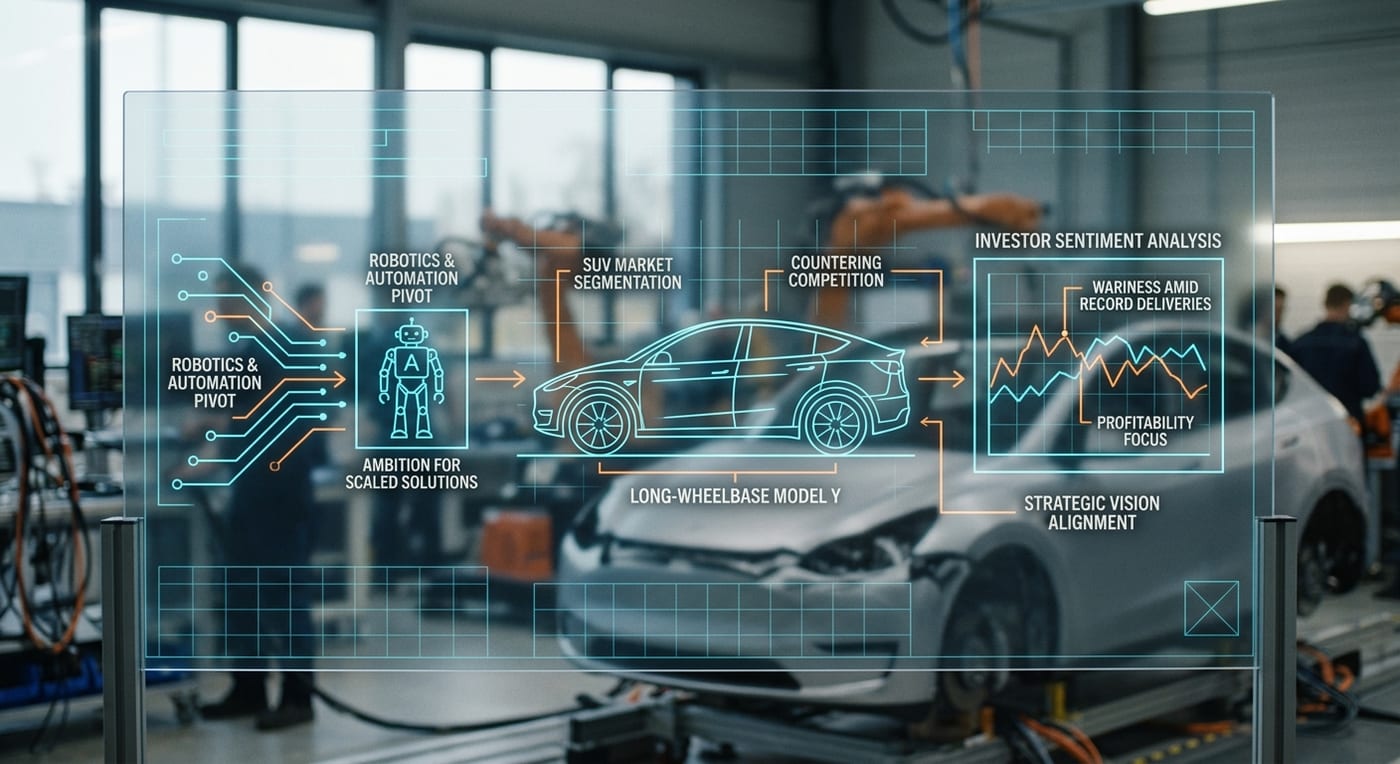
- Tesla pivots to robotics, reflecting an ambition for automation.
- Introduction of a long-wheelbase Model Y counters growing SUV competition.
- Investor sentiment is wary with focus on profitability amid record deliveries.
Tesla, Inc. (TSLA) is navigating a transformative journey as it diversifies its portfolio beyond electric vehicles (EVs) into innovative technologies such as robotics. This strategic shift is underscored by robust sales growth and a commitment to emerging sectors, but not without challenges and scrutiny regarding profitability. This article delves into Tesla’s evolving business model, highlighting its latest developments, strategic pivots, and the implications for investors amid fluctuating market conditions.
Reinventing the Core: The Shift to Robotics
At the heart of Tesla's new direction is the introduction of the Optimus humanoid robot, which aims to redefine the company's manufacturing capabilities and product offerings. The pivot toward robotics emphasizes Elon Musk's vision of integrating automation into various sectors, a move necessitated by escalating competition and changing consumer demands in the automotive landscape. Tesla’s Fremont factory, redirecting resources towards robot production, fits within this broader strategy, funneling talent and technology into a field perceptibly different from automotive production.
The shift to robotics is not merely a side venture; it's a core element of Tesla's future growth strategy. As competition increases with traditional automakers introducing electric models and tech companies advocating autonomous vehicles, Tesla's decision to explore robotics provides a competitive edge. This integration is aimed at utilizing its advanced engineering capabilities while addressing present challenges in the EV market.
Expanding the Electric SUV Lineup
In addition to venturing into robotics, Tesla is amplifying its focus on SUVs, highlighted by the recent rollout of a long-wheelbase variant of the Model Y. This model caters to the growing demand for family-oriented vehicles as traditional SUVs gain traction in the market. Priced at approximately $61,990, the new Model Y aims to counter increasingly competitive offerings from brands like Ford and Rivian, which have begun to carve out significant market share in the electric segment.
Tesla acknowledges the rising importance of SUVs in its vehicle lineup, a segment currently overshadowed by growing competitors. The long-wheelbase Model Y addresses this market demand strategically, presenting Tesla not just as a luxury car producer, but as a versatile player in the broader automotive sphere. This proactive maneuver aligns with insights from previous articles discussing Tesla’s response to competition and evolving market dynamics.
Investor Sentiment and Profitability Concerns
Despite a surface-level perception of growth with record vehicle deliveries—totaling 480,126 units in the last quarter—investor sentiment is markedly cautious. Tesla struggles with compressing profit margins, primarily attributed to its reliance on vehicle discounts and competitive pricing strategies, which undermine high-profit expectations essential for sustaining its market capitalization. With a forward P/E ratio still hovering at a lofty 172, this valuation rests heavily on optimistic assurances regarding future success in autonomy and robotics, a fundamental aspect that investors are keenly monitoring.
While momentum in vehicle sales remains, the profitability narrative is of increasing concern. Analysts highlight the need for strong margins, particularly with automotive gross margins reflecting a decline under scrutiny in recent quarters. The pivotal figure to watch in upcoming earnings reports is the automotive gross margin excluding regulatory credits, which has shown slight improvements recently but remains vulnerable to market volatility and competition-driven pricing pressures.
Musk’s ambitious plans hinge not only on expanding vehicle offerings but also on ensuring profitability in the core automotive sector. As the company pivots towards more capital-intensive innovations like autonomous technology, investors must carefully assess the sustainability of current growth trajectories against the backdrop of evolving economic conditions.
Energy as a Future Growth Catalyst
One of the undercurrents of Tesla’s strategic landscape is the burgeoning Energy sector, where projects like the Megapack offer not just supplementary revenue but a critical pivot towards sustainable energy solutions. As the global focus sharpens on renewable energy amid environmental concerns, Tesla's energy storage solutions become increasingly vital, positioning the company at the confluence of transportation and energy transformation.
The energy segment not only reinforces Tesla's EV market appeal but also extends its footprint into significant infrastructure developments, such as data centers, which are rapidly proliferating. With energy costs becoming more critical within operating models, Tesla’s ability to deliver cost-effective energy solutions can potentially become a runway for future growth as demand escalates in environmentally conscious markets.
Challenges Ahead: Competitive Pressures and Regulatory Scrutiny
Looking ahead, Tesla faces daunting challenges as market competition intensifies, particularly with numerous legacy automakers ramping up their EV initiatives. While a surge in competitors with aggressive pricing strategies presents an immediate hurdle, the long-term implications of Tesla's expansive strategy—combining robotics with established automotive and energy sectors—might offer a pathway to sustained growth.
In harmonizing its traditional automotive business with its ambitious robotics initiatives, Tesla's broader vision requires a meticulous balancing act between innovation costs and profitability. This balancing act is exacerbated by external pressures, such as regulatory scrutiny on autonomous vehicle safety and environmental standards, which can impose additional operational burdens.
Conclusion: The Road Ahead for Tesla, Inc.
Tesla, Inc. (TSLA) continues to redefine its approach in a rapidly changing industry landscape. With the dual focus on robotics and a diverse vehicle lineup, the company's strategic initiatives showcase both opportunities and challenges that influence its market trajectory. Investors must monitor developments closely, weighing the innovations against profitability and market pressures. As Tesla forges ahead, its ability to navigate these intricacies will fundamentally shape its viability as a leading player in the future landscape of transportation and technology. The same pressure is reflected in recent reporting on the issue, which helps explain why the company's pricing decisions remain under scrutiny.