
Tether USD's Growing Global Impact
ED
Editorial
Cashu Markets·4 min read
TL;DR
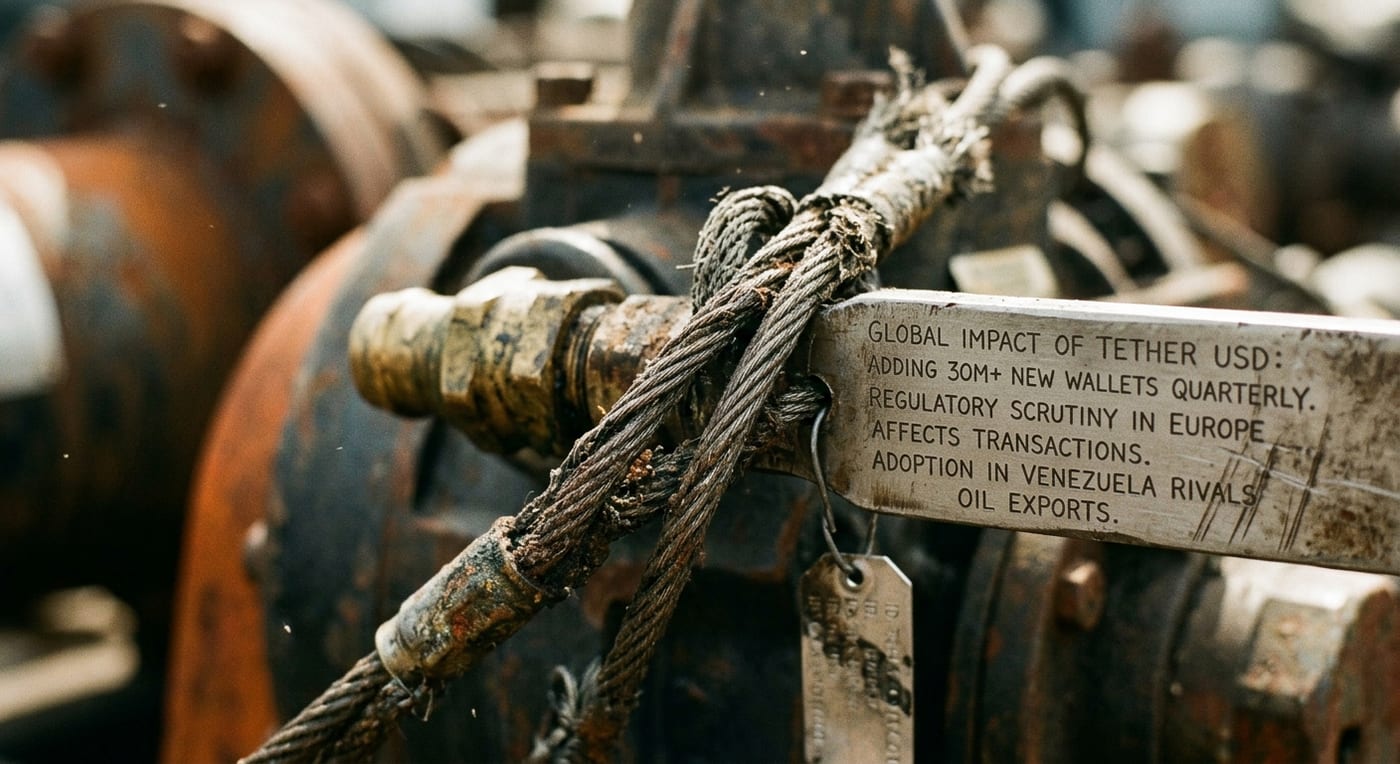
- Tether reports adding over 30 million new wallets quarterly.
- Significant regulatory scrutiny in Europe affects USDT transactions.
- Tether's adoption in Venezuela rivals traditional oil exports.
Tether USDt USD ( USDTUSD) continues to cement its position as a leading stablecoin amidst evolving market dynamics and regulatory scrutiny. As Tether navigates this challenging landscape, the company's growth trajectory is impressive, revealing significant demand for stablecoin solutions across various sectors, particularly in regions like Venezuela and Europe. This article will dive into Tether's recent market movements, user growth, and challenges posed by regulatory developments around the globe.
Robust User Growth and Market Expansion
In an impressive display of growth, Tether has reported the addition of over 30 million wallets each quarter, with its overall user base exceeding 550 million. This remarkable pace has led to Tether becoming a preferred option for cross-border trade and digital payments, with CEO Paolo Ardoino emphasizing that approximately 50-60% of the stablecoin's utility is rooted in these transactions. The demand is particularly high in developing regions where traditional banking infrastructure may be lacking.
As Tether's market cap approached around $190 billion in 2026, the stablecoin even briefly surpassed Ethereum to become the second-largest cryptocurrency by market value, reinforcing its critical position in the digital asset ecosystem. The significant financial results posted by the company, which included $1.04 billion in profit for the first quarter of 2026, are indicative of its strong operational health, supported by an impressive reserve of over 97,000 BTC. Tether has not only fortified its user metrics but also continues to innovate with the launch of its self-custodial wallet app aimed at further empowering its considerable user base.
Regulatory Challenges in Europe
However, Tether's ascendancy has not been without its challenges. The company is currently navigating a complex regulatory environment in Europe, particularly against the backdrop of the Markets in Crypto-Assets (MiCA) regulations. Tether's decision to forgo pursuing MiCA approval reflects concerns regarding the framework's reserve requirements, which Ardoino has described as potentially harmful to stablecoin issuers. In response to these tightening regulations, various exchanges have begun to restrict USDT transactions, pushing users towards alternatives such as USDC.
Significant competitors in the European exchange landscape, such as OKX, have opened conversion routes allowing users to transition from USDT to USDC amid these new compliance measures. With established financial operators becoming increasingly cautious about their association with USDT, Tether's market dynamics in Europe are expected to shift, potentially reducing availability amid heightened scrutiny from regulators.
Tether's Strategic Resilience
Despite the looming regulatory pressures in Europe, Tether's stronghold in the cryptocurrency market illustrates its resilient business model. As highlighted in previous analyses, Tether commands a substantial share of the centralized finance (CeFi) lending market, holding roughly 68% despite an overall contraction in that space. These dynamics showcase Tether's strategic ability to maintain market share while others falter, reflecting a robust response to external pressures.
Moreover, Tether's substantial financial backing, including accumulating excess reserves of over $8 billion, primes the firm for greater compliance as specific regulatory challenges emerge. Tether is expected to explore partnerships that can enhance compliance frameworks, thereby bolstering its market position and ensuring future growth avenues remain open, even amidst tighter scrutiny.
Emerging Markets: The Case of Venezuela
Tether's strongest performance isn't solely rooted in developed markets; rather, it's significantly influenced by its adoption in emerging economies like Venezuela. The Venezuelan market has seen USDT trading volumes that have recently approached levels traditionally dominated by oil exports, further entrenching the stablecoin as a vital mechanism for currency exchange and trade.
Reports indicate that USDT trading on Binance's peer-to-peer market in Venezuela surged to approximately $1.39 billion within a short period, accounting for about 75% of the country's monthly oil export value. This development underscores how stablecoins are becoming critical fixtures in local economies where access to traditional currency can be severely limited due to factors such as sanctions and hyperinflation.
Conclusion: Tether's Ongoing Evolution
Tether USDt USD's ongoing evolution reflects a broader narrative within the cryptocurrency sector marked by rapid innovation and regulatory complexity. As the company strategizes its approach to stringent regulations, its ability to expand thoughtfully in emerging markets while sustaining unparalleled user growth will be crucial. With ongoing challenges and challenges on the horizon, the Tether brand has to remain agile and responsive, securing its legacy as a pillar in the world of stablecoins while addressing the dynamic needs of users across the globe.
In conclusion, Tether USDt USD's story is one of resilience against a backdrop of regulatory challenges, competitive dynamics, and the continuing swell of support from a growing global user base. The same pressure is reflected in recent reporting on the issue, which helps explain why the company's pricing decisions remain under scrutiny.