
TSMC: Powering the AI Semiconductor Future
ED
Editorial
Cashu Markets·5 min read
TL;DR
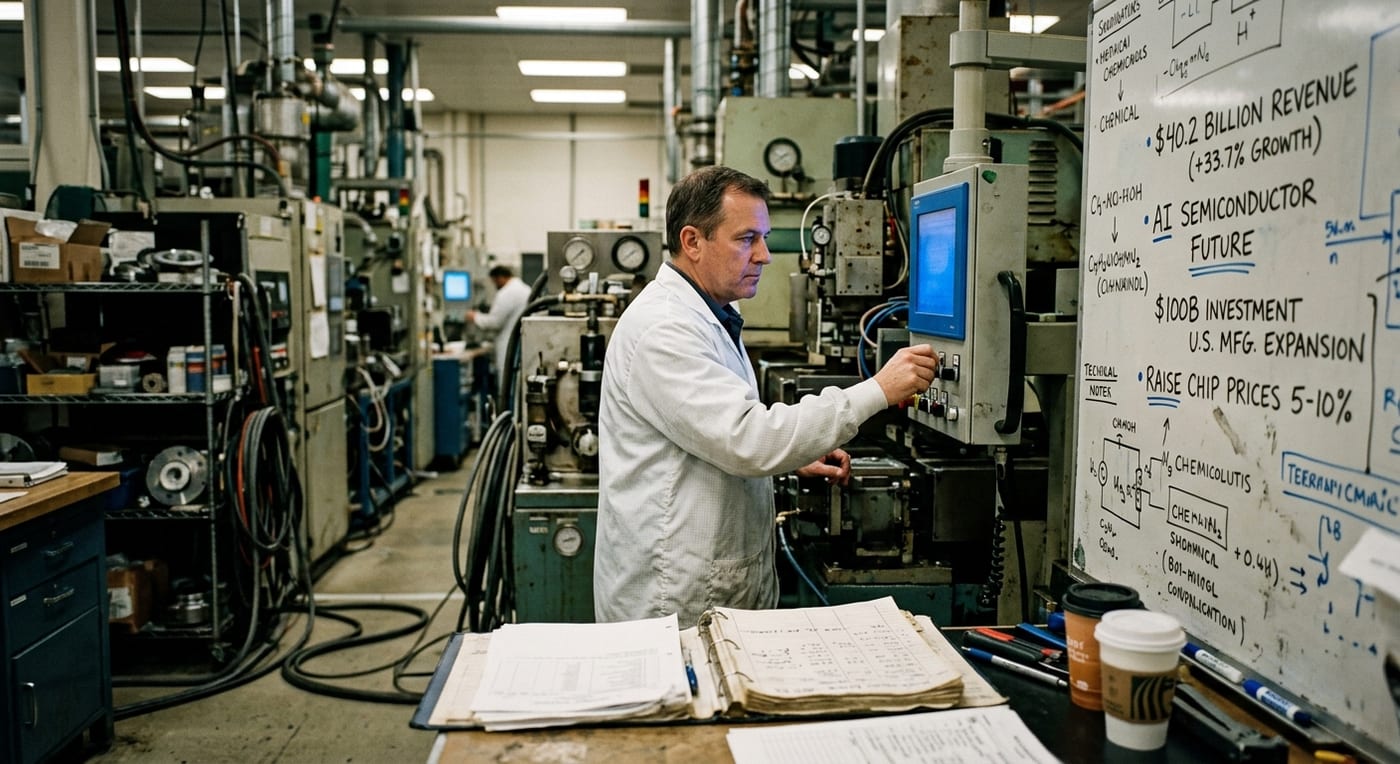
- TSMC experiences 33.7% revenue growth to $40.2 billion.
- $100 billion investment for U.S. manufacturing expansion.
- Plans to raise chip prices by 5% to 10% to sustain profitability.
Taiwan Semiconductor Manufacturing Company Limited (TSM) stands at the forefront of the semiconductor industry, distinguished by its unrivaled dominance in the production of advanced chips crucial for artificial intelligence (AI) applications. As global demand for AI-centric technologies surges, TSMC's strategic maneuvers, robust financial performance, and expansive growth initiatives mark it as a pivotal player within this rapidly evolving market. The company has recently made headlines with an impressive 33.7% increase in revenue, totaling approximately $40.2 billion, reinforcing its position as a critical supplier to several major technology firms. This article explores TSMC's remarkable achievements, future outlook, and the strategies informing its decision-making amidst a dynamic technological landscape.
TSMC's Financial Performance
In its latest earnings report, TSMC showcased a staggering revenue increase that underscores the company's role as a linchpin in the semiconductor ecosystem. The 33.7% year-over-year growth to $40.2 billion exemplifies the manufacturer's ability to capture significant market share, particularly within the realm of AI chip fabrication. This financial surge can be linked directly to soaring global demand for advanced chips, as noted in previous reports highlighting TSMC's adaptability to the market needs. The company continues to thrive despite competitive pressures, achieving gross margins estimated at 67.7%, which suggests strong operational efficiency.
Alongside these remarkable revenue figures, TSMC's net income saw a notable rise of 77.4% year-over-year, significantly eclipsing analyst expectations. As TSMC navigates through these tumultuous times with its robust operational framework, investors remain increasingly optimistic about the company's future trajectory. TSMC's ability to maintain such profitability in the face of rapid technological changes highlights its formidable market position and strategic foresight.
Strategic Investments for Future Growth
To sustain its momentum and capitalize on the burgeoning AI chip market, TSMC has committed to a strategic investment plan amounting to approximately $100 billion for manufacturing expansion, particularly in the United States. This endeavor aligns with the growing geopolitical emphasis on localizing semiconductor production, as national governments view chip manufacturing as a pivotal industry for technological sovereignty.
Such extensive investment plans indicate TSMC's commitment to not only expanding its production capabilities but also to reinforcing its supply chain mechanisms. As AI and machine learning technologies proliferate, TSMC's expansion efforts in the U.S. could provide it with a significant lead against competitors who are similarly vying for a slice of the AI semiconductor market. By establishing additional manufacturing capacity, TSMC ensures it can meet the escalating demand from a variety of industries, including automotive, consumer electronics, and cloud computing.
Connections with Competitors and Market Landscape
While TSMC is perfectly positioned to benefit from the AI chip boom, it is important to consider the competitive landscape. Companies like Nvidia and Micron are also experiencing substantial growth, propelled by their technological advancements and investments aimed at the AI market. Nvidia, for instance, has solidified its dominance in the GPU sector, ensuring its products remain pivotal for AI infrastructure; however, unlike TSMC, it does not possess the same level of manufacturing capabilities. TSMC uniquely combines both the design and manufacturing aspects within the semiconductor supply chain, allowing it to control a significant portion of the advanced chip market, with an estimated 90% market share for state-of-the-art processors.
This dynamic means that even as competitors invest in similar technologies, TSMC's capacity for large-scale, reliable chip production enables it to maintain a distinct advantage in quality and supply reliability. As articulated in prior reports, TSMC's leadership in production serves not only to meet current demand but also sets the stage for future growth as the AI sector continues to expand.
Pricing Strategy and Maintaining Profitability
Another important aspect of TSMC's strategy is its approach to pricing in the current economic environment. The company has indicated plans to increase chip prices by 5% to 10%, an adjustment made necessary by rising production costs associated with enhanced manufacturing techniques and expansion efforts. This pricing strategy reflects TSMC's proactive measures to maintain profitability while supporting ongoing investments in technology and infrastructure.
Interestingly, such adjustments were previously outlined in articles analyzing TSMC's market responses to AI chip trends. It is essential to maintain an equilibrium between demand and pricing to circumvent potential margin pressures, particularly as competition heats up in the semiconductor arena. TSMC's capability to navigate these challenges effectively underscores its resilience as a leader in semiconductor manufacturing.
Investor Outlook and Long-Term Goals
As TSMC continues to solidify its foothold in the AI chip sector, investor confidence appears robust. With projections indicating that demand for AI chips will persist through 2029 and beyond, TSMC's strategic investments and production capabilities position it favorably for sustained growth. The company's historical performance and management's forward-looking statements have led some analysts to regard TSMC as an appealing prospect for investors looking to capitalize on the evolving technology landscape.
Moreover, TSMC's recent evaluation, trading at approximately 30 times earnings, reflects its elevated growth expectations in comparison to historical valuation metrics. While concerns have surfaced regarding potential cyclical downturns following this AI boom, management has suggested that ongoing innovation and demand for semiconductors can create a pathway for continued strength in the market.
Conclusion
Taiwan Semiconductor Manufacturing Company Limited (TSM) is more than just a key player in the semiconductor industry; it is a critical driver of technological advancement as AI chips reshape the global landscape. With impressive financial results, aggressive growth strategies, and a robust market position, TSMC awaits a future filled with substantial opportunities and challenges. As the semiconductor landscape evolves, TSMC’s adaptability and innovation will undoubtedly play crucial roles in determining the trajectory of the market for years to come. The same pressure is reflected in recent reporting on the issue, which helps explain why the company's pricing decisions remain under scrutiny.