
Uber's Path to Sustainable Growth
ED
Editorial
Cashu Markets·5 min read
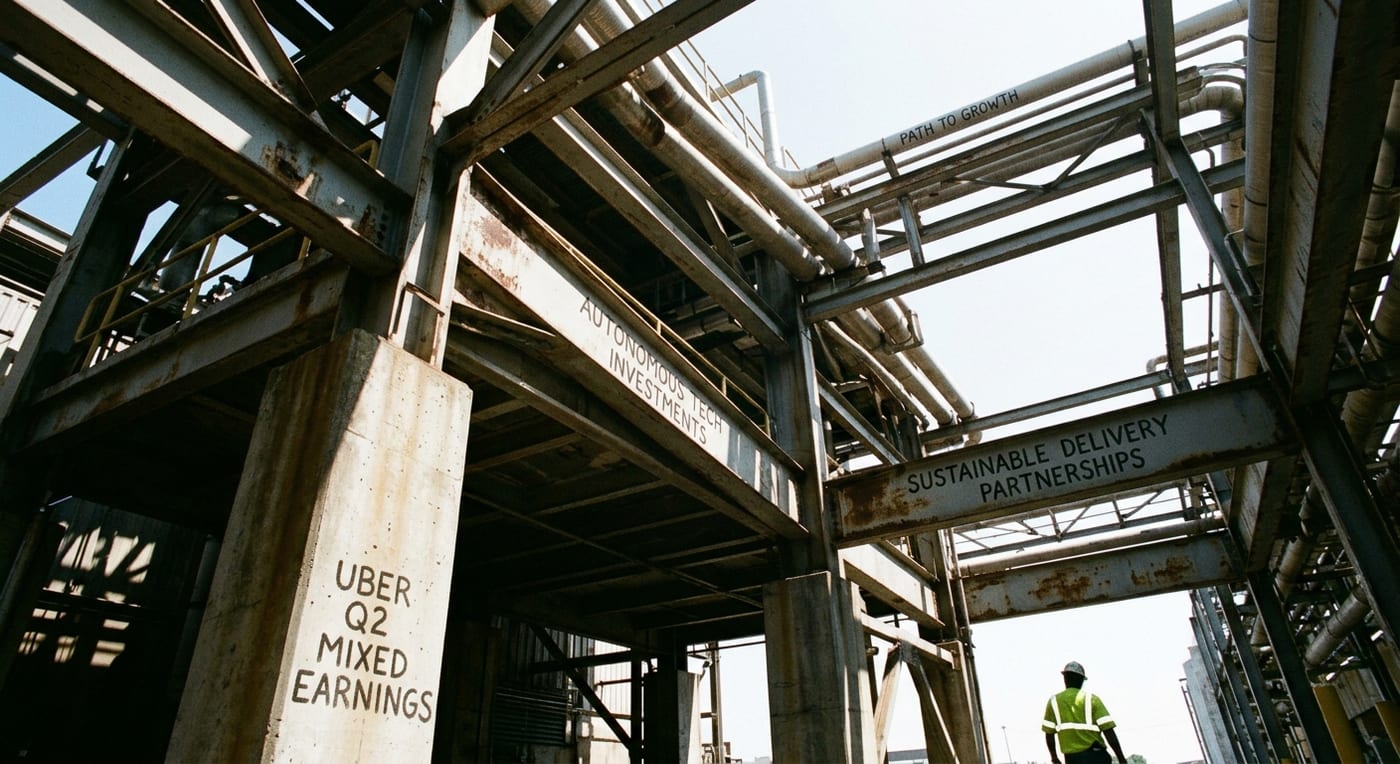
TL;DR
- Uber sees mixed Q2 earnings with some forecasts trailing expectations.
- Strategic investments in autonomous vehicles and AI reflect future growth efforts.
- Partnerships advancing sustainable delivery initiatives enhance market positioning.
Uber Technologies, Inc. ( UBER) continues to navigate a multifaceted landscape as it adapts to operational challenges and market shifts. As the ridesharing giant pushes forward, it is innovating within its core mobility and delivery services while attempting to redefine its strategies in artificial intelligence and sustainability. Recent earnings reports indicate a mixed performance, with forecasted bookings trailing expectations, yet growth lies ahead as Uber seeks to solidify its place in the competitive landscape.
Earnings Report: A Mixed Bag
In its latest quarterly earnings, Uber reported that second-quarter profit met analysts' expectations, aligning with the earnings per share projected at 81 cents. Revenue for the quarter rose to $14.19 billion, a 12% year-over-year increase from $12.65 billion. In terms of bookings, Uber recorded a total of $58 billion, surpassing estimates of $57.23 billion. However, the company provided a subdued forecast for upcoming quarters, predicting bookings around $59.25 billion, which is slightly below analysts' consensus of $59.33 billion. This has raised concerns among investors, given that Uber's stock has already seen a 12% decline this year, contrasts sharply with a 14% rise in the Nasdaq.
Despite these forecasted disappointments, Uber's leadership, under CEO Dara Khosrowshahi, remains optimistic, attributing revenue spikes to seasonal events like the FIFA World Cup, which attracted over 8 million tourists in North American cities. The core mobility segment generated $7.36 billion, while delivery services contributed $5.25 billion to the overall revenue.
Strategic Focus: Autonomous Vehicles and AI
Uber’s commitment to enhancing its position in the market is underscored by substantial investments in autonomous vehicle (AV) technology. The company has pledged over $10 billion to advance its AV projects over the coming years. This strategic push aims to not only elevate Uber's operational efficiency but also enhance user experience through more automated service offerings. By integrating AVs into its existing framework, Uber hopes to redefine urban mobility, an initiative that parallels the advancements of competitors in the space. While the earlier exclusivity agreements with partners like Waymo are set to expire, this shift allows Uber the flexibility to explore new partnerships and opportunities in the rapidly growing robotaxi sector.
Uber's efforts to streamline its operations through artificial intelligence (AI) continue to evolve. The company's Chief Technology Officer, Praveen Neppalli Naga, recently discussed the end of the 'tokenmaxxing' era, which highlights a pivot towards efficiency in AI usage rather than raw spending volumes. In earlier phases, Uber encouraged its team to maximize AI integrations across their workflow. Naga now indicates the focus will be on optimizing AI processes to yield better productivity. This shift comes in response to earlier critiques of excessive AI spending with inadequate returns, an issue facing several tech firms today. The enhancements in AI efficiency at Uber signal potential for operational optimization as the company refines its resource allocation.
Sustainability Initiatives: Partnering for Impact
A significant step toward closer alignment with sustainability goals is Uber's partnership with Coco Robotics, which aims to revolutionize food delivery in urban environments. The collaboration seeks to deploy autonomous delivery robots in Miami, enhancing Uber Eats' service and promoting zero-emission logistics. This initiative is particularly timely as consumers increasingly favor eco-friendly alternatives in their purchasing decisions. As highlighted in previous coverage, Coco's robots have already achieved remarkable success in Los Angeles, with over 500,000 emissions-free deliveries.
Uber's venture into sustainable deliveries aligns with broader market trends where both consumers and regulators are becoming increasingly aware of environmental impacts. By investing in innovative solutions like autonomous robots, Uber is responding to real-time consumer demand and positioning itself at the forefront of sustainable logistics.
Challenges and Future Directions
Despite the progress, the company must navigate regulatory hurdles and evolving market conditions that pose risks to its long-term strategy. The forecasted decline in earnings amid increased competition places added pressure on Uber to deliver on its promises of growth and innovation. The ongoing disparities in market expectations against performance metrics can dampen investor sentiment, as seen in its recent stock movements.
While Uber's strategy focuses on leveraging technology across its delivery and ridesharing segments, external factors, including economic fluctuations, will play a crucial role in determining its overall success. Although the company is improving its performance across various sectors, it must consistently adapt to maintain its leadership position.
Conclusion
As Uber Technologies, Inc. navigates through its evolving operational landscape, it remains essential for the company to remain agile and responsive to both market demands and technological advancements. The dual focus on enhancing autonomous vehicle integration and pioneering sustainable delivery partnerships showcases the company's ambition to redefine urban mobility and delivery efficiency. Investors and market observers will need to watch closely as these initiatives unfold, looking for Uber to fulfill its projections while addressing market uncertainties directly tied to its expansive growth ambitions. The same pressure is reflected in recent reporting on the issue, which helps explain why the company's pricing decisions remain under scrutiny.