
United Airlines Faces Immigration Policy Challenges Ahead of FIFA Men’s World Cup
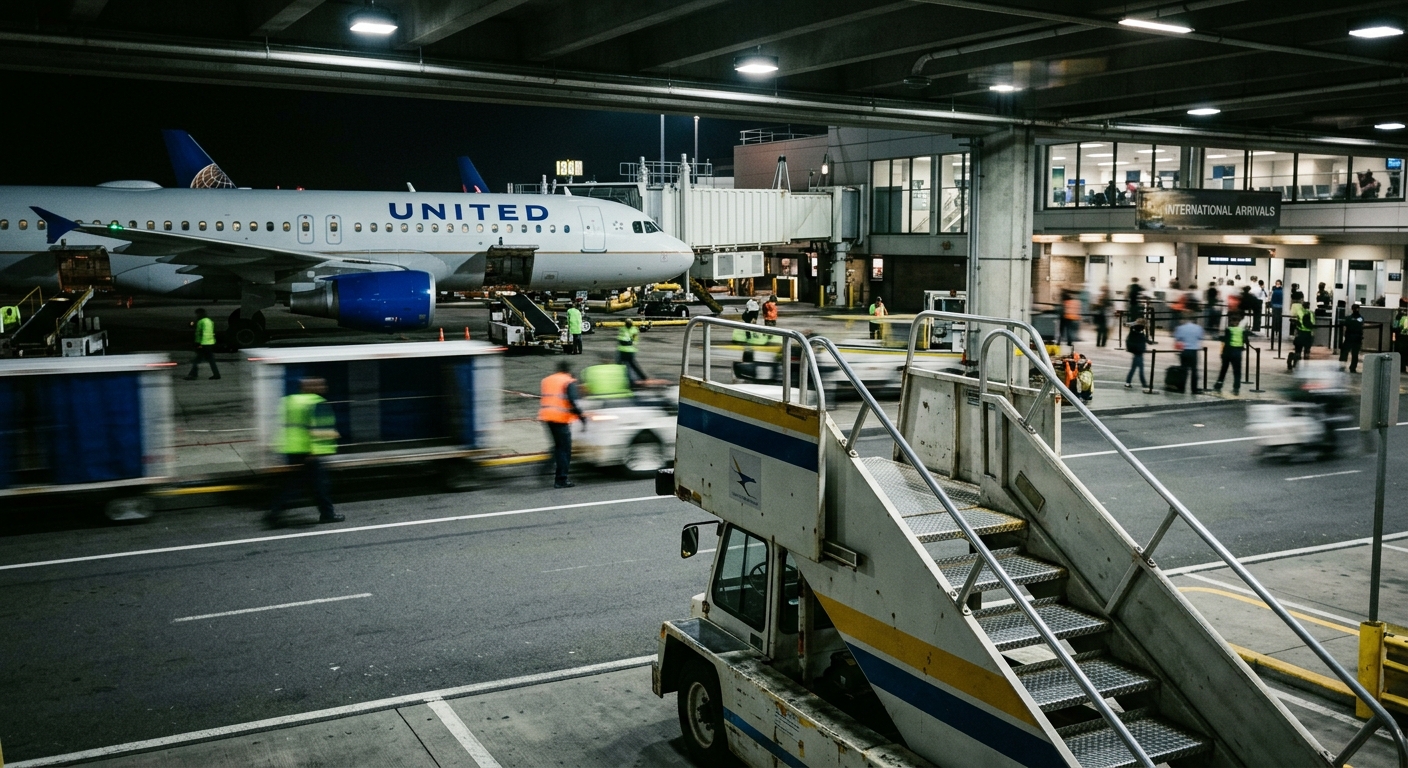
- United Airlines CEO Scott Kirby will discuss immigration processing changes with Homeland Security, impacting Newark Airport operations.
- Proposed reduced Customs services could disrupt United's efficiency, affecting passenger travel and cargo logistics at critical hubs.
- United Airlines and industry groups advocate against staffing limits, highlighting potential economic impacts and travel accessibility during events like the World Cup.
United Airlines Holdings (UAL) finds itself at the center of a significant debate over proposed changes to immigration processing at major airports, particularly amidst the impending FIFA Men's World Cup. CEO Scott Kirby is set to engage with Homeland Security Secretary Markwayne Mullin to discuss how these changes may disrupt the flow of travelers and freight through key hubs, including Newark Liberty International Airport, which is vital to United's operations. The airline industry expresses grave concerns, as the implementation of reduced Customs and Border Protection (CBP) services could lead to operational chaos, particularly considering Newark handles around 20,000 international passengers each day, most of whom are U.S. citizens.
Proposed Changes Prompt Industry Concerns
The proposal emerges as part of the Trump administration's strategy to influence 'sanctuary cities' to adopt stricter immigration enforcement. According to the airline trade group Airlines for America, the proposed measures could bottleneck flight operations, affecting both passenger travel and air cargo logistics. As Newark is a critical junction for international flights, any delays in customs processing directly affect United’s ability to operate efficiently, disrupting not only local travel but also broader connections across the Midwest and beyond. The timing of the proposal raises further alarm, as it coincides with the World Cup, a major event expected to increase travel significantly. This may exacerbate tensions between federal policy goals and the operational realities of the airline sector.
Industry Leaders Advocate Against Disruption
Industry groups and United Airlines lead the charge in advocating against these changes, arguing that limiting CBP staffing could have devastating implications for the airline business and local economies that depend on international tourism. The collaboration between the airline executives and government officials underlines a crucial effort to ensure that the United States remains an accessible destination for international visitors, especially during significant events like the upcoming World Cup. Given the pressure such regulatory changes could put on travel and tourism, United Airlines aims to address these concerns proactively.
Implications for Future Airline Operations
As stakeholders await further developments, the airline industry braces for possible repercussions not just on operational logistics but on the broader market dynamics linked to U.S. travel policies. The outcome will not only impact United Airlines but could also set a precedent for how immigration policy interacts with the airline sector moving forward.
Related Cashu News

Allegiant Travel Restructures Balance Sheet with $650 Million Senior Secured Notes Issuance
Allegiant Travel (Ticker: ALGT) undertakes a crucial restructuring of its balance sheet by issuing $650 million in Senior Secured Notes, maturing in 2031. This strategic move enables the company to pa…

C.H. Robinson Launches BidBoardX to Revolutionize Digital Freight Logistics
C.H. Robinson Worldwide (Ticker: CHRW) has recently made headlines with the launch of its innovative digital freight marketplace, BidBoardX. Introducing BidBoardX: A New Era in Freight Logistics BidBo…

FedEx Faces EEOC Lawsuit Over Alleged Discrimination Against Blind Employees in North Carolina
FedEx Corporation (Ticker: FDX) faces a significant legal challenge as the U.S. Equal Employment Opportunity Commission (EEOC) files a federal lawsuit against the company. The lawsuit alleges that Fed…

Union Pacific Launches Commemorative Locomotive in Partnership with NASA's Artemis III Program
Union Pacific (Ticker: UNP) has unveiled a new commemorative locomotive that honors a former U.S. President, marking a significant addition to its fleet. This initiative comes as the company partners…