
USDCUSD: Stablecoin's Promising Future
ED
Editorial
Cashu Markets·3 min read
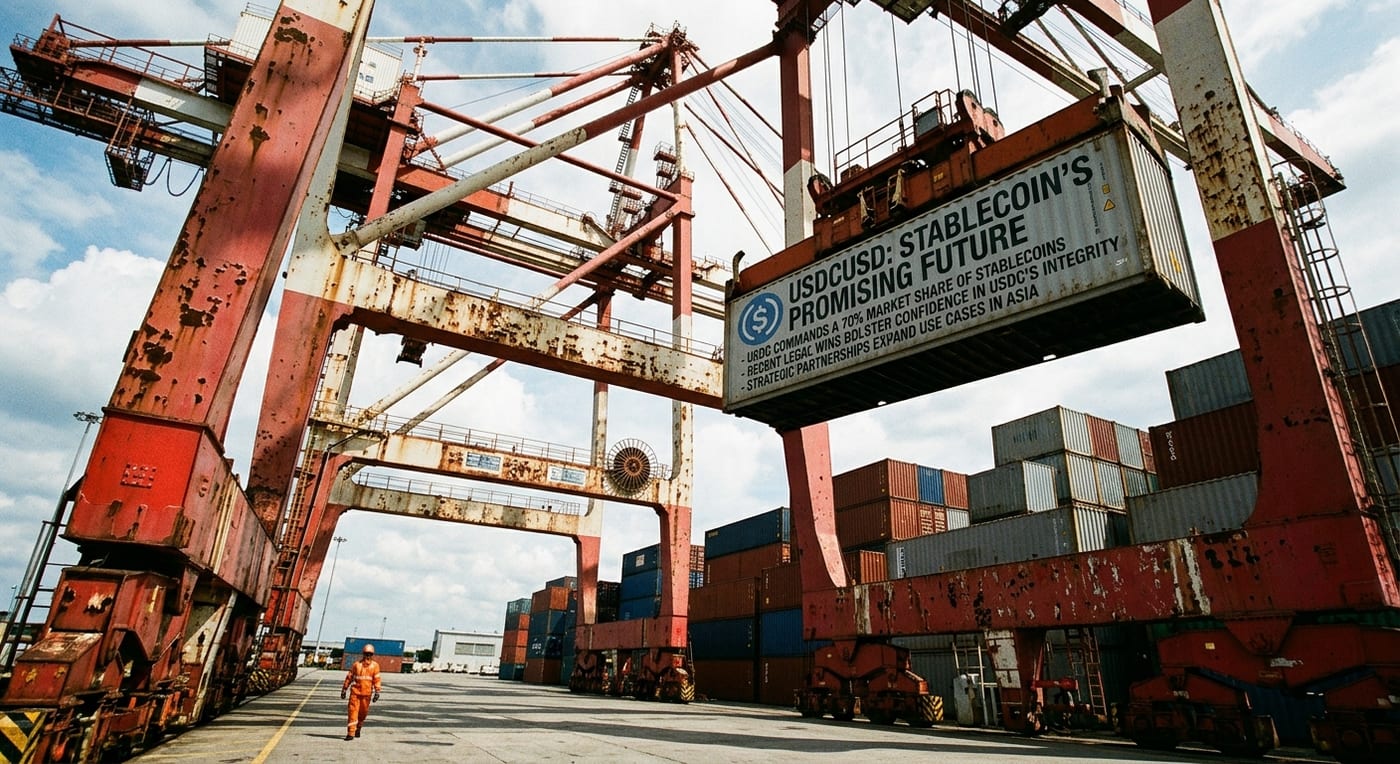
TL;DR
- USDC commands a 70% market share of stablecoins.
- Recent legal wins bolster confidence in USDC's integrity.
- Strategic partnerships expand use cases in Asia.
USDCUSD (USDCUSD) has emerged as a dominant player in the cryptocurrency landscape, particularly in the realm of stablecoins, which are increasingly favored by institutional investors and businesses alike. As we examine the trajectory of USDC, we see a convergence of favorable legal outcomes and strategic partnerships that lay the groundwork for its future growth.
Institutional Adoption at the Core
The shift towards institutional adoption is pivotal for USDC, especially considering its recent gain of approximately 70% market share of adjusted stablecoin volume. This trend signals a growing preference among financial institutions for stablecoins that emphasize compliance and security—a void that USDC is well-equipped to fill. Moreover, as institutional players increasingly integrate digital assets into their operations, they find USDC’s transparent operational framework and dollar-backed structure particularly appealing.
Legal Resilience Boosts Confidence
A pivotal moment for USDC came with a recent court ruling where Circle secured a victory in a legal dispute involving Heka Funds, which had been accused of potential market manipulation involving Tether. This arbitration not only affirmed Circle's decision to suspend Heka’s minting and redemption services due to undisclosed ties with Tether but also highlighted the company’s commitment to maintaining integrity in its operations. As noted in a detailed report, this outcome reinforces Circle's operational standards and ensures that USDC remains a trustworthy option for institutions navigating a complex and often turbulent cryptocurrency landscape.
Strategic Partnerships Driving Growth
In addition to legal victories, Circles' ongoing partnerships are crucial in establishing USDC’s foothold in various markets. Notably, the recent partnership with JCB to pilot USDC for business and retail payments marks a significant expansion into Asia, where Circle aims to leverage its stablecoin for cross-border transactions and internal treasury operations. This collaboration is set to enhance USDC's utility in everyday business practices, thereby broadening its adoption among both merchants and consumers.
As the pilot progresses, it will not only assess internal fund transfers but also explore the viability of stablecoin payments for retail in Japan—a move that aligns perfectly with Circle's broader strategy of institutional growth and market penetration.
Competing Amidst Challenges
Despite USDC's remarkable trajectory, it faces mounting competition from other stablecoins. Recently, new models such as Open USD have emerged, promoting innovative structures like revenue-sharing. This push towards diverse stablecoin models could pose challenges; however, USDC's robust infrastructure and established relationships with financial institutions provide a stabilizing force against such competition.
The Road Ahead for USDCUSD
As we look ahead, the dynamics of the macroeconomic environment, paired with evolving regulatory frameworks, will play pivotal roles in shaping USDC's strategy. Its positioning as a leading stablecoin will be further fortified by its continued focus on regulatory compliance, transparency, and building institutional trust. The anticipated growth in both the user base and transaction volumes will be instrumental in solidifying USDC's market presence and ensuring sustained investor confidence.
The trajectory of USDC USD is tethered not only to its operational successes but also to its ability to adapt to the shifting landscape of the cryptocurrency market. As institutional interest grows and legal frameworks evolve, USDC remains a key player, poised for growth amid a rapidly changing financial ecosystem. The coming months will reveal much about how effectively USDC can capitalize on these opportunities while navigating through its competitive landscape. The same pressure is reflected in recent reporting on the issue, which helps explain why the company's pricing decisions remain under scrutiny.