
Verra Mobility Faces Crucial Crossroads
ED
Editorial
Cashu Markets·4 min read
TL;DR
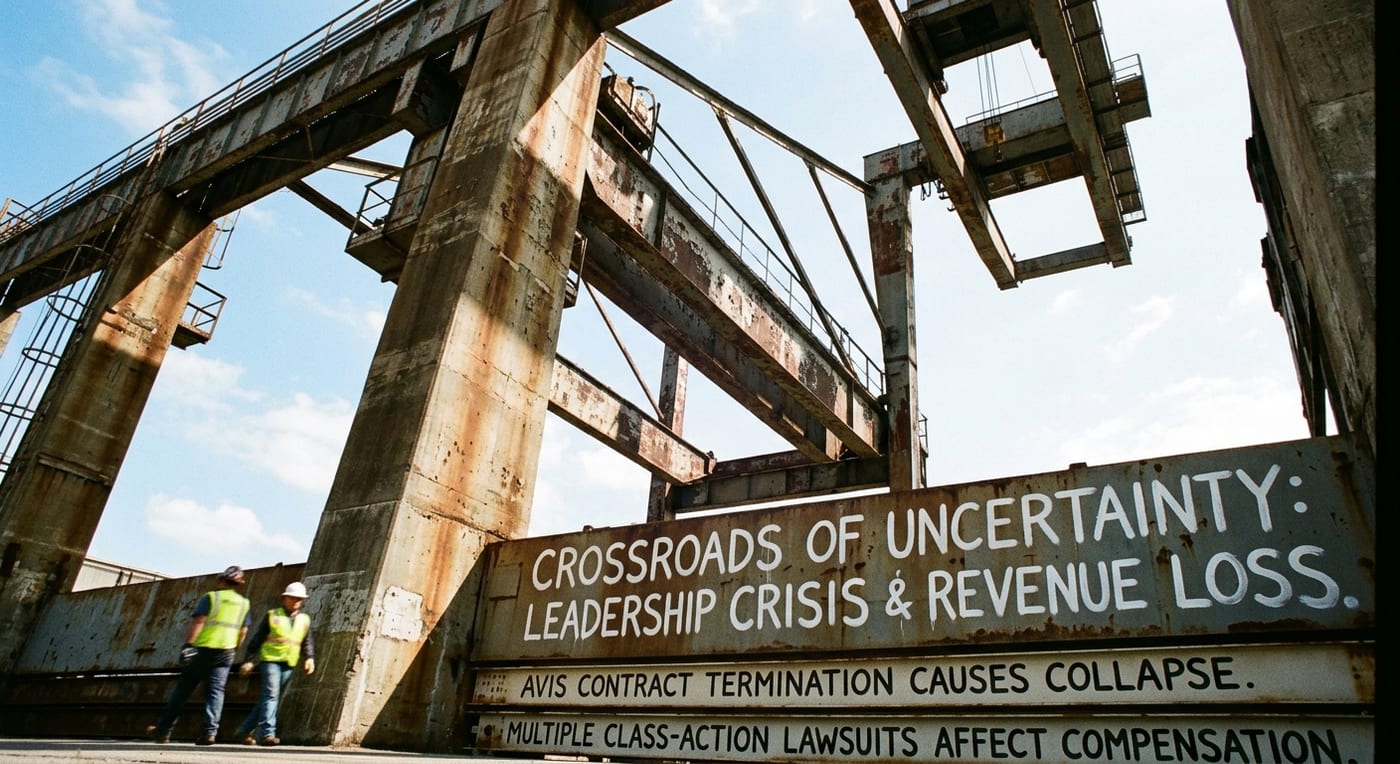
- Verra Mobility faces leadership crises and revenue loss.
- The termination of Avis contract causes stock price collapse.
- Multiple class-action lawsuits could affect investor compensation.
The recent announcement of the termination of Verra's contract with Avis on May 26, 2026, was a watershed moment for the company. This critical relationship accounted for substantial revenue and market confidence. Following the news, Verra's stock price plummeted nearly 71%, from $13.08 to $3.85 per share within a single day. This dramatic decline sends a clear signal of the market's reaction to the void left by the Avis partnership, which is seen as integral to Verra's operational framework.
Leadership Challenges Amplify Uncertainty
Compounding the crisis, the abrupt resignation of CEO David Roberts on June 1, 2026, only deepened the instability within the organization. With Roberts at the helm for over a decade, his departure—a direct fallout from the Avis contract termination—raised alarms among investors regarding the leadership's ability to steer the company through this crisis. As highlighted in previous reports, the loss of such a critical contract has the potential to diminish Verra’s operational capabilities and market valuation significantly.
The domino effect is apparent: as Verra struggles to regain its footing, the implications of lost contracts extend beyond immediate financial losses. Analysts have consistently pointed to how major rental car companies could explore in-house solutions or alternative partnerships, further threatening Verra's business model and market share. These concerns resonate with sentiments expressed in earlier discussions surrounding Verra Mobility's Leadership Challenges, where the precarious state of their leadership dynamics was underlined.
With Verra's market capitalization suffering a staggering loss—estimated at around $1.4 billion—investors are scrambling. In light of these events, multiple class action lawsuits have sprung up, fueled by claims of misinformation regarding the strength of the Avis contract, which Verra reportedly downplayed prior to the termination announcement. The lawsuits suggest that the company's executives may have knowingly concealed critical information from investors, further eroding trust.
Legal Landscape Shifts with Class Actions
In the wake of the contract loss, legal firms are rallying to encourage injured investors to seek restitution. Firms like Rosen Law Firm and Faruqi & Faruqi are actively managing securities class actions on behalf of investors, emphasizing the importance of timely legal representation. According to their communications, the class period is defined as running from February 24, 2026, to May 26, 2026, which is specifically tied to the period leading up to the Avis contract termination.
Both law firms are leveraging their reputations to draw in clients, underscoring the urgency of the situation. Investors who purchased Verra's stock during this critical time frame may find themselves entitled to compensation, underlining the interconnected nature of the company's recent operational turmoil and its legal ramifications, as covered in new articles like Faruqi & Faruqi’s call to action.
Market Outlook: Hoping for Stability
The path ahead for Verra Mobility is strewn with uncertainty. While efforts are underway to assemble leadership and stabilize operations, the loss of a major client like Avis serves as a critical reminder of the volatility in this marketplace. The rental and mobility sector is increasingly characterized by shifting partnerships and evolving consumer demands, requiring companies like Verra to not only adapt swiftly but also maintain transparent communications with stakeholders.
For Verra, restoring investor confidence hinges on its ability to articulate a clear vision for both immediate recovery strategies and long-term growth. These strategies must encompass safeguarding existing contracts, finding substitutes for lost revenue, and enhancing communication with stakeholders to rebuild trust. This is crucial not just for the company’s stock recovery but for its survival in an ever-evolving industry landscape. The same pressure is reflected in recent reporting on the issue, which helps explain why the company's pricing decisions remain under scrutiny.