
Verra Mobility Faces Uncertain Future
ED
Editorial
Cashu Markets·4 min read
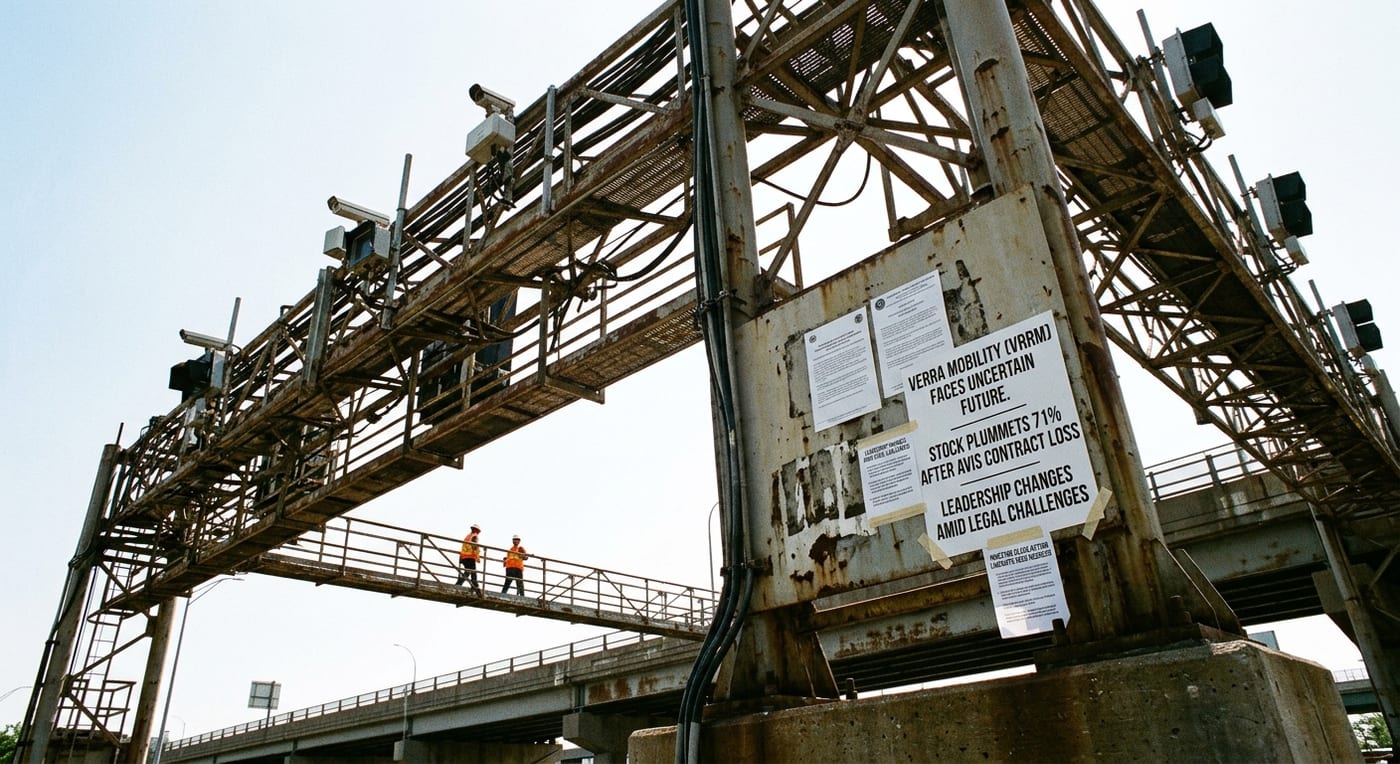
TL;DR
- Verra Mobility's stock plummets 71% following Avis contract loss.
- Leadership changes add to uncertainty amid ongoing legal challenges.
- Investors seek redress through multiple class action lawsuits against the company.
Verra Mobility Corporation (VRRM) is experiencing significant turmoil following the abrupt termination of its key contract with Avis Budget Group. This loss has sent shockwaves through the company, resulting in not only a dramatic drop in stock price but also a cascade of legal and operational challenges that threaten the company's future viability. With investors on edge and leadership changes complicating recovery efforts, Verra finds itself at a critical inflection point. The fallout from the Avis contract loss not only impacts the company’s immediate financial outlook but raises questions about its long-term strategy and stability in a competitive mobility landscape.
The Avis Contract Termination: A Financial Catastrophe
The termination of Verra's contract with Avis, which accounted for about 10% of the company’s annual revenue, expected to contribute around $135 million to $145 million, has shaken the foundation of the business. The announcement on May 26, 2026, triggered a staggering 71% plummet in Verra's stock price—from $13.08 to a mere $3.85—resulting in a drastic reduction of market capitalization and shaking investor confidence to its core. Following this announcement, the company was compelled to revise its financial forecasts for 2026, markedly lowering expectations for both revenue and profitability.
The immediate financial implications are dire, but the broader ramifications extend into investor trust and market perception. Legal troubles have begun to mount, as disgruntled shareholders file lawsuits, alleging that Verra misled them regarding the status of its relationship with Avis and the stability of the revenue it generated. This has led to multiple firms, including Bronstein, Gewirtz & Grossman, and Faruqi & Faruqi, initiating class-action lawsuits on behalf of those who acquired shares between February and May 2026, alleging the company made materially false and misleading statements regarding its operational stability.
The Leadership Void: A Concerning Transition
Reeling from the abrupt contract termination, Verra has also dealt with leadership instability, further complicating its recovery efforts. Following the news of the Avis contract cancellation, CEO David Roberts unexpectedly resigned, signaling potential internal turmoil and a lack of strategic direction at a critical time. From executive leadership transitions to potential strategic overhauls, Verra has positioned itself in the midst of a structural transformation that investors are understandably wary about.
This transition raises serious concerns about the operational strategy that will replace the now-defunct partnership with Avis and how the company plans to recover lost revenue streams. Without a clear leadership vision, Verra's ability to stabilize operations and regain investor confidence will be equally uncertain.
Legal Battles and Investor Sentiment
As Verra Mobility navigates the financial and operational repercussions of the Avis loss, the legal landscape is rapidly evolving. The atmosphere is tense as accusations of securities fraud surface, with companies like Hagens Berman and Kaplan Fox participating in class action litigation against Verra to secure justice for investors who feel wronged. The firm Hagens Berman, for instance, has broad allegations focused not only on the contract's sudden termination but also on whether the leadership knew about the impending crisis, which escalated following the surprising stock market reaction.
This has resulted in a complex and multi-tiered legal scenario that may take years to resolve, leaving investors with lingering uncertainty about their financial futures and the company’s operational viability. The dual challenges of a contract loss and ensuing lawsuits pose significant threats to Verra's prospects, and investors are now rattled as they question the longevity of the company in a shifting market landscape.
The Way Forward: Strategic Recovery Needed
In the wake of these profound challenges, the question remains: how will Verra Mobility recover? Future outlook hinges on the company’s ability to pivot strategically and rebuild its business model. Analysts suggest that Verra will need to re-evaluate its partnerships and possibly seek new alliances to offset lost revenue. Furthermore, there is a pressing necessity for a transparent communication strategy that reassures investors of the company’s commitment to recovery, stability, and growth.
In light of legal challenges and the need for an operational resurgence, Verra could look to diversify its offerings, explore new customer segments, and enhance its service capabilities. Whether these strategies will be enough to placate worried investors and salvage the trust that has been lost largely depends on how the company manages its recovery narrative.
Conclusion: Uncertain Markets Ahead
Verra Mobility’s position in the market has swiftly shifted from a key player in mobility solutions to one entangled in a crisis of confidence. The loss of the Avis contract, coupled with leadership changes and legal hurdles, paints a challenging picture for future growth. As legal action mounts and the leadership reshuffles unfold, the coming months will be pivotal for Verra as it attempts to regain investor trust and strategize a path forward in an increasingly competitive and uncertain landscape.