
XRPUSD: Navigating Regulatory Challenges
ED
Editorial
Cashu Markets·5 min read
TL;DR
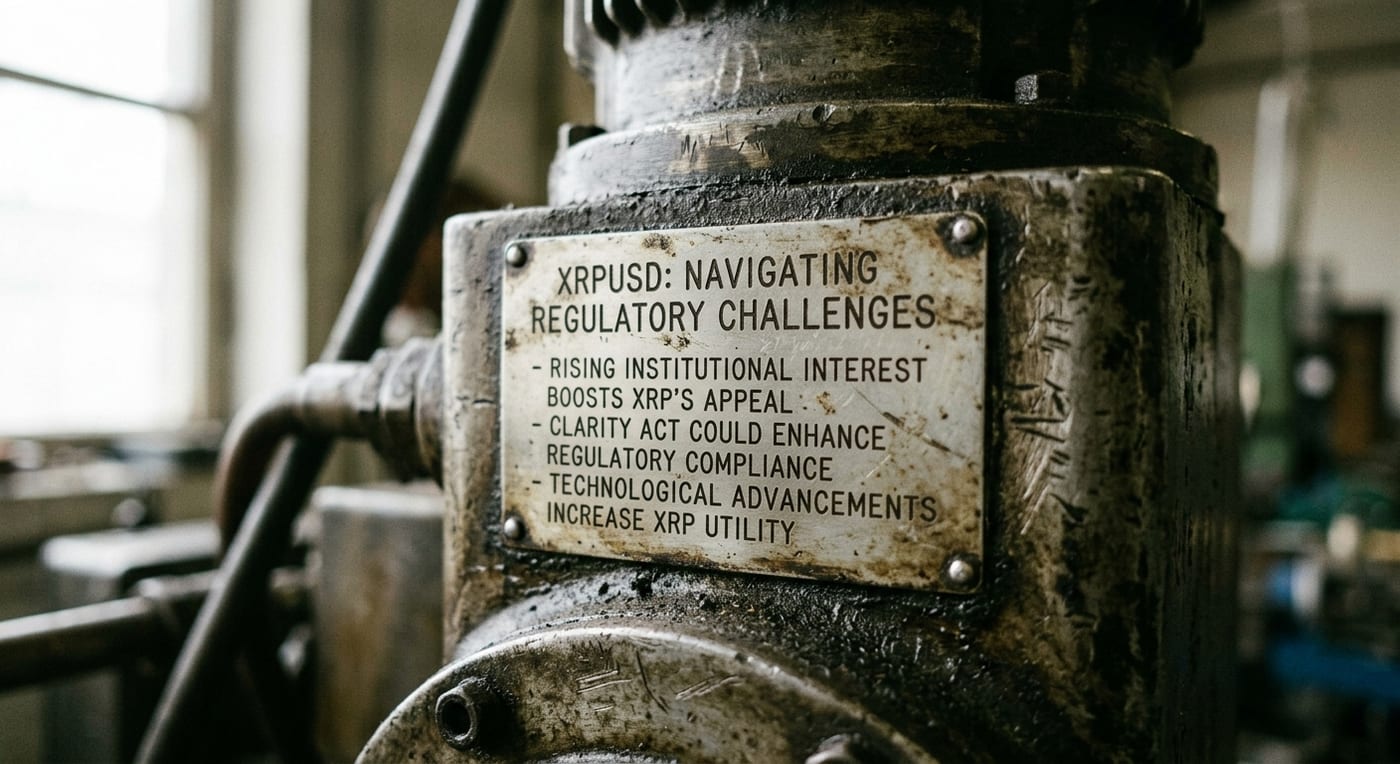
- Rising institutional interest boosts XRP's appeal.
- CLARITY Act could enhance regulatory compliance.
- Technological advancements increase XRP utility.
XRP USD (XRPUSD) finds itself at a transformative juncture, influenced significantly by the evolving regulatory landscape and its institutional adoption narrative. For Ripple, the company behind XRP, these factors play a crucial role in shaping the future of its cryptocurrency in an increasingly complex financial ecosystem. Recent developments have underscored XRP's potential to reshape cross-border payments while navigating the minefield of compliance issues and regulatory mandates.
Institutional Demand Bolsters Investor Sentiment
The surge in institutional interest surrounding XRP is particularly noteworthy. Major holders, referred to as 'whales', have increased their positions, adding over 70 million tokens recently. This notable accumulation is complemented by a tightening supply on exchanges, such as Binance. The growing speculation around this institutional surge may catalyze a price upswing, positioning XRP favorably among digital assets. Analysts have evidenced that, as institutional participation rises, the sentiment surrounding XRP continues to strengthen, aligning with arguments in a recent article that illuminated the role of institutional accumulation in XRP's price recovery.
Moreover, the current broad economic landscape is fostering an environment conducive to such institutional engagement. Regulatory advancements, particularly the potential passage of the CLARITY Act, promise clearer operational frameworks, thereby enhancing market trust among institutions. Ripple’s advocacy for the CLARITY Act is aimed at bolstering compliance and creating a more favorable marketplace for digital assets, which links directly to institutional strategies covering cross-border payments and improving accessibility for larger players in the financial sector.
Regulatory Frameworks Influencing Market Dynamics
The regulatory environment remains a key factor influencing XRP's trajectory. Ripple's efforts to align with global compliance standards underscore its commitment to maintaining a robust operational stance, particularly in the face of regulatory scrutiny. The anticipation surrounding the CLARITY Act—a proposal designed to establish clearer rules governing digital assets—has amplified discussions concerning XRP's regulatory future. Ripple executives, including CEO Brad Garlinghouse, have been vocal proponents of this bill, which aims to enhance consumer protections and offer clearer operational guidelines for businesses associated with cryptocurrencies.
As the cryptocurrency market continues to showcase volatility, the clarity offered by potential legislative changes such as the CLARITY Act could buffer XRP against market fluctuations. Ensuring that digital assets align with established legal frameworks offers a more accessible pathway for institutional investment. Increased legal certainty could foster a boom in transactional activities across the XRP Ledger, reiterating XRP's utility in the broader digital economy. This interplay between regulation and market acceptance has been analyzed in previous discussions regarding XRP’s challenges and the ongoing legislative dynamics.
Technological Advancements on the XRP Ledger
Beyond regulatory considerations, groundbreaking technological advancements on the XRP Ledger further enrich the narrative surrounding XRP. The ledger recently achieved a milestone with over one million AI-driven transactions, which offers a glimpse into the innovative capabilities Ripple is embedding into its ecosystem. The anticipated upgrades—including batch transactions, zero-knowledge proof privacy features, and dynamic tokens—aim to enhance transaction efficiency while reducing operational costs.
Such features not only promote XRP's utility among existing users but also generate interest among potential institutional clients looking for seamless transaction solutions. The introduction of lending protocols atop the XRP Ledger is another tactical approach aiming to attract a broader array of users. These advancements align closely with Ripple's overarching strategy to expand the utility of XRP and integrate it more fully into everyday transactional frameworks. The momentum of these technical improvements resonates with trends highlighted in recent market analyses, confirming the intertwined relationship of technology and regulatory clarity for XRP’s potential growth.
The Ripple Effect of Real-World Asset Tokenization
The XRP Ledger's pivot towards tokenizing real-world assets (RWAs) also highlights its strategic importance in the financial framework. Recent reports indicate that the XRP Ledger accounted for approximately $2.6 billion in tokenized RWA value added over the last six months, ranking it second among blockchain networks for RWA inflows. This growth underscores XRP's potential to function as a bridge between traditional assets and digital finance, ensuring that Ripple remains relevant in a rapidly evolving marketplace.
This tokenization of RWAs—particularly in sectors like energy—shows promise for integrating XRP into genuine financial use cases, further enhancing its appeal. However, while the increasing RWA valuation is an encouraging sign, it does not necessarily correlate directly to heightened demand for XRP tokens used in transactions. The simultaneous rise of competing stablecoins also suggests a diversifying market landscape, emphasizing that while XRPL's capacity grows, so too does the need for a nuanced understanding of demand dynamics.
Investor Outlook and Future Predictions
As XRP navigates these multifaceted challenges, market predictions suggest a cautiously optimistic outlook. Various analysts have projected XRP's price could reach between $1.32 to $3.75 by the end of 2026, reflecting both optimistic sentiments about regulatory clarity and the anticipated growth of institutional engagement. Factors such as potential ETF inflows and the long-pending CLARITY Act are seen as pivotal to XRP's price recovery trajectory.
Given the complexity of the current economic landscape, XRP's future hinges on successfully leveraging institutional interest while maintaining compliance with evolving regulations. The potential for upward price movement remains contingent on the broader acceptance and integration of XRP within institutional frameworks as well as its adaptability to ongoing technological enhancements and competitive pressures within the cryptocurrency market.
In conclusion, XRP USD (XRPUSD) finds itself at a crucial crossroads. The interplay of regulatory clarity, institutional adoption, and technological innovation will likely define its path ahead, shaping not only its market valuation but also its role in the broader digital finance ecosystem. The same pressure is reflected in recent reporting on the issue, which helps explain why the company's pricing decisions remain under scrutiny.